
Best Post Hole Diggers & Augers
Whether you are setting a mailbox post or fencing a pasture, the right digger turns a brutal job into a manageable one. Here is how to choose between manual, electric, gas, and PTO, size the bit to your soil, and dig holes that will not heave or lean.
Quick Answer
For a handful of holes or working where no power reaches, a manual clamshell digger is cheap and reliable. For fence lines, decks, and repeated digging, a powered auger saves your back: electric for quiet, fuel-free work near power in lighter soil, or gas for range and grunt in tougher ground. Fencing acreage or fighting clay and rock? A 3-point PTO auger on a tractor is fastest by far. Match the bit to the post, and always call 811 first.
Best for a few holes: Manual clamshell digger
Best electric: 1500W electric auger
Best all-around powered: 52cc gas auger (6" & 10" bits)
Best for big jobs & hard soil: 3-point PTO tractor auger
On this page
Before you read anything else: call 811 a few days before you dig. It is free, it gets buried utilities marked, and it prevents the one mistake on this page that can seriously hurt you or cost thousands.
What a Post Hole Digger Does
A post hole digger or earth auger bores clean, consistent, vertical holes for fence posts, deck footings, pergolas, mailbox posts, sign posts, and tree planting. The right tool bores a straight-sided hole at the diameter you want, without the wallowed-out crater a shovel leaves, so posts set square and hold.
The whole decision comes down to two things: how many holes you are digging, and how hard your soil is. A few holes in soft ground suit a manual digger. A fence line, a deck, or hard rooty soil calls for power. Fencing serious acreage or fighting clay and rock points straight at a tractor-mounted PTO auger.
The 6 Types, in Depth
From cheapest and simplest to fastest and most powerful.
Manual clamshell digger
$30 to $60Power
Muscle
Hole count
A few
Best soil
Soft, loose soil
Bit size
Sets the hole width by hand
- Cheapest option, nothing to maintain
- Works anywhere, no power or fuel
- Precise, narrow holes
- Hard physical work
- Struggles in clay, rock, and roots
- Slow past a handful of holes
Hand / spiral auger
$25 to $70Power
Muscle
Hole count
A few small
Best soil
Soft soil, planting
Bit size
2 to 4 in typical
- Light and cheap
- Great for bulbs, plants, and small stakes
- Clean, tidy holes
- Small diameter only
- Tiring in dense soil
- Not for fence or structural posts
Electric auger
$100 to $250Power
Corded or battery
Hole count
Several
Best soil
Lighter soil near power
Bit size
4 to 8 in
- Quiet, no fuel or fumes
- Push-button start, low maintenance
- Great for garden and light fence work
- Cord range or battery runtime limits
- Less torque in heavy or rocky ground
- Kickback on roots and rock
Gas auger (one-person)
$150 to $350Power
43cc to 52cc gas
Hole count
A fence line
Best soil
Tougher, mixed soil
Bit size
6 to 10 in
- Goes anywhere, no cords
- Real torque for fence lines and decks
- One-person portable
- Heavier, needs fuel and upkeep
- Kickback in roots and rock
- Tiring for a very long day
Two-person gas auger
$400 to $700Power
63cc+ gas
Hole count
Many
Best soil
Hard, rocky soil
Bit size
8 to 16 in
- Big power for hard ground and wide holes
- Two operators absorb kickback
- Fast on long fence runs
- Needs two people
- Heavy and awkward to move
- Overkill for a handful of holes
3-point PTO tractor auger
$400 to $1,200+ attachmentPower
Tractor PTO
Hole count
Dozens+
Best soil
The hardest ground
Bit size
6 to 24 in
- By far the fastest for big jobs
- Handles clay, rock, and large diameters
- No operator strain, the tractor does the work
- Needs a tractor with 3-point and PTO
- Attachment cost on top of the tractor
- Less nimble in tight spots
Head-to-Head Comparison
| Factor | Manual | Electric | Gas | PTO |
|---|---|---|---|---|
| Power source | Muscle | Electric motor | Gas engine | Tractor PTO |
| Best hole count | A few | Several | A fence line | Dozens or more |
| Best soil | Soft, loose | Light near power | Mixed, tougher | Hard, rocky, clay |
| Typical bit size | By hand | 4 to 8 in | 6 to 10 in | 6 to 24 in |
| Operator effort | High | Low | Medium | Very low |
| Portability | Carry it | Carry it | Carry it | Drive the tractor |
| Typical price | $30 to $60 | $100 to $250 | $150 to $350 | $400 to $1,200+ |
How to Choose, in 4 Questions
How many holes are you digging?
A handful favors a manual digger. A fence line, deck, or a project you will repeat favors a powered auger. Dozens of holes or fencing acreage favors a PTO tractor auger.
How hard is your soil?
Soft loam is forgiving for any tool. Heavy clay, rock, and roots demand real torque, which means a bigger gas auger, a two-person unit, or a PTO auger, ideally with sharp or carbide teeth.
Do you have power or a tractor?
Near an outlet or with batteries, electric is quiet and clean. Off-grid, gas goes anywhere. If you own a tractor with a 3-point hitch and PTO, an auger attachment is the fastest tool you can bolt on.
What is your budget, and how often?
A one-time small job may not justify buying at all (renting is an option). For recurring property work, a mid-range gas auger or a PTO attachment earns its keep quickly in saved time and back.
Still torn between doing it by hand or buying power? See manual vs powered post hole digger for the head-to-head.
Bit and Hole Sizing Guide
The rule of thumb is a hole about three times the post width, so it sets solid with room to tamp or pour. Oversizing just wastes concrete.
| Post or use | Hole diameter | Typical use |
|---|---|---|
| T-post or small round (light fence) | 4 to 6 in | Wire fence, garden, temporary |
| 4 in round or 4x4 wood post | 10 to 12 in | Standard fence, mailbox, pergola |
| 6 in round or 6x6 wood post | 12 to 18 in | Gate posts, heavy fence, structural |
| Deck or structural footing | Per building code | Decks, pole barns, load-bearing |
| Tree or shrub planting | 2 to 3x root ball | Planting, not posts |
How Soil Changes Everything
The same auger that flies through loam will stall in clay and bounce off rock. Soil is the biggest reason people buy the wrong tool, so size your power to the worst ground you will hit, not the best.
Loam and sand
Easiest digging. Almost any tool works, though sandy holes can collapse, so dig and set promptly.
Clay
Sticky and heavy, and brutal when dry. Pre-soak a day ahead, use more torque, and back out often to clear the flighting.
Rocky ground
Stalls light augers and causes kickback. Use a heavier or PTO auger, a rock auger with carbide teeth, and expect to clear rocks by hand.
Roots
Grab and jam handheld augers. Keep a firm grip, cut through with the auger teeth, or switch to a manual digger and lopper in root-heavy spots.
How to Dig a Post Hole the Right Way
- 1
Call 811 to locate utilities
A few days ahead, call 811 (the national one-call service). It is free and gets buried gas, power, and water lines marked so you dig safely.
- 2
Mark holes and set your depth
Mark each hole. Plan depth below your local frost line, generally about one-third of a fence post's above-ground height.
- 3
Match the bit to the post
Size the hole roughly three times the post width, leaving room for concrete or tamped backfill.
- 4
Drill in stages, brace for kickback
With a powered auger, keep a firm two-hand grip and good footing. Let the flighting pull soil out, and back the bit out to clear spoil.
- 5
Clear the hole in hard soil
In rock or dry clay, back out often to clear spoil and avoid binding. Pre-soak very hard ground the day before.
- 6
Set the post and backfill
Set the post plumb and brace it, then backfill with tamped soil, gravel, or concrete depending on the load.
How Deep and the Frost Line
Post holes must go below your local frost line so the post will not heave when the ground freezes and thaws. Frost depth ranges from just a few inches in the far south to 4 feet or more in the north, so check your local figure. As a general fence rule, bury about one-third of the post's height. Deck and structural footings follow code-required depths, which you should confirm with your building department before digging.
Concrete vs Gravel Backfill
Set corner posts, gate posts, and structural footings in concrete for maximum strength. For wood line posts, many builders add a few inches of gravel at the bottom for drainage plus tamped soil or gravel around the post, since concrete can trap moisture against wood and speed rot. Match the method to the load the post carries.
Safety Essentials
Call 811 first, always
Free utility locating prevents striking gas, power, or water. This is non-negotiable before any dig.
Respect auger kickback
When the bit hits a root or rock it can spin the machine. Firm two-hand grip, solid stance, and never loop your body through the handles.
Wear the right PPE
Eye protection, gloves, sturdy boots, and hearing protection for gas units. Tie back loose clothing away from the flighting.
Mind the PTO
On a 3-point auger, keep the PTO shaft guarded, stay clear while it turns, and shut it down before you touch the bit.
Mistakes to Avoid
Not calling 811 first
Hitting a buried utility is dangerous and expensive. Locating is free and required in most areas.
Wrong bit size
Too small and the post will not set; too large wastes concrete. Aim for about 3x post width.
Digging too shallow
Footings above the frost line heave and lean over winter. Dig below your local frost depth.
Fighting kickback
Powered augers bind on roots and rock and can wrench your wrists. Keep a firm grip and clear the hole in stages.
Underestimating hard soil
Dry clay and rock defeat a light auger. Match the machine to your soil, or pre-soak the ground.
Concrete around wood line posts
It can trap water against the post and speed rot. Gravel and tamped backfill often outlast concrete for wood.
Our Post Hole Digger Picks
Manual clamshell, electric, and gas augers for a few holes up to a full fence line. Have a tractor? A 3-point PTO auger will outdig all of them on a big job.
Post Hole Diggers & Augers
Match power and bit size to your hole count and soil.
Some links below are affiliate links, including Amazon Associate links. As an Amazon Associate, Tractor Iron earns from qualifying purchases, at no additional cost to you.

VEVOR Gas Post Hole Auger (52cc, 6" & 10" Bits)
A 52cc, 1450W one-person earth auger that ships with 6-inch and 10-inch bits plus 3 extension rods. The most versatile pick for fence posts, deck footings, and tree planting.
$150.90
Check Price at VEVOR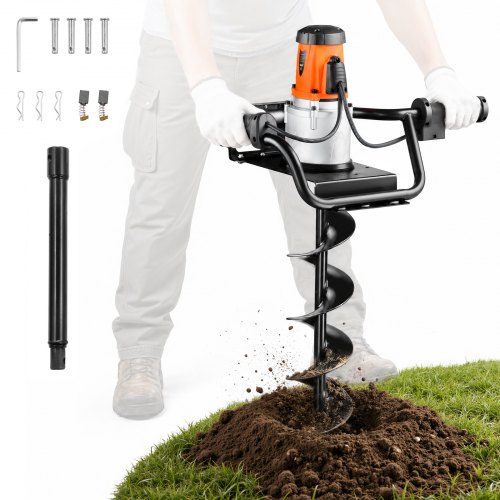
VEVOR Electric Post Hole Digger (1500W, 5.71" Bit)
A 1500W corded electric auger with a 5.71-inch bit and extension rod. Quiet, no fuel mixing, and the highest-rated powered pick. Best near power for lighter soils.
$143.91
Check Price at VEVOR
VEVOR Gas Post Hole Digger (43cc, 8" Bit)
A lighter 43cc, 1250W gas auger with an 8-inch bit and 30-inch alloy-steel flighting. The budget powered option for occasional fence and garden work.
$113.31
Check Price at VEVOR
VEVOR Manual Post Hole Digger (Carbon Steel, 57.5")
A heavy-duty clamshell digger with carbon-steel handles, scale markings, and a metal blade. The pick for a handful of holes or working where no power reaches.
$63.81
Check Price at VEVOR
VEVOR Manual Post Hole Digger (Fiberglass, 57.5")
The most affordable option, a clamshell digger with lighter fiberglass handles and scale markings. Good for light-duty and occasional post setting.
$47.79
Check Price at VEVORFencing acreage? Consider a PTO auger on a tractor.
For dozens of holes and hard ground, a 3-point auger on a compact or utility tractor is the fastest tool there is. See how the 3-point hitch and PTO attachments work.
Frequently Asked Questions
What size auger bit do I need for a fence post?
Electric or gas post hole digger?
When is a PTO tractor auger worth it?
Can one person use a powered auger?
How deep should a post hole be?
Concrete or gravel to set a post?
How do I dig in hard clay or rocky soil?
Do I really need to call 811 before digging?
How many post holes can I dig in a day?
What maintenance does a gas auger need?
Sources & References
- Utility locating: call 811 before you dig (national one-call service).
- Frost-depth footings, post depth, and setting methods: local building codes and cooperative extension fencing guides.
- Auger sizing, torque, and operation: manufacturer and equipment guidance.
Related Guides
Keep going, these guides pair well with what you just read.
Manual vs Powered Post Hole Digger
Which to buy based on hole count, soil, and budget.
Read guideTractor Attachments Hub
3-point, PTO, loader, and hydraulic implements for your tractor.
Read guide3-Point Hitch Explained
How the hitch and category determine what implements you can run.
Read guideBest Sprayers for Weeds & Pasture
Keep new fence lines and pasture clear of weeds and brush.
Read guideBest Tractors for Loader Work
Moving posts, gravel, and materials around the property.
Read guideFarm & Property Equipment
Power, fuel, and equipment guides for running rural land.
Read guide