
Lawn Roller vs. Aerator
People often buy the wrong one. A roller firms the soil, an aerator loosens it. They solve opposite problems, so start with what your lawn actually needs.
Quick Answer
If your lawn is thin, hard, or compacted, you need an aerator (use a core aerator) to loosen the soil. If you just seeded or laid sod, or have minor frost heave, use a roller to firm and press. Do not roll a compacted lawn to smooth it, because that only compacts it further.
Lawn is hard or compacted: Core (plug) aerator
Just seeded or laid sod: Lawn roller, light fill
Spring frost heave: Lawn roller, light pass
Avoid: Rolling a compacted lawn
Head-to-Head Comparison
| Factor | Lawn Roller | Aerator |
|---|---|---|
| What it does | Firms and presses the surface | Loosens compacted soil |
| Effect on compaction | Increases it | Relieves it (core aerator) |
| Best use | Press seed, settle sod, frost heave | Fix thin, hard, compacted lawns |
| When | Spring, after seeding or sodding | Growing season, before overseeding |
| Fill or weight | Fill with water or sand to adjust | Add weight so tines penetrate |
| Do not use it to | Fix a compacted or bumpy lawn | Firm freshly seeded soil |
Diagnose the Lawn Before Choosing a Tool
| What you see | Likely next step | Why |
|---|---|---|
| Water puddles and a screwdriver is difficult to push into moist soil | Core aerate after checking drainage | Compaction may be limiting infiltration, but aeration cannot repair a failed grade or buried drainage problem. |
| Thin turf on a heavily traveled area | Core aerate, then overseed if seasonally appropriate | Removing plugs creates space in the root zone and improves seed access to soil. |
| Fresh seed on a properly prepared bed | One very light roller pass, if needed | Gentle pressure can improve seed-soil contact; heavy weight can crust or compact the bed. |
| Fresh sod with air pockets | Light rolling after installation and watering guidance | The goal is contact between sod and prepared soil, not compressing the root zone. |
| Minor frost heave after thaw and drainage | Test a light roller on a small area | Rolling can settle shallow heave, but saturated spring soil compacts easily. |
| Deep ruts, roots, settled trenches, or poor grade | Neither: repair, top-dress, or regrade | A roller cannot add missing soil; an aerator cannot correct elevation. |
| Spongy surface with a thick organic layer | Measure thatch; dethatch if appropriate | Aeration may help as part of a plan, but a roller does not remove thatch. |
Core Aerator vs. Spike Aerator
If compaction is the problem, the type of aerator matters. A core aerator removes plugs and creates actual pore space. A solid spike only displaces soil around the hole and can compact the sides of that hole, especially in heavy soil.
Choose a core aerator for
- Established turf with measurable traffic compaction
- Clay or loam where plugs can be pulled cleanly
- Aerating before overseeding during active growth
- A recurring lawn-care program where soil structure is the goal
Treat spike aeration as limited-use
Spikes can make temporary openings in lightly compacted soil and are simpler to tow, but they do not remove soil. Do not assume a spike unit is equivalent to core aeration. See the plug vs. spike aerator guide for the full comparison.
When to Roll or Aerate
Rolling window
Roll only for a defined surface-contact job. For seed or sod, follow the installation guidance. For frost heave, wait until the ground has thawed and drained. Soil should be workable, not dusty-hard, frozen, muddy, or saturated.
Use the minimum drum fill that works, make one test pass, and stop if the drum ruts, smears soil, or squeezes water to the surface.
Aeration window
Aerate while the grass is actively growing and can recover: generally late summer into early fall for cool-season turf, and late spring through early summer for warm-season turf. Local climate and grass species control the exact timing.
Moist soil helps tines penetrate, but wet soil smears and tears. Irrigate beforehand only if needed, then let surface moisture drain.
If You Need Both: Use Them for Separate Jobs
- 1
Correct drainage and grade first
Neither attachment solves standing water caused by low spots, downspouts, or a failed slope.
- 2
Core aerate established compacted turf
Make passes when the soil is moist enough for penetration and the grass is actively growing. Mark irrigation heads and shallow utilities first.
- 3
Overseed and top-dress as the lawn plan requires
Aeration holes can improve seed access, but seed selection, coverage, watering, and timing still determine establishment.
- 4
Reserve rolling for seed, sod, or minor heave
Do not follow aeration with routine heavy rolling; that works against the pore space you just created.
Rent or Buy?
Renting usually wins for a one-time sod project or annual core aeration because it avoids storage, maintenance, and buying a light-duty tool that may not penetrate. Buying makes more sense when you have repeat work, suitable storage, and a tow vehicle approved for the attachment.
- Compare the full rental cost: daily rate, deposit, transport, cleaning, and whether weather could waste the reservation.
- For a tow-behind unit, verify the mower or tractor manual's towing, tongue-weight, ballast, slope, and braking limits. A hitch alone is not proof of capacity.
- Match attachment width to gates and transport paths, not merely lawn acreage.
- For an aerator, weight-tray capacity does not mean the tow vehicle can safely handle that loaded weight on every slope.
The simple rule
Roll to firm, aerate to loosen. If the problem is a hard, thirsty, thin lawn, aerate. If the problem is loose new seed or sod that needs soil contact, roll lightly. Using the wrong tool does not just waste time, it can make the lawn worse.
Tow-Behind Lawn Care Picks
Both a tow-behind roller and a plug aerator, plus the carts and sweepers that complete a lawn-care kit.
Rollers, Aerators & Lawn Care
Pull-behind gear for firming, loosening, and finishing the lawn.
Some links below are affiliate links, including Amazon Associate links. As an Amazon Associate, Tractor Iron earns from qualifying purchases, at no additional cost to you.

VEVOR 28 Cu. Ft. Tow-Behind Dump Trailer (1800 lb)
Heavy-duty steel dump trailer with a removable rear panel, rated to 1,800 lb. Haul soil, gravel, mulch, and yard waste behind a lawn tractor, ATV, or UTV.
$545.90
Check Price at VEVOR
VEVOR 6 ft Tow-Behind Drag Harrow / Driveway Grader
Adjustable-width chain harrow for grading gravel driveways, leveling soil, breaking up clumps, and smoothing arenas. Fits ATVs, UTVs, and tractors.
$319.90
Check Price at VEVOR
VEVOR 1500 lb Poly Dump Cart (15 Cu. Ft.)
Rust-proof poly dump cart with a 90° quick-dump mechanism and 2-in-1 tow/push handle. Perfect for moving plants, soil, firewood, and harvest around the property.
$289.90
Check Price at VEVOR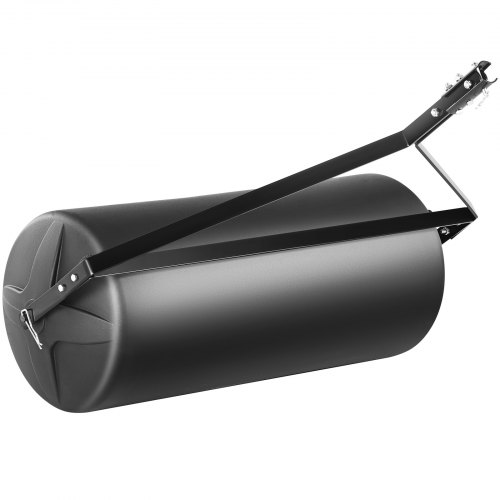
VEVOR Tow-Behind Lawn Roller (400 lb)
Sand/water-filled LLDPE drum with a steel frame and easy-turn plug. Firms new seed beds, presses sod, and smooths frost heave behind a tractor or ATV.
$199.90
Check Price at VEVOR
VEVOR 40" Tow-Behind Plug Aerator
Pull-behind core aerator with iron spikes and a universal hitch. Relieves compaction and opens the soil so water, air, and fertilizer reach the roots.
$192.99
Check Price at VEVOR
VEVOR 30" Lawn Sweeper (12 Cu. Ft. Hopper)
Spinning-brush sweeper with adjustable height and a 12 cu. ft. hopper. Collects leaves, grass clippings, and debris in a single pass to save raking.
$123.17
Check Price at VEVORFrequently Asked Questions
What is the difference between a lawn roller and an aerator?
Should I roll or aerate my lawn?
Can I use a lawn roller to fix a bumpy lawn?
Do I need both a roller and an aerator?
Sources & References
- University of Minnesota Extension: Seeding and sodding home lawns for seed/sod preparation, contact, and light rolling guidance.
- University of Minnesota Extension: Thatch control for distinguishing thatch management from compaction relief.
- Tow-behind weight, hitch, speed, and operating limits: the attachment manual and the tow-vehicle manufacturer's operator manual.
- Core-aeration timing varies by turf species and climate; use your state Cooperative Extension turf guidance for the local window.
Related Guides
Keep going, these guides pair well with what you just read.
Best Tow-Behind Attachments
The full guide to carts, aerators, rollers, sweepers, and spreaders.
Read guideBest Lawn Rollers
Our top roller picks, plus when to roll and how full to fill the drum.
Read guideBest Tow-Behind Aerators
If the lawn is compacted, aerate instead of rolling.
Read guidePlug vs Spike Aerator
If you need to aerate, which aerator actually works.
Read guideLawn Sweeper vs Bagger
The best way to collect leaves and clippings.
Read guide