Sub-CompactVerifiedCase IH Tractors: Models, History & Buyer Guide
175+ years of American agricultural heritage. Browse every Case IH tractor in our database, compare specs, and find the right model for your farm.
Brand Overview
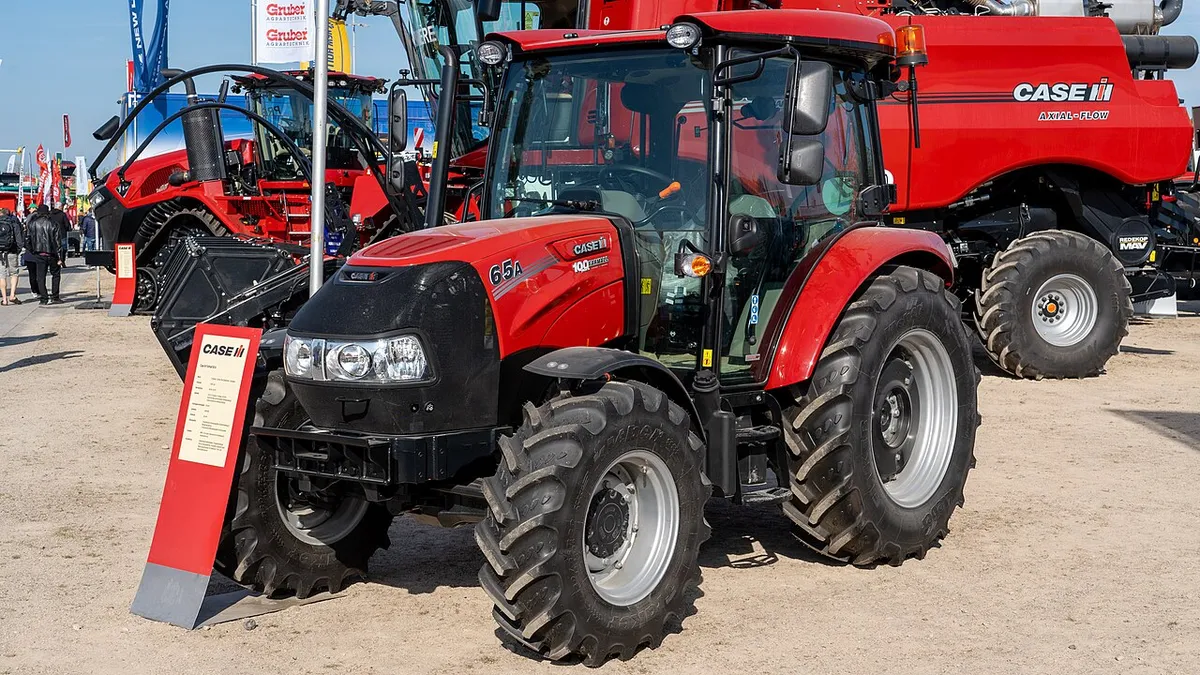
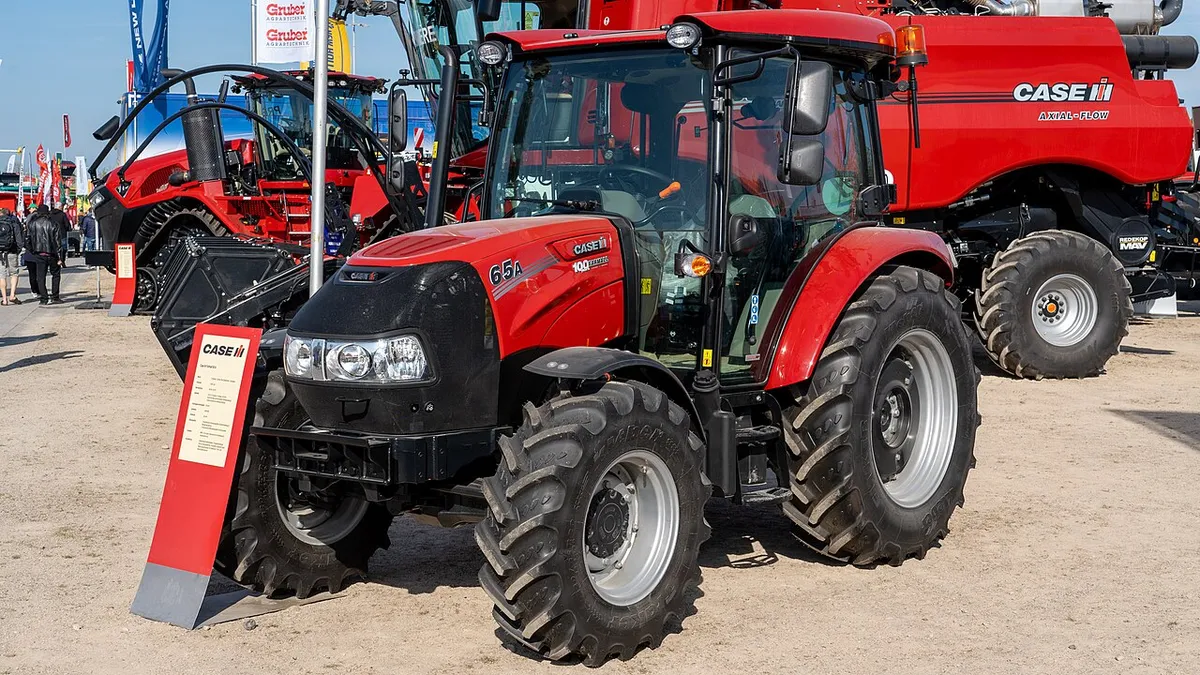
Case IH was formed in 1985 through the merger of J.I. Case and International Harvester's agricultural equipment division, two of the most important names in American farming history. Today, Case IH is particularly strong in utility and large agricultural tractors, where it competes directly with John Deere and New Holland at slightly lower price points.
If you're deciding how much tractor you need, our guides on choosing by acreage, matching a tractor to your tasks, and buying within a budget are a good starting point before diving into individual models.
Quick Brand Snapshot
Is Case IH Worth It?
Case IH competes with John Deere in utility and large ag, often at a slightly lower price for comparable capability. Here's an honest breakdown.
+ Pros
- ✓Strong in large agricultural tractor and combine harvester markets
- ✓AFS (Advanced Farming Systems) precision ag, direct John Deere competitor
- ✓Excellent cab comfort and operator experience in large tractors
- ✓Long American heritage, IH + Case = 175+ years combined history
- ✓Good value vs. John Deere in the large ag and Maxxum utility segment
- ✓900+ dealer locations across North America
− Cons
- −Limited compact tractor lineup, not competitive with Kubota or John Deere compact
- −Dealer network smaller than John Deere or Kubota overall
- −Weaker brand recognition in the under-60 HP segment
- −Focus on large agriculture means less depth in small-farm categories
- −Shares platforms with New Holland, some prefer more distinct identity
★ Best For
- →Buyers in the 75 HP and above utility or large ag market
- →Operations comparing John Deere and wanting comparable tech at lower cost
- →Commercial farms running combines and large tractors together
- →Buyers with strong local Case IH dealer support
- →IH loyalists who value the brand heritage
Not sure which model fits your situation? See the most commonly purchased Case IH tractors, with a plain-language breakdown of who each one is for.
View Popular Models →Most Popular Case IH Tractors
Eight of the most-researched models across the lineup, each with a plain-language explanation of why it matters and who it's best for.
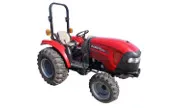
Case IH Farmall 25A
24.6 HP entry point to the Farmall lineup. Genuine 3-point hitch and PTO capability in a sub-compact footprint, straightforward and reliable.
Best for: Property owners and hobby farmers needing basic tractor functionality on a budget.
Case IH Farmall 35C
36 HP with hydrostatic transmission option. The C-series brings modern ergonomics and loader compatibility to the proven Farmall platform.
Best for: Small farms and property owners running a loader, box blade, and light PTO implements.
Case IH Farmall 45C
44 HP compact with excellent ergonomics and a smooth hydrostatic transmission. Pairs well with Case IH's front loader package.
Best for: Hobby farms and small operations needing a versatile all-around compact tractor.
Case IH Farmall 55C
55 HP bridges compact and utility class. The Farmall 55C offers genuine utility capability without the footprint of a full utility tractor.
Best for: Growing operations that need more than a compact but not a full 75+ HP utility machine.
Case IH Farmall 75C
76 HP utility Farmall with solid hydraulics and PTO capacity for demanding implements. A popular choice on livestock farms.
Best for: Livestock operations and hay producers needing reliable utility performance in the 75 HP class.
Case IH Maxxum 115
116 HP Maxxum with multi-controller and excellent operator comfort. Competes directly with New Holland T6 and John Deere 6R at a lower price point.
Best for: Commercial farms and contractors running mixed daily operations in the 100–120 HP range.
Case IH Puma 165
165 HP Puma with AFS precision ag integration. A workhorse in the mid-large utility segment, competing directly with John Deere 7R.
Best for: Large mixed farms running planting, tillage, and loader work with precision ag requirements.
Case IH Magnum 265
265 HP Magnum with full AFS Connect technology. The Magnum series is Case IH's large ag flagship and a direct competitor to the John Deere 8R.
Best for: Large commodity farms running row crops, grain, and large-scale tillage operations.
Want to compare specs side-by-side? Browse the full 99-model database below, filtered by category, sorted by horsepower.
Browse All Models →Explore Case IH Tractor Models
The database below covers 99 Case IH models, organized by category and sorted by horsepower. Each model page includes verified engine specs, transmission options, PTO output, hydraulics, and pricing where available.
Not sure where to start? Browse by:
- →Property size , match tractor class to your acreage
- →Primary task , loader work, mowing, hay, tillage, and more
- →Budget , see what each price range gets you across brands
Sub-Compact Tractors
View all Sub-Compact →
Sub-CompactVerified
Sub-CompactVerifiedCompact Tractors
View all Compact →Showing 6 of 10 compact tractors
View all 10 →Utility Tractors
View all Utility →Showing 6 of 87 utility tractors
View all 87 →Still narrowing it down? Our buying guides can help you match the right horsepower class and category to your specific situation.
Which Case IH Is Right for You?
Use this as a quick-reference guide. For a deeper breakdown, choosing by acreage and matching a tractor to your tasks cover the decision in more detail.
SSmall Farms & Hobby Operations
- →Under 50 HP: the Farmall 25A, 35C, or 45C are the most accessible compact options in the lineup
- →The Farmall C-series offers a hydrostatic transmission option, simplifying operation for first-time buyers
- →Case IH's compact lineup is narrower than Kubota or John Deere, if sub-25 HP is your priority, consider those brands first
- →All Farmall models support factory-matched front loader packages from Case IH
LMid to Large Farm Operations
- →75–120 HP: the Farmall 75C and Maxxum 115 are strong value options vs. John Deere 5 and 6 Series
- →Maxxum series is particularly well-regarded for livestock and hay operations, comfortable cab, reliable PTO performance
- →Puma series (150–260 HP) handles intensive large-farm work and competes directly with New Holland T7 and John Deere 7R
- →AFS Connect telematics available on Puma and Magnum series, real-time machine monitoring and remote diagnostics
AGLarge-Scale Commodity Farming
- →The Magnum series is Case IH's flagship for row crop and grain operations, competing directly with the John Deere 8R
- →Steiger four-wheel-drive tractors (425–785 HP) are designed for the largest commercial grain and row crop farms
- →AFS (Advanced Farming Systems) includes GPS autosteer, section control, and yield mapping, directly competitive with John Deere's precision ag suite
- →Case IH Axial-Flow combines pair well with Magnum and Steiger tractors for an integrated precision fleet
$Value vs. John Deere Comparison
- →Case IH typically prices its large utility and large ag tractors slightly below comparable John Deere models, the gap widens at higher horsepower
- →AFS precision ag technology is competitive with John Deere's Operations Center, a key reason commercial buyers consider Case IH
- →Resale values trail John Deere but are stronger than New Holland or Massey Ferguson, factor into total cost calculations
- →For sub-60 HP, John Deere and Kubota are stronger choices, Case IH is most competitive at 75 HP and above
Find a Case IH Dealer
Near You
Search our dealer directory by ZIP code. Sponsored Case IH dealers appear first, with full contact details, services offered, and brands carried.
Or browse all dealers using your current location →ZIP & GPS Search
Find dealers within any radius of your location
Sponsored First
Featured dealers surface at the top of every search
Direct Contact
Phone, address, and website on every listing
Services Listed
Sales, parts, service, and financing noted per dealer
Case IH vs. Other Brands
The right brand depends on your priorities. Here's how Case IH stacks up against its main competitors.
Case IH vs. John Deere →
John Deere vs Case IH — the two most iconic American ag brands head to head. Compare large ag lineups, precision farming tech, pricing, and dealer support to find which red or green brand wins for your operation.
Case IH vs. Kubota →
Kubota vs Case IH — two of North America's top tractor brands serve very different segments. Kubota dominates compact; Case IH leads large ag. Compare specs, pricing, and dealer support to find which fits your needs.
Case IH vs. New Holland →
New Holland vs Case IH — sister brands under CNH Industrial with shared engineering but distinct identities. Compare dealer networks, model lineups, cab design, and pricing to find which CNH brand fits your operation.
Case IH vs. Massey Ferguson →
Case IH vs Massey Ferguson — compare two heritage American ag brands in utility and large ag tractors. Case IH leads on technology; Massey Ferguson wins on simplicity and global value.
Case IH vs. Mahindra →
Case IH vs Mahindra — two very different brands competing in the utility tractor range. Case IH brings American heritage and CNH technology; Mahindra brings aggressive pricing and global scale.
Case IH: A Brief History
Jerome Increase Case founds the J.I. Case Threshing Machine Company in Racine, Wisconsin. The company quickly becomes a major force in grain threshing and agricultural machinery.
J.I. Case manufactures its first steam engine. The company builds a reputation for large, powerful machines suited to the demands of expanding American farms.
International Harvester is formed from the merger of five farm equipment companies (McCormick, Deering, and others) becoming one of the largest agricultural equipment manufacturers in the world.
International Harvester's Farmall brand becomes iconic in American farming. The red tractors are a fixture on farms across the Midwest and South.
Tenneco merges J.I. Case with International Harvester's agricultural operations to form Case IH, combining over 175 years of agricultural history. The red color scheme carries forward from IH.
Case IH merges with New Holland to form CNH (Case New Holland) under Fiat's ownership, creating one of the largest agricultural equipment companies in the world.
Case IH introduces AFS (Advanced Farming Systems) precision agriculture across its lineup, GPS autosteer, section control, and yield mapping competing directly with John Deere's precision ag platform.
Case IH operates as a brand within CNH Industrial, with manufacturing in Racine (Wisconsin), Basildon (UK), St. Valentin (Austria), and facilities across Brazil, India, and China.
Frequently Asked Questions
Is Case IH the same as International Harvester?
Case IH is the direct successor to both J.I. Case and International Harvester. When Tenneco merged the two companies' agricultural operations in 1985, they took the Case IH name and retained IH's red color scheme. The combined entity carries over 175 years of American agricultural history.
How does Case IH compare to John Deere?
Case IH competes most directly with John Deere in utility and large agricultural tractors. Case IH typically prices slightly below John Deere on comparable large ag models while offering competitive AFS precision ag technology. John Deere has a larger dealer network, stronger compact tractor lineup, and typically better resale values.
Are Case IH and New Holland the same tractor?
Both brands are owned by CNH Industrial and share some manufacturing platforms and components, particularly in mid-utility tractors. They have separate dealer networks, distinct features, and different engineering priorities. They are not interchangeable, though some parts overlap.
Who makes Case IH engines?
Case IH tractors use FPT Industrial engines, also part of CNH Industrial. These are purpose-designed agricultural diesel engines that power both Case IH and New Holland tractors across most segments.
Does Case IH make compact tractors?
Yes, but the Case IH compact lineup is narrower than competitors like Kubota and John Deere. The Farmall series covers the compact and sub-compact range (25A through 55C), but Case IH's real strength is in the 75 HP and above utility and large ag segments.
What is AFS in Case IH tractors?
AFS (Advanced Farming Systems) is Case IH's precision agriculture platform. It includes GPS autosteer, section control, variable rate application, yield mapping, and AFS Connect remote monitoring, directly competitive with John Deere's AutoTrac and Operations Center systems.
Where are Case IH tractors manufactured?
Key manufacturing locations include Racine, Wisconsin (USA), Basildon, England, St. Valentin, Austria, and facilities in Brazil, India, and China. The specific origin varies by model series, Farmall compact tractors and Magnum large ag tractors are primarily produced at North American or European facilities.