The Ultimate Lawn Tractor & Riding Lawn Mower Maintenance Guide (2026)
Last Updated: February 2026
Proper riding lawn mower maintenance is the single most important factor in determining how long your machine lasts and how well it performs. A well-maintained lawn tractor can deliver 10-15 years of reliable service, while a neglected one may struggle after just 3-5 seasons. The difference is not luck or brand loyalty -- it is a consistent maintenance routine.
This comprehensive lawn tractor maintenance guide combines manufacturer-recommended service schedules with real-world homeowner patterns. We cover everything from pre-mow inspections to seasonal winterizing, organized by hour-based intervals so you always know what is due next. Whether you handle lawn mower maintenance yourself or rely on a dealer, this guide gives you the knowledge to keep your mower running at peak performance.
Shopping for a new mower? See our Lawn Tractor Buying Guide for expert recommendations on choosing the right machine for your yard.
Quick Maintenance Checklist
A complete summary of every maintenance task, organized by interval. Download and post in your garage for reference.
| Interval | Tasks | Est. Time | Difficulty |
|---|---|---|---|
| Every Mow | Check oil, inspect fuel/leaks, tire pressure, belts, clean deck, clear debris | 10-15 min | Easy |
| 25 Hours | Service air filter, sharpen blades | 40 min | Moderate |
| 50 Hours | Change oil & filter, grease spindles/pivots | 35 min | Moderate |
| 100 Hours | Replace spark plug, fuel filter, service battery | 35 min | Moderate |
| 200 Hours | Inspect/replace belts, carburetor inspection | 50 min | Advanced |
| Seasonal | Winterize fuel system, battery storage, full cleaning | 30 min | Easy |
| Annual | Full deck deep clean, complete system inspection | 60+ min | Moderate |
Visual Maintenance Timeline
A quick overview of when each maintenance category is due, from pre-mow checks to annual overhauls.
Every Mow
Oil check, tire pressure, deck clean, visual inspection
25 Hours
Air filter service, blade sharpening
50 Hours
Oil & filter change, grease fittings
100 Hours
Spark plug, fuel filter, battery
Seasonal
Winterize fuel, store battery, deep clean
Annual
Belt replacement, full system audit
Before & After Each Mow
These quick checks take under 15 minutes and prevent the vast majority of breakdowns and safety incidents. Make them habit.
Safety Warning
Always disconnect the spark plug wire before performing any maintenance underneath the mower deck. Allow the engine to cool completely before cleaning or touching hot components.
Before Mowing
- 1Check oil level on the dipstick -- add if below the full mark
- 2Inspect fuel level and look for leaks around lines and connections
- 3Check tire pressure (check manual for PSI; uneven tires cause uneven cuts)
- 4Visually inspect belts for cracks, fraying, or glazing
- 5Check that all fasteners and safety shields are secure
- 6Confirm blades are sharp (listen for tearing sounds while mowing)
After Mowing
- 1Allow engine to cool for 5-10 minutes before cleaning
- 2Clean grass clippings from the deck top and sides with a brush or leaf blower
- 3Remove debris from around the engine cooling fins and air intake
- 4Check under the deck for buildup (scrape weekly during heavy mowing season)
- 5Wipe down the seat and controls to prevent UV and moisture damage
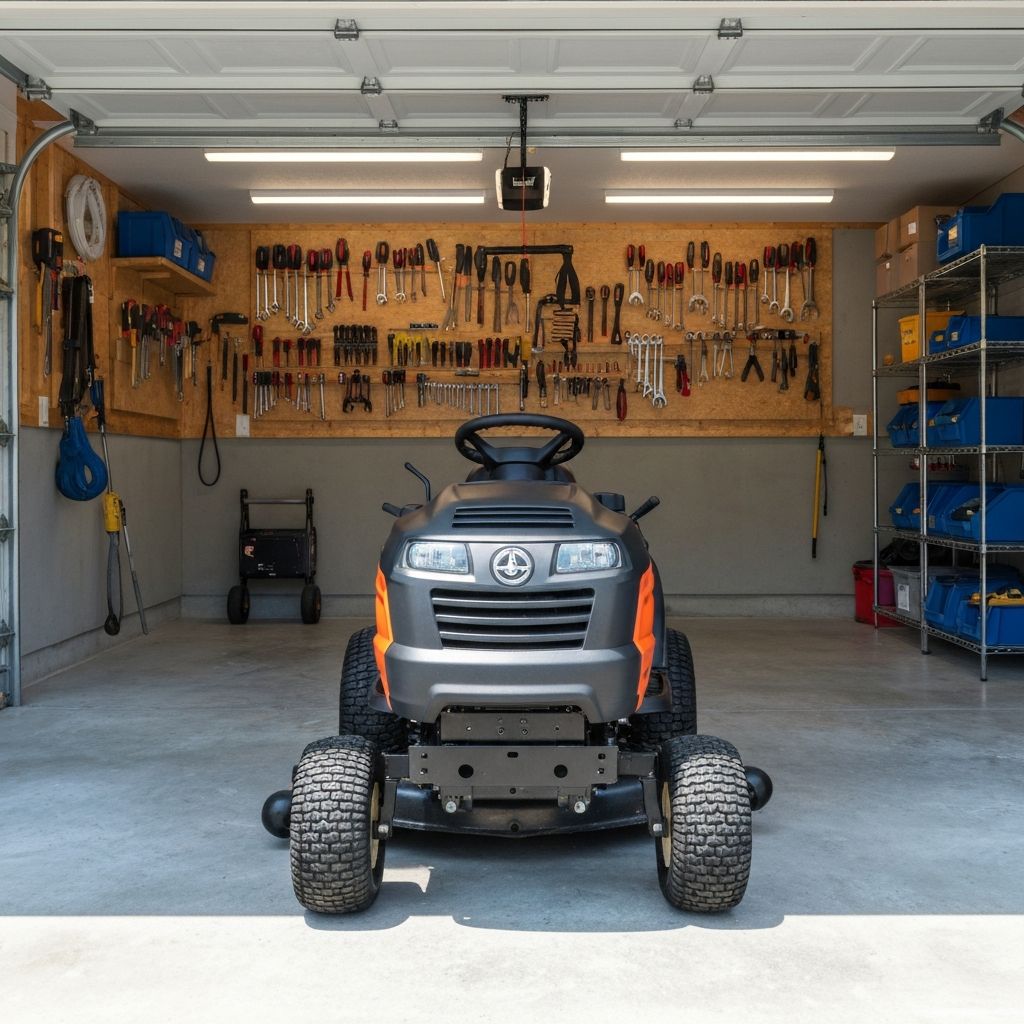
- 6Park in a covered area whenever possible to protect from weather
25-50 Hour Service
These mid-interval tasks keep the engine breathing clean air and the blades cutting cleanly. For most homeowners mowing weekly, this falls roughly every 2-4 weeks during peak season.
| Task | Why It Matters | Signs It's Needed | Est. Cost |
|---|---|---|---|
| Oil change (50 hrs) | Removes contaminants, prevents engine wear | Dark/gritty oil on dipstick, hour meter at 50 | $15-$30 |
| Oil filter replacement (50 hrs) | Prevents particles from circulating back into engine | Replace with every oil change | $8-$15 |
| Air filter service (25 hrs) | Ensures clean airflow, prevents rich-running engine | Visibly dirty, reduced power, increased fuel use | $10-$20 |
| Blade sharpening (25 hrs) | Clean cuts promote healthy grass, reduce engine load | Brown tips on grass, tearing sound, uneven cut | $10-$20/blade |
| Deck deep clean (50 hrs) | Prevents rust, maintains airflow for proper discharge | Clumping, poor discharge, visible buildup | $0 (DIY) |
Pro Tip: Track Your Hours
If your mower does not have an hour meter, install an aftermarket one ($10-$20) or track hours in a notebook. Most residential owners accumulate 50-150 hours per season.
100-200 Hour / Annual Service
These deeper-interval tasks address components that wear slowly but critically. For typical homeowners, this aligns with an annual or biannual service.
| Task | Interval | Why It Matters | Est. Cost |
|---|---|---|---|
| Spark plug replacement | 100 hours | Ensures reliable starting and efficient combustion | $5-$10 |
| Fuel filter replacement | 100 hours | Prevents clogs and fuel starvation | $8-$15 |
| Belt inspection & replacement | 200 hours | Prevents mid-mow breakdowns and uneven cuts | $20-$50 |
| Grease spindles & bearings | 50-100 hours | Prevents seized bearings and expensive repairs | $5 |
| Battery service | 100 hours | Clean terminals prevent starting failures | $0 (DIY) |
| Carburetor inspection | 200 hours | Addresses hard starting, surging, poor idle | $0-$30 |
Electric Rider Maintenance
Electric riding mowers eliminate many gas-engine maintenance tasks but introduce new considerations around battery health and electronics.
What You Skip
- No oil changes
- No spark plugs
- No fuel filters or fuel stabilizer
- No air filter service
- Reduced belt stress (no engine vibration)
- No carburetor maintenance
What You Add
- Battery health monitoring (check charge cycles)
- Charger cord & connection inspection
- Firmware updates (if applicable)
- Winter battery storage at 40-80% charge
- Store battery above freezing temperatures
- Battery replacement every 5-8 years ($500-$1,500)
Winterizing & Storage
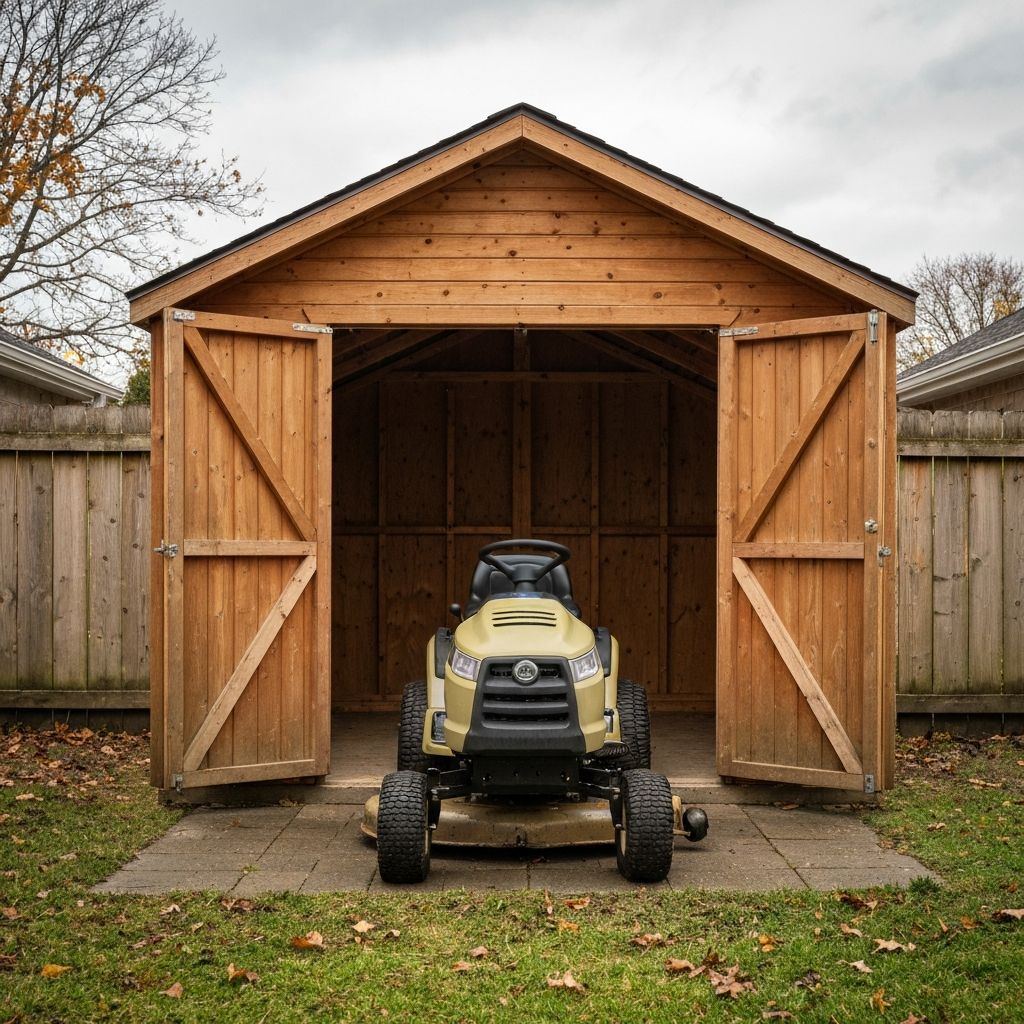
Proper end-of-season storage prevents the most common spring startup failures. This procedure takes under 30 minutes and saves hundreds in potential repair costs.
Step-by-Step Winterizing Procedure
- 1
Add fuel stabilizer to a full tank of fresh gas
Follow the product's ratio instructions
- 2
Run the engine for 5 minutes
This circulates treated fuel through the carburetor and lines
- 3
Clean the mower thoroughly
Scrape under the deck, brush off all grass, wipe down surfaces
- 4
Dry the deck completely
Moisture causes rust, especially on stamped steel decks
- 5
Disconnect the battery
Clean terminals, fully charge, store above freezing
- 6
Store indoors in a dry location
Cover with a breathable tarp -- avoid plastic that traps moisture
Cold Climate Notes
In regions with hard freezes, battery storage above freezing is critical. Consider a trickle charger. Check tire pressure in spring (cold deflates tires). Inspect for rodent damage to wiring and belts after thaw.
Mild Climate Notes
If you mow year-round, skip full winterizing but still add stabilizer if the mower sits unused for 30+ days. Monthly battery checks and periodic oil service remain important even without a formal off-season.
Climate-Based Maintenance
Your local climate directly affects how often maintenance is needed. Adjust your schedule based on these guidelines.
Cold Climates
- Thorough winterizing is mandatory
- Use 5W-30 oil for cold starts below 32 degrees F
- Inspect for rodent damage every spring
- Battery trickle-charge through winter
- Check for rust from salt exposure on stored machines
- Shorter mowing season means fewer oil changes but more critical winterizing
Hot / Dusty Climates
- Service air filter every 15-20 hours (not 25)
- Change oil every 40 hours instead of 50
- Clean cooling fins more frequently
- Check tire pressure more often (heat expands air)
- UV damages seats and plastic -- use a cover
- Longer mowing season means more frequent service overall
High Humidity
- Clean and dry deck after every mow (rust prevention)
- Apply silicone spray under deck monthly
- Check battery terminals for corrosion frequently
- Store indoors whenever possible
- Inspect fuel for water contamination
- Grease fittings more often to prevent moisture intrusion
Maintenance Cost Breakdown
Understanding the true cost of maintenance helps you budget accurately and decide between DIY and dealer service. For homeowners mowing larger properties, see our best mowers for heavy use.
| Item | Frequency | Annual Cost (DIY) |
|---|---|---|
| Engine oil & filter | 1-2x per season | $20-$45 |
| Air filter | 1-3x per season | $10-$40 |
| Spark plug | Annually | $5-$10 |
| Fuel filter | Annually | $8-$15 |
| Blade sharpening / replacement | 2-4x per season | $20-$60 |
| Drive/deck belts | Every 2-3 seasons | $10-$25/yr avg |
| Fuel stabilizer | End of season | $8-$12 |
| Grease | Ongoing | $5-$10 |
| Total Annual (Gas) | -- | $85-$215 |
5-Year Gas Mower Cost
$425 - $1,075
DIY maintenance over 5 years, assuming typical residential use of 50-150 hours per season.
5-Year Electric Mower Cost
$150 - $400
Electric riders eliminate oil, filters, and fuel costs. Main expenses are blades and eventual battery replacement ($500-$1,500 in year 5-8).
Troubleshooting Matrix
Diagnose common riding mower issues quickly with this reference table.
| Symptom | Likely Cause | Fix | Urgency |
|---|---|---|---|
| Hard starting | Stale fuel, fouled spark plug, dead battery | Fresh fuel + stabilizer, new plug, charge battery | Medium |
| Uneven cut | Dull/unbalanced blades, uneven deck, low tire | Sharpen & balance blades, level deck, set tire PSI | Low |
| Excessive vibration | Damaged blade, worn spindle bearing, loose hardware | Replace blade, check bearings, tighten bolts | High |
| Engine overheating | Blocked cooling fins, low oil, clogged air filter | Clean fins, check oil, replace air filter | High |
| Poor bagging | Dull blades, clogged chute, worn bag, wet grass | Sharpen blades, clear chute, replace bag if torn | Low |
| Belt slipping | Worn/stretched belt, misaligned pulley, debris | Replace belt, check pulley alignment, clean area | Medium |
| Engine surging | Dirty carburetor, old fuel, clogged fuel filter | Clean/rebuild carb, fresh fuel, replace fuel filter | Medium |
Tools Required
Most lawn mower maintenance requires basic hand tools. Here is what to have on hand.
Essential Tools
- Socket wrench set (3/8" and 1/2" drive)
- Oil drain pan
- Oil filter wrench
- Spark plug socket (13/16" or 5/8")
- Tire pressure gauge
- Plastic scraper or putty knife (deck cleaning)
- Wire brush (terminal cleaning)
- Funnel
- Shop rags
- Safety glasses and work gloves
Optional (Nice to Have)
- Bench grinder or angle grinder (blade sharpening)
- Blade balancer ($8-$12)
- Torque wrench (for blade bolt torque specs)
- Battery trickle charger ($20-$40)
- Aftermarket hour meter ($10-$20)
- Grease gun + lithium grease cartridges
- Jack or ramps (for under-deck access)
- Silicone spray (deck anti-stick coating)
DIY vs Dealer Service
Most routine maintenance is straightforward DIY work. But there are times when professional service is the smarter choice.
Best for DIY
- Oil and filter changes
- Air filter replacement
- Spark plug replacement
- Deck cleaning
- Tire pressure checks
- Battery terminal cleaning
- Winterizing
Estimated savings: $100-$200/year vs dealer
Consider a Dealer
- Blade sharpening (if no grinder)
- Belt replacement (complex routing)
- Carburetor rebuild
- Electrical troubleshooting
- Hydrostatic transmission issues
Typical dealer service: $150-$300 annually
Warranty Considerations
- DIY maintenance does not void warranty in most cases
- Keep receipts for oil, filters, parts
- Follow manufacturer intervals exactly
- Use OEM or equivalent parts
- Dealer service creates a documented record
Always check your specific warranty terms
Maintenance Myths Debunked
Misinformation leads to wasted money or neglected maintenance. Here is the truth behind common riding mower myths.
Myth: "Premium fuel improves performance"
Truth: Small engines are designed for regular 87-octane fuel. Premium fuel provides zero benefit and wastes money. The only fuel consideration that matters is freshness -- use fuel within 30 days or add stabilizer.
Myth: "Blades only need sharpening once per year"
Truth: Blades should be sharpened every 20-25 hours of use, which is 2-4 times per season for most homeowners. Annual sharpening means you are mowing with dull blades for months, damaging your grass and overworking the engine.
Myth: "If it starts fine, the oil is fine"
Truth: Oil degrades chemically over time and with use, even if the engine starts perfectly. Contaminated oil accelerates internal wear that is invisible until serious damage occurs. Change oil based on hours or schedule, not symptoms.
Myth: "Winterizing is optional in mild climates"
Truth: Fuel degrades within 30 days regardless of temperature. If your mower sits unused for a month or more, untreated fuel forms varnish that clogs the carburetor. Add stabilizer any time the mower will sit idle for extended periods.
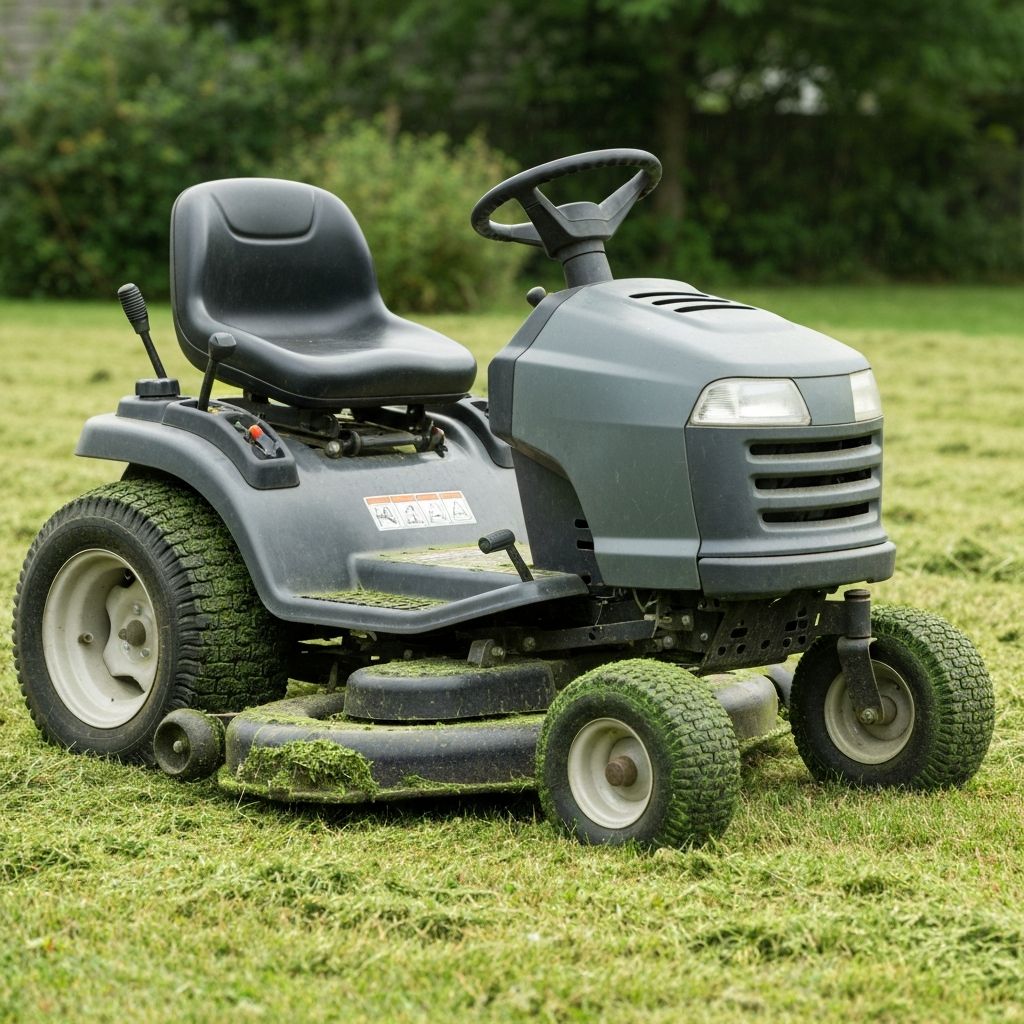
Regular deck cleaning prevents rust, maintains proper airflow, and ensures a clean cut every time.
Interactive Schedule Builder
Answer a few questions about your mowing habits and we will generate a personalized maintenance schedule with cost estimates. For broader task-specific guidance, see our tractors by task guide.
Frequently Asked Questions
How often should I change the oil in my riding lawn mower?
Change engine oil every 50 hours of use or at least once per season, whichever comes first. New mowers should have their first oil change at 5-8 hours. Use the oil weight specified in your owner's manual, typically SAE 10W-30 for most conditions.
How long does a riding lawn mower last?
A well-maintained riding lawn mower lasts 8-15 years or 1,000-1,500 engine hours. Key longevity factors include regular oil changes, blade sharpening, clean air filters, and proper winter storage with fuel stabilizer.
How often should I sharpen lawn mower blades?
Sharpen blades every 20-25 hours of use, roughly every 8-10 mowings. Dull blades tear grass instead of cutting cleanly, causing brown tips and increasing disease susceptibility. A professional sharpening costs $10-$20 per blade.
What type of oil does a riding lawn mower use?
Most riding lawn mowers use SAE 10W-30 for temperatures above 32F. For colder conditions, SAE 5W-30 is recommended. Always check your owner's manual for the manufacturer-specified oil weight and use high-quality detergent oil.
How do I level the deck on my riding mower?
Park on a flat surface, set the deck to its mid-height position, and measure from the blade tips to the ground on all sides. Adjust the deck hangers or leveling bolts until all measurements are equal within 1/8 inch. Check your manual for model-specific procedures.
Why is my riding mower vibrating excessively?
Excessive vibration is usually caused by unbalanced or damaged blades, loose mounting hardware, worn spindle bearings, or a bent crankshaft. Start by inspecting blades for damage and checking all deck mounting bolts are tight.
When should I replace mower belts?
Replace mower belts every 200 hours or when you notice cracks, glazing, fraying, or slipping. A slipping belt causes poor cut quality and can leave uncut strips. Most homeowners replace belts every 2-3 seasons.
Is winterizing a riding mower really necessary?
Yes. Untreated fuel degrades within 30 days, forming varnish that clogs carburetors and fuel lines. Add fuel stabilizer, run the engine for 5 minutes to circulate it, clean the deck, disconnect the battery, and store indoors if possible.
How often should I replace the spark plug?
Replace the spark plug every 100 hours or annually. A worn spark plug causes hard starting, rough running, and increased fuel consumption. Check the gap with a feeler gauge and replace if electrodes are worn or deposits are heavy.
Can I use premium fuel in my riding lawn mower?
Premium fuel is not necessary and provides no performance benefit for small engines. Use regular 87-octane unleaded gasoline. The most important fuel consideration is freshness - avoid fuel older than 30 days without stabilizer.
How do I properly store a lawn mower battery for winter?
Remove the battery, clean the terminals with a wire brush and baking soda solution, fully charge it, and store in a cool dry location above freezing. Use a trickle charger or charge monthly to prevent sulfation.
What does a riding mower annual service cost at a dealer?
A professional annual service typically costs $150-$300 and includes oil and filter change, blade sharpening, air filter, spark plug, belt inspection, deck cleaning, and a multi-point safety inspection. DIY costs $50-$100 for the same service.
How do I clean under the mower deck?
Let the engine cool completely, disconnect the spark plug wire, tilt or raise the mower safely, and use a plastic scraper or putty knife to remove packed grass. Rinse with a garden hose, dry thoroughly, and apply a thin coat of silicone spray to prevent future buildup.
Should I run my mower out of gas for winter storage?
No. Running the tank dry can damage the fuel system and leaves moisture-prone surfaces exposed. Instead, fill the tank with fresh fuel, add stabilizer, and run the engine for 5 minutes to circulate treated fuel throughout the system.
How do I know if my mower needs a new air filter?
Inspect the air filter every 25 hours. Replace it if it is visibly dirty, damaged, or oil-soaked. A clogged air filter restricts airflow, causing the engine to run rich, reducing power, increasing fuel consumption, and accelerating engine wear.
What maintenance is different for electric riding mowers?
Electric riders eliminate oil changes, spark plugs, fuel filters, air filters, and winterizing fuel. Key maintenance includes blade sharpening, belt checks, battery health monitoring, charger inspection, keeping firmware updated, and storing the battery at 40-80% charge over winter above freezing temperatures.