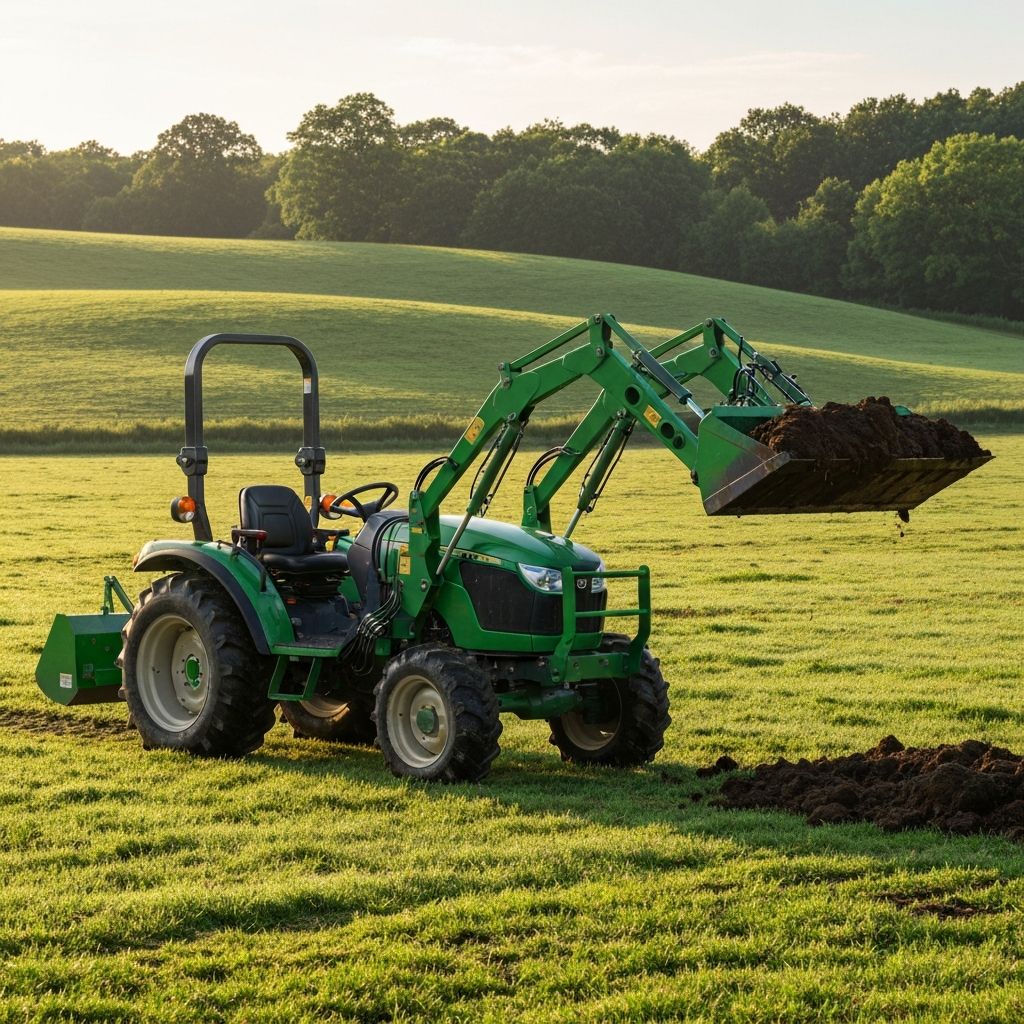
Tractor Buying Guide
How to choose the right tractor for your land, budget, and workload
How This Guide Was Created
This guide was created by the Tractor Iron editorial team using real-world tractor specifications, dealer inspection standards, manufacturer documentation, and long-term ownership considerations.
The goal is to provide neutral, practical guidance based on how tractors are actually selected, used, and maintained in real operating conditions — not promotional rankings or sponsored recommendations.
All content is reviewed for accuracy and updated regularly.
Tractor Recommendation Estimator
Answer a few questions to get personalized tractor recommendations for your property and tasks.
Enter your total working acreage
Your Recommendation
Recommended Class
Compact
Engine HP Range
20-40 HP
PTO HP Range
16-32 HP
Drivetrain
2WD or 4WD
2WD may be adequate for flat terrain and light tasks, but 4WD offers more versatility.
Transmission
Hydrostatic
Hydrostatic transmission is ideal for beginners—smooth, easy operation with foot pedal control.
Recommended Starter Implements
Safety & Practicality Notes
- •Always wear a seatbelt when the tractor is equipped with ROPS.
Printable Tractor Buying Guide
A dealer-ready checklist you can save or print. Includes quick-reference tables, inspection checklists, and key decision guides.
No email required. Instant download in text format for easy printing.
Purchasing a tractor is a significant investment that can have a lasting impact on your productivity and efficiency. With so many options available in terms of size, power, and features, choosing the right tractor requires careful consideration of your specific needs, property characteristics, and long-term goals.
This comprehensive buying guide covers everything from understanding tractor types and horsepower requirements to evaluating transmission systems, comparing new versus used options, and knowing what to inspect before purchase. Whether you're a first-time buyer or looking to upgrade your equipment, this guide will help you make an informed decision.
Do You Need a Tractor?
Tractors are versatile machines that can dramatically boost efficiency and minimize labor on properties of various sizes. Before investing, consider whether a tractor makes sense for your situation.
Common Uses for Tractors
- Mowing pastures and maintaining lawns
- Plowing, tilling, and soil preparation
- Moving materials, dirt, and debris
- Snow removal and winter maintenance
- Landscaping and property improvements
- Hauling and towing equipment
- Fence building and post hole digging
- Hay production and livestock support
Signs You May Need a Tractor
- You own more than an acre of land requiring regular maintenance
- Manual labor for property tasks is becoming time-consuming or physically demanding
- You need to move heavy materials or equipment regularly
- Your current equipment can't handle the scope of work required
Choosing the Best Tractor for Your Property Size
Property size is one of the most important factors in selecting the right tractor. Here's a detailed breakdown to help match your acreage to the ideal tractor class.
acres
Small Properties & Homesteads
Sub-compact tractors (15-25 HP) are ideal for small acreage. These maneuverable machines handle mowing, light loader work, garden tilling, and snow removal efficiently. Their compact size allows easy navigation around barns, trees, and landscaping.
acres
Hobby Farms & Rural Properties
Compact tractors (25-40 HP) provide the versatility needed for hobby farms. They can handle more demanding tasks like brush hogging, grading driveways, and running multiple implements while remaining easy to operate and store.
acres
Working Farms & Large Properties
Mid-range compact to utility tractors (35-70 HP) suit properties of this size. You'll need more power for efficient mowing of large areas, serious loader work, hay production, and running larger implements like rotary cutters and box blades.
acres
Large Farms & Agricultural Operations
Utility and agricultural tractors (70+ HP) are necessary for large-scale operations. These machines efficiently handle row crop work, large hay operations, heavy tillage, and commercial tasks. Consider cab comfort features for long operating hours.
Key Factors to Consider When Buying a Tractor
Horsepower and Engine Size
Horsepower determines your tractor's speed and capability to perform different tasks. Higher horsepower generally means more power, but it should match your specific requirements.
Horsepower Guidelines by Property Size
| Property Size | Recommended HP | Best For |
|---|---|---|
| 1-10 acres | 20-30 HP | Light tasks, mowing, small gardens |
| 10-50 acres | 30-70 HP | General farming, moderate implements |
| 50+ acres | 70+ HP | Heavy-duty tasks, large implements |
Type of Work and Attachments
Tractors can accommodate various attachments and implements that dramatically expand their versatility. The range of compatible implements affects a tractor's value and usefulness.
Common Implements
- Front-end loaders for lifting/moving
- Rotary cutters and mowers
- Rear blades for grading
- Rotary tillers for soil prep
- Post hole diggers
- Backhoes for digging
Matching Implements
- Match implement HP to tractor PTO
- Verify weight capacity limits
- Check physical size compatibility
- Ensure proper hitch connections
- Consult dealer for guidance
Transmission Types
The transmission controls power output, direction, and speed. Different types suit different skill levels and applications.
Hydrostatic
Uses pressurized oil to control speed and direction via foot pedals. Offers smooth, easy operation ideal for beginners. Long lifespan but may have performance variations in extreme temperatures.
Gear-Drive
Classic clutch and gear shift system. More affordable and allows maximum PTO performance. Requires more skill and practice but offers greater control. Best for experienced operators.
Power Shuttle
Automatically clutches and shifts based on speed. Excellent for tasks requiring frequent forward/reverse changes like loader work. Typically features oil-lubricated clutches for smoother operation and longer life.
CVT (Continuously Variable)
Advanced system that automatically adjusts based on pedal input. Offers excellent fuel efficiency and smooth operation. Less common in smaller tractors but increasingly available.
2WD vs 4WD
Drive configuration affects traction, capability, and price. Consider your terrain and typical working conditions.
2WD (Two-Wheel Drive)
- Lower purchase price
- Adequate for flat, dry terrain
- Simpler maintenance
- Best for: Light tasks on level ground
4WD (Four-Wheel Drive)
- Superior traction on slopes
- Better in wet or muddy conditions
- Enhanced pulling power
- Best for: Varied terrain, heavy loads
Maintenance and Service Access
Regular maintenance is crucial for tractor longevity. Research models known for reliability and ease of service before purchasing.
Key Considerations
- Check parts availability and service centers in your area
- Look for models with straightforward maintenance schedules
- Consider dealer support quality and response times
- A reliable brand with good dealer support provides peace of mind
Budget and Long-Term Costs
Your budget determines not just what you can purchase but shapes your entire ownership experience. Consider total cost of ownership, not just the purchase price.
Budget Factors to Include
- Purchase price or financing payments
- Insurance costs
- Fuel consumption
- Regular maintenance and fluids
- Implements and attachments
- Storage requirements
- Future repairs and parts
- Potential upgrades or modifications
Many dealers offer manufacturer financing programs with competitive rates. Some promotions include 0% APR on new tractors. Explore financing options if needed to get the right tractor for your requirements.
Tractor Types and Sizes
Understanding different tractor categories helps you match the right machine to your needs. Each type is designed for specific applications and property sizes.
| Type | Horsepower | Best For | Common Uses |
|---|---|---|---|
| Sub-Compact | 15-25 HP | 1-5 acres, homeowners | Mowing, light hauling, snow removal, garden prep |
| Compact | 25-60 HP | 5-50 acres, hobby farms | Loader work, mowing, landscaping, light farming |
| Utility | 40-100+ HP | 20-100+ acres, farms | Heavy-duty farming, hay production, large implements |
| Agricultural | 85-450+ HP | Large-scale farming | Row crops, plowing, tilling, commercial operations |
Sub-Compact Tractors
With lift capacities under 1,000 pounds, sub-compact tractors are ideal for light work on smaller properties. Their small size makes them maneuverable around barns, trees, and obstacles. They're affordable, easy to operate, and simple to maintain and store.
Browse Sub-Compact TractorsCompact Tractors
Available in various sizes and configurations, compact tractors suit homeowners and hobby farmers with 10-50 acres. They offer flexible operation, are easy to maintain, and can handle diverse tasks from heavy lifting to landscaping.
Browse Compact TractorsUtility Tractors
Utility tractors offer an excellent blend of power and versatility for multi-purpose use. They're compatible with a broad range of implements and feature hydraulic systems and PTO for enhanced capability. Despite their larger size, they're relatively easy to maneuver and fuel-efficient.
Browse Utility TractorsAgricultural Tractors
Perfect for large-scale farming, agricultural tractors deliver powerful performance for heavy-duty fieldwork. They accommodate extensive implements and include safety features like rollover protection, lighting, and seat belts.
Browse Industrial TractorsBuying a New vs Used Tractor
Both new and used tractors can be excellent investments. The right choice depends on your budget, needs, and risk tolerance.
Advantages of Buying New
- Full manufacturer warranty coverage
- Latest technology and efficiency improvements
- Parts availability guaranteed for years
- Energy-efficient and emissions-compliant engines
- Longer overall lifespan ahead
- Manufacturer financing often available
Advantages of Buying Used
- Significant cost savings on purchase price
- Tractors can last decades with proper maintenance
- Slower depreciation than new equipment
- Proven reliability of established models
- May include implements or attachments
- Certified pre-owned programs offer warranties
When Buying Used Makes Sense
Unlike cars that last 10-15 years, a well-maintained tractor can serve for several decades. A 25-year-old tractor in good condition could be perfect for your needs at a fraction of the new price. Used makes particular sense when:
- You have a limited budget but need reliable equipment
- The model has a proven track record of reliability
- Parts are still readily available
- You can verify maintenance history
- A reputable dealer offers warranty or certification
Inspection and Buying Tips
Whether buying new or used, following a systematic approach helps ensure you make a sound investment. Use this checklist when evaluating tractors.
Visual Inspection Checklist
- Check for oil, hydraulic, and coolant leaks
- Examine tires for cracks, cuts, and uneven wear
- Look for rust, corrosion, or structural damage
- Inspect the undercarriage and frame
- Check all lights and electrical systems
- Verify all safety features function properly
Operational Testing
- Start the engine cold and listen for unusual sounds
- Test all transmission functions and gear shifts
- Check hydraulic operation (loader, 3-point hitch)
- Verify PTO engagement and operation
- Take a thorough test drive on varied terrain
- Test brakes and steering response
Documentation Review
- Review total operating hours
- Ask for complete maintenance records
- Verify ownership history
- Check for any outstanding liens
- Review any repair or replacement history
Dealer Considerations
- Verify dealer reputation and reviews
- Ask about warranty coverage and terms
- Inquire about service and support availability
- Confirm parts availability for the model
- Discuss financing and delivery options
Pro Tip: Choose the Right Dealer
When you choose a dealer, you're choosing a long-term business partner. Look for dealers with extensive inventory, organized facilities, quality customer support, and a track record of service. A good dealer can prevent unscheduled downtime and keep your operation productive for years to come.
Frequently Asked Questions
Ready to Find Your Perfect Tractor?
Now that you know what to look for, explore our comprehensive tractor listings or find an authorized dealer near you to start your search.
Explore More
Browse by Category
Explore tractors organized by type: lawn, sub-compact, compact, utility, and more.
Browse by Brand
Compare tractors from John Deere, Kubota, New Holland, Mahindra, and other manufacturers.
Attachment Guide
Learn about loaders, mowers, tillers, and other implements to expand your tractor's capabilities.