Tractor Attachment Compatibility Guide
Match the right attachment to your tractor by verifying hitch category, PTO requirements, hydraulic connections, and lift capacity before you buy.
Last updated: February 2026 — Reviewed for technical accuracy against manufacturer specification sheets and dealer documentation.
- Task-based attachment matching
- 3-point hitch, PTO & hydraulics explained
- Compatibility checklist you can copy before purchase
What Is Tractor Attachment Compatibility?
Tractor attachment compatibility refers to whether a specific implement safely matches your tractor's 3-point hitch category, PTO speed and horsepower, hydraulic connections, and lift capacity. Proper tractor implement compatibility ensures safe operation, full performance, and prevents equipment damage. Understanding what attachments fit my tractor starts with verifying these four specifications against the implement manufacturer's requirements.
How to Know If an Attachment Will Fit Your Tractor
Identify Your Tractor Specs
Look up your tractor's 3-point hitch category, PTO speed and horsepower, number of hydraulic remotes, and rear lift capacity. These are in your operator's manual or on the manufacturer's spec sheet.
Identify the Attachment's Requirements
Every implement lists a required hitch category, minimum PTO HP, hydraulic connections needed, and its own weight. Check the attachment manufacturer's spec sheet before purchasing.
Compare Hitch, PTO, Hydraulics & Lift Capacity
Match your tractor's specs against the attachment's requirements. Hitch category must match. PTO HP must meet or exceed the implement's demand. Hydraulic remotes must be available. Lift capacity must exceed implement weight.
Confirm with Manufacturer or Dealer
Even when specs match on paper, confirm compatibility with the implement or tractor manufacturer. Quick-hitch fitment, driveline length, and mounting dimensions can vary between brands.
Download the Tractor Attachment Compatibility Checklist
Printable PDF version of the 4-step compatibility process. Free download — no signup required.
Task → Best Attachment → Minimum Tractor Requirements
Use this compact tractor attachments list to identify the right attachment for your task, then verify your tractor meets the minimum specifications before purchasing.
| Task | Best Attachment | Tractor Type Match | Minimum Specs to Verify | Why It Matters |
|---|---|---|---|---|
| Driveway Grading | Box Blade | Compact, Utility | Cat 1 hitch, 20+ PTO HP, no hydraulics required | Box blades rely on tractor weight and hitch lift — not PTO — so matching lift capacity to blade weight is the primary concern. |
| Brush Clearing | Rotary Cutter | Compact, Utility | Cat 1 or Cat 2 hitch, 540 PTO, 25+ PTO HP | Rotary cutters draw heavy PTO load. Under-powering a cutter causes stalling, belt damage, and safety risks. |
| Lawn Mowing | Finish Mower | Sub-Compact, Compact | Cat 1 hitch, 540 PTO, 18+ PTO HP | Finish mowers need consistent PTO speed for a clean cut. Width must match available PTO HP — typically 5 HP per foot of cutting width. |
| Moving Pallets / Logs | Pallet Forks or Grapple | Compact, Utility | Loader-equipped, 1,500+ lb lift capacity, 3rd function hydraulics for grapple | Loader lift capacity must exceed load weight. Grapples require a 3rd-function hydraulic valve. Rear ballast is essential for stability. |
| Fence Building | Post Hole Digger | Compact, Utility | Cat 1 hitch, 540 PTO, 20+ PTO HP, adequate tractor weight for stability | Augers can bind in rocky soil, transferring torque back to the tractor. Heavier tractors resist spinning better. |
| Snow Removal | Snow Blower or Front Blade | Sub-Compact, Compact | Cat 1 hitch, 540 PTO, 20+ PTO HP for blower; loader-mount for blade | PTO snow blowers need sustained horsepower. Front blades mount on loaders and require adequate tractor weight and 4WD for pushing. |
| Garden Preparation | Rotary Tiller | Sub-Compact, Compact | Cat 1 hitch, 540 PTO, 15+ PTO HP | Tillers draw moderate PTO load but can stall in heavy clay. Match tiller width to PTO HP — roughly 4 HP per foot of tilling width. |
| Post Hole Digging | PTO Auger | Compact, Utility | Cat 1 hitch, 540 PTO, 18+ PTO HP, 1 rear remote (hydraulic models) | Auger diameter determines torque demand. 9-inch augers need less HP than 12-inch. Rocky soil increases demand significantly. |
Minimum Tractor Specifications by Attachment Type
Quick-reference table showing the minimum tractor specs required for the most common attachments.
| Attachment | Min PTO HP | Hitch Category | Hydraulic Requirement | Typical Tractor Size |
|---|---|---|---|---|
| Rotary Cutter | 25-40 | Cat 1 / Cat 2 | None | Compact to Utility |
| Finish Mower | 18-30 | Cat 1 | None | Sub-Compact to Compact |
| Box Blade | N/A (no PTO) | Cat 1 / Cat 2 | None | Compact to Utility |
| Land Plane | N/A (no PTO) | Cat 1 / Cat 2 | None | Compact to Utility |
| Post-Hole Digger | 18-25 | Cat 1 | None (PTO) / 1 remote (hydraulic) | Compact to Utility |
| Grapple | N/A (loader) | Loader mount | 3rd function required | Compact to Utility |
| Pallet Forks | N/A (loader) | Loader mount | None | Sub-Compact to Utility |
| Snow Blower | 20-35 | Cat 1 | 1 rear remote (chute rotation) | Sub-Compact to Compact |
3-Point Hitch Categories Explained (Cat 0–IV)
The 3-point hitch is the standard mounting system for rear implements. Hitch category is determined by pin size and spacing, and must match between tractor and implement.
| Category | Typical HP Range | Common On | Typical Implements |
|---|---|---|---|
| Cat 0 | Up to 20 HP | Sub-Compact Tractors | Small tillers, lightweight blades, landscape rakes |
| Cat 1 | 20-50 HP | Compact Tractors | Rotary cutters, box blades, finish mowers, post hole diggers |
| Cat 2 | 40-100 HP | Utility Tractors | Heavy-duty rotary cutters, disc harrows, large mowers |
| Cat 3 | 80-225 HP | Row-Crop / Ag Tractors | Plows, large planters, heavy disc harrows |
| Cat 4 | 180+ HP | Large Ag Tractors | Large tillage, heavy-duty commercial implements |
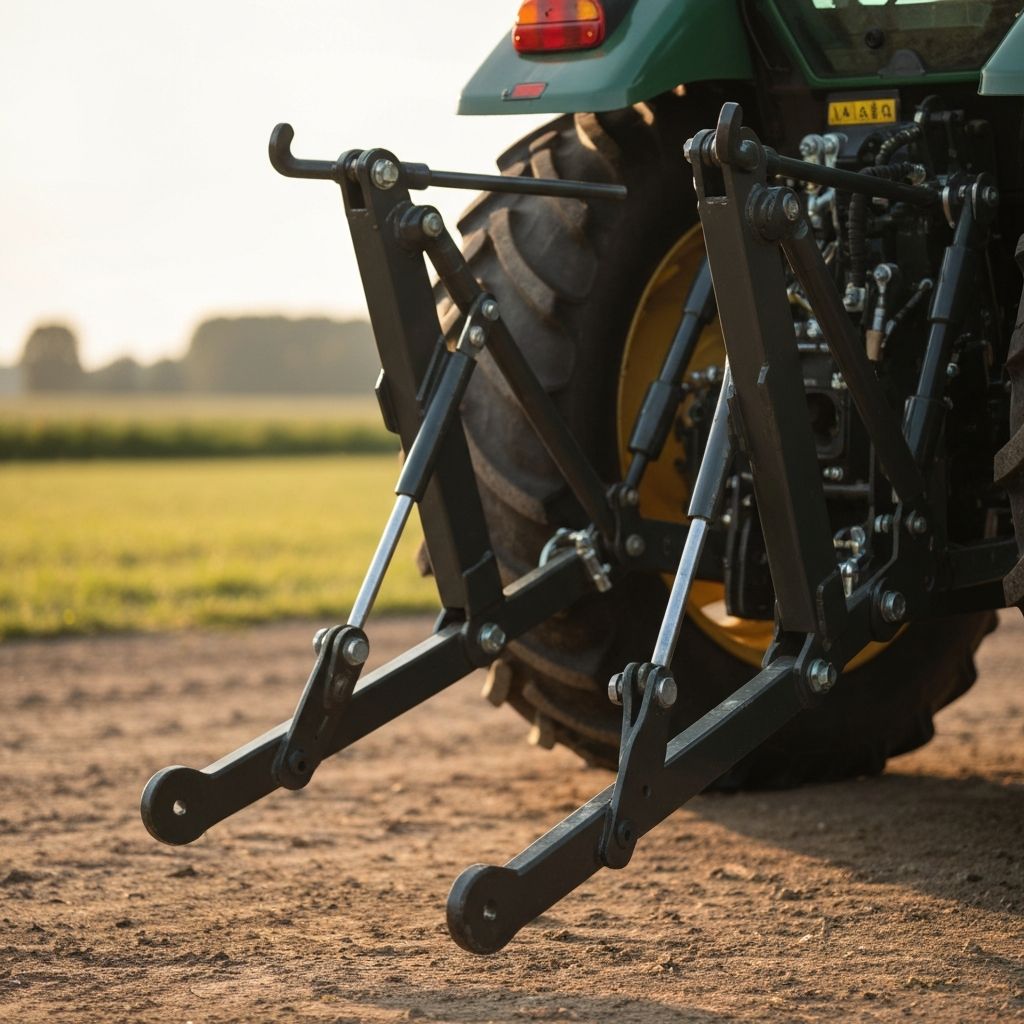
Not all Cat 1 implements fit all Cat 1 quick hitches without bushings. Pin diameter and spacing can vary slightly between manufacturers. Always test-fit before final purchase.
PTO Speed and PTO Horsepower
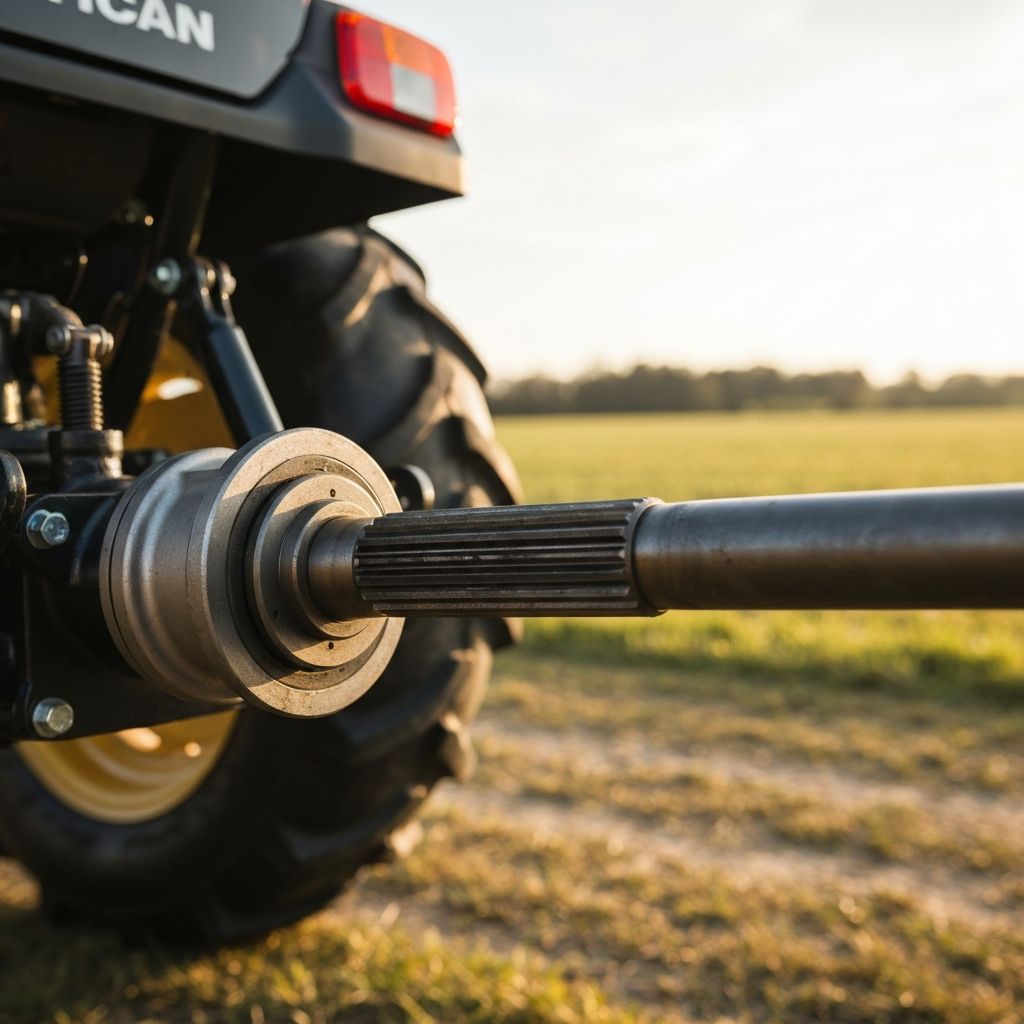
The PTO (power take-off) transfers engine power to rear-mounted implements through a rotating shaft. Understanding PTO speed and PTO horsepower is essential for safe, effective attachment use.
540 RPM is the Standard
Nearly all compact and utility tractor implements are designed for 540 RPM PTO speed. Some larger agricultural tractors offer 1,000 RPM PTO for high-demand implements. Running an implement at the wrong PTO speed causes damage and is dangerous.
Engine HP vs PTO HP
PTO horsepower is typically 80-85% of engine horsepower due to drivetrain losses. When an implement lists a minimum HP requirement, it means PTO HP — not engine HP. A 40 HP engine typically delivers 32-34 PTO HP.
Mid PTO for Mower Decks
Sub-compact and some compact tractors offer a mid-mount PTO (typically at 2,000 RPM) specifically for belly-mounted mower decks. This is separate from the rear PTO and cannot power rear-mounted implements.
Match Implement Width to PTO HP
A common rule: rotary cutters need about 5 PTO HP per foot of cutting width, and tillers need about 4 PTO HP per foot. A 6-foot rotary cutter needs roughly 30 PTO HP. Under-powering an implement causes stalling, excessive wear, and poor results.
Hydraulic Remotes and 3rd Function Explained
Rear Remotes for Hydraulic Implements
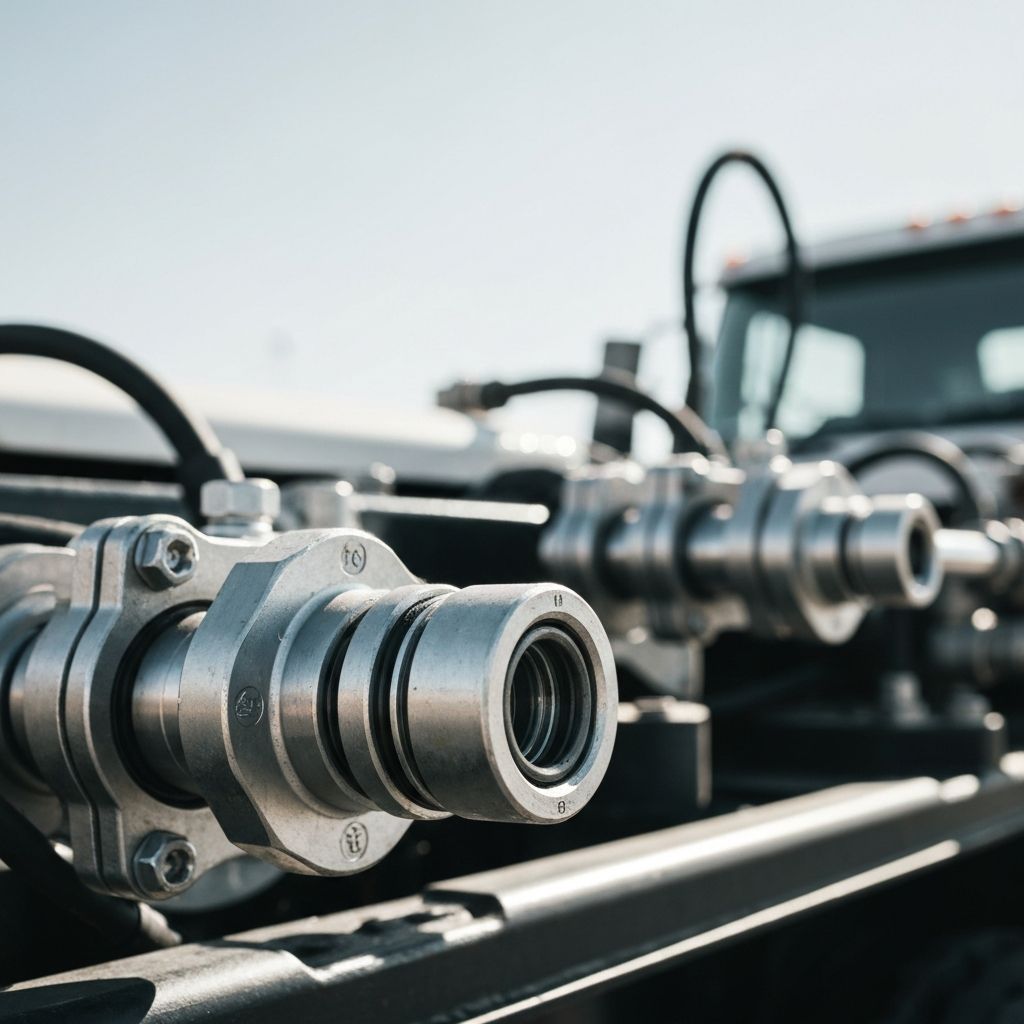
Rear hydraulic remotes are quick-connect couplers at the back of the tractor that supply pressurized hydraulic fluid to implements. Common hydraulic implements include log splitters, hydraulic augers, and hydraulic-top-link cylinders. Each remote provides one circuit (two hoses — pressure and return).
3rd Function for Grapples
A standard loader uses two hydraulic functions: lift/lower and curl/dump. A grapple adds a third function — open/close the grapple jaws. This requires a 3rd-function hydraulic valve, which adds a dedicated circuit with two additional hoses routed to the loader.
Diverter vs Dedicated Circuit
A diverter valve shares an existing hydraulic circuit between two functions (switching between them with a toggle). A dedicated circuit provides independent hydraulic flow. Dedicated circuits offer better performance but cost more. Diverters are a budget-friendly alternative for occasional grapple use.
Count your hoses before you buy. Before purchasing any hydraulic implement, count the number of hydraulic couplers available on your tractor. If an implement requires more circuits than you have, you will need to add a remote valve or diverter.
Common Tractor Attachment Compatibility Mistakes
These are the most frequent errors buyers make when purchasing tractor attachments. Each one is avoidable with basic spec verification.
- Buying a rotary cutter wider than your tractor's PTO HP can handle — a 6-foot cutter in heavy brush can easily demand 35+ PTO HP.
- Ignoring implement weight relative to your tractor's 3-point lift capacity — if your tractor lifts 1,200 lbs and the implement weighs 1,400 lbs, it won't clear the ground.
- Skipping rear ballast when using a front loader — this is the most common cause of rear-wheel lift and tipping incidents.
- Assuming every compact tractor is Cat 1 compatible — some sub-compacts use Cat 0 hitches, and some utility tractors use Cat 2.
- Not verifying hydraulic requirements before buying a grapple — grapples require a 3rd-function hydraulic valve that many tractors don't include from the factory.
Many compatibility problems happen not because the hitch fits — but because PTO horsepower or hydraulic requirements are overlooked.
Common Attachment Comparisons
Rotary Cutter vs Finish Mower
Rotary Cutter
- Handles tall grass, brush, and saplings up to 2 inches
- Leaves a rough cut — not for lawns
- Requires 25+ PTO HP for a 5-foot deck
- Best for pastures, fence lines, and overgrown areas
Finish Mower
- Produces a clean, manicured lawn-quality cut
- Cannot handle brush or tall weeds
- Requires 18+ PTO HP for a 5-foot deck
- Best for established lawns and maintained areas
Box Blade vs Land Plane
Box Blade
- Scarifier teeth break up compacted material
- Can cut, grade, and backfill in one pass
- Adjustable depth via top link and shoes
- Better for initial grading and driveway repair
Land Plane
- Passive float design follows existing contour
- Smooths and levels without digging
- No scarifier teeth — lighter draft
- Better for maintaining already-graded surfaces
Grapple vs Pallet Forks
Grapple
- Grabs irregular objects — logs, brush, debris
- Requires 3rd-function hydraulic valve
- Higher cost and more complex installation
- Ideal for land clearing and brush cleanup
Pallet Forks
- Lifts flat, stable loads — pallets, lumber, bales
- No hydraulics required beyond loader
- Lower cost and simpler to attach
- Ideal for material handling and farm supplies
PTO Post Hole Digger vs Hydraulic Auger
PTO Post Hole Digger
- Powered by tractor PTO — reliable and common
- Lower cost than hydraulic models
- Fixed speed — harder to control in rocky soil
- Standard choice for most fence-building projects
Hydraulic Auger
- Powered by hydraulic remotes — variable speed control
- Better for rocky or variable soil conditions
- Higher cost, requires 1+ rear remote
- Preferred for commercial and difficult terrain work
Match Attachments to Your Tractor Category
Lawn Tractors
- Mower decks
- Utility carts
- Snow blades
Sub-Compact Tractors
- Front loader
- Finish mower
- Rotary tiller
Compact Tractors
- Rotary cutter
- Box blade
- Post hole digger
Utility Tractors
- Disc harrow
- Heavy rotary cutter
- Round baler
Industrial Tractors
- Backhoe
- Large loader bucket
- Commercial mower
Frequently Asked Questions
How do I know my tractor's 3-point hitch category?
Check your tractor's operator's manual or the manufacturer's spec sheet. The hitch category is determined by the spacing of the lower lift arm pins and the pin diameter. Sub-compacts are typically Cat 0 or Cat 1, compacts are Cat 1, and utility tractors are Cat 1 or Cat 2. You can also measure the lower link pin diameter: Cat 0 uses 5/8-inch pins, Cat 1 uses 7/8-inch pins, and Cat 2 uses 1-1/8-inch pins.
What PTO speed do most attachments require?
The vast majority of compact and utility tractor attachments are designed for 540 RPM PTO speed. Some larger agricultural implements require 1,000 RPM PTO, but these are uncommon on tractors under 75 HP. Always verify the implement's required PTO speed before connecting — running a 540 RPM implement at 1,000 RPM can cause serious damage or injury.
What's the difference between engine HP and PTO HP?
Engine horsepower is the total power the engine produces. PTO horsepower is the power available at the PTO shaft after drivetrain losses. PTO HP is typically 80-85% of engine HP. When an implement lists a minimum PTO HP requirement, compare it to your tractor's PTO HP — not engine HP. For example, a tractor rated at 40 engine HP may only deliver 32-34 PTO HP.
Do I need rear hydraulics for a grapple?
Yes. A grapple requires a 3rd-function hydraulic valve to open and close the grapple jaws independently of the loader's lift and curl functions. Many tractors do not include a 3rd function from the factory, so you may need to add an aftermarket kit. Some tractor models offer a factory-installed 3rd function as an option — check before purchasing.
Can a Cat 1 implement fit a Cat 2 tractor?
Yes, with reducer bushings. Cat 1 implements have smaller lift-arm pin holes than Cat 2 tractors, but inexpensive steel bushings allow a Cat 2 tractor to accept Cat 1 implements. However, a Cat 2 implement will not fit a Cat 1 tractor — the pins are too large. Bushings are widely available at farm supply stores.
How do I prevent tipping with heavy attachments?
Always add ballast to the opposite end of the tractor from the heavy implement. When using a front loader, add rear wheel weights or suitcase weights to the 3-point hitch. When using heavy rear implements, add front suitcase weights. Keep loads low during transport, avoid steep side-slopes, and never exceed your tractor's rated lift capacity.
What attachments are best for 5 acres?
For a typical 5-acre property, the most useful attachments are a front-end loader for moving materials, a rotary cutter or finish mower for maintaining grass, and a box blade for driveway grading. A sub-compact or compact tractor in the 25-35 HP range can handle all three. Add a post hole digger if you plan to build fencing.
Can lawn tractors use 3-point implements?
Standard lawn tractors do not have a 3-point hitch or PTO — they are designed only for mower decks and light pull-behind attachments like carts and aerators. If you need 3-point hitch capability, you need at minimum a sub-compact tractor. Some manufacturers offer sub-compact models that bridge the gap between lawn tractors and full compact machines.
Ready to Find the Right Tractor?
Browse tractor models by category, compare specifications side by side, or find a dealer near you to confirm attachment compatibility in person.