Sub-Compact Tractor Buying Guide (2026): Choose the Right 18–25 HP Tractor for Your Property
Last Updated: February 2026
Last Updated: February 2026
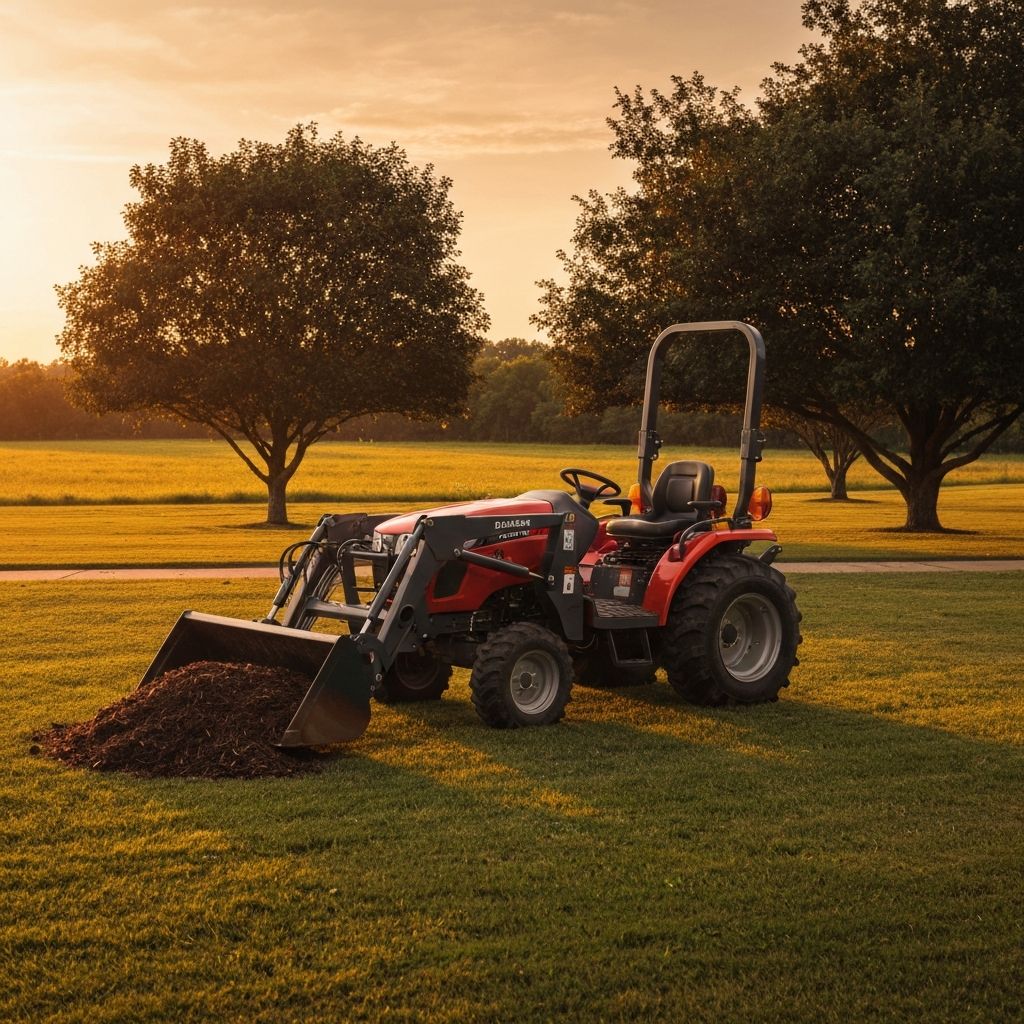
A sub-compact tractor is a small-frame utility machine in the 18–25 engine horsepower class, designed for property owners managing 1 to 10+ acres. These tractors bridge the gap between a lawn tractor (which can only mow) and a full-size compact tractor (which may be overkill for a small property). Sub-compacts handle mowing, light grading, moving material with a front-end loader, snow removal, and driveway maintenance—all with a single machine.
Sub-compacts are versatile but not limitless. They are not designed for heavy ground engagement like large-scale tillage or commercial farm work. This guide covers everything you need to confidently choose, equip, and purchase the best sub-compact tractor for your property—including downloadable dealer checklists, sortable comparison tables, and an interactive setup picker.
Built by the Tractor Iron Home editorial team. For task-specific recommendations, see our Tractors by Task guide, our Best Tractors for Mowing page, or our Tractor Attachment Guide.
Follow these seven steps to narrow your choices before visiting a single dealer.
List your top 3-5 tasks
Mowing, loader work, grading, snow removal, tilling? Knowing your primary jobs determines every other spec.
Confirm sub-compact is the right size
If you are managing 1-10 acres with light-to-moderate tasks, a sub-compact (18-25 hp) fits. Over 15 acres with heavy ground work? Consider a compact.
Match PTO hp to your primary implement
Your heaviest PTO-driven implement (rotary cutter, tiller, snowblower) dictates minimum PTO horsepower. Add a 10-15% margin.
Choose loader capacity + hydraulic flow targets
Set a minimum lift capacity (at pivot pins and 500 mm forward) and check hydraulic flow in GPM for loader speed.
Choose transmission: HST vs gear
HST is easier and better for loader/mowing. Gear is more efficient for steady PTO work like tilling.
Choose attachments in priority order
Loader, box blade, pallet forks first. Then add based on your specific property needs.
Compare 2-3 models with a simple checklist
Use our dealer checklist below to walk into a dealership prepared.
Pro Tip
Write down your top 3 tasks and bring them to the dealer. Every spec decision flows from your task list. If you start with the tractor instead of your tasks, you will overpay or undersize.
Safety Warning
Always wear your seatbelt with the ROPS (roll-over protective structure) in the upright, locked position. Never fold the ROPS down on slopes. Sub-compact tractors are light; rollover risk is real, especially on hills with a raised loader.
Sub-compacts fill a specific niche. Understanding where they sit in the tractor size spectrum helps you avoid buying too small or too large.
| Tractor Size | Typical HP | Best For | When to Move Up |
|---|---|---|---|
| Lawn / Garden Mower | < 18 hp | Pure lawn mowing | Need a loader or 3-point implements |
| Sub-Compact | 18–25 hp | 1–10+ acres, mowing + light loader / grading | Heavy ground work, bigger implements |
| Compact | 25–50 hp | 10–50 acres, heavier grading / brush / hay tools | Large tillage, heavy constant use |
| Utility / Row-Crop | 50+ hp | Commercial farming | — |
Dealer brochures list dozens of specs. These are the ones that determine whether a sub-compact tractor will actually handle your work.
Engine HP is measured at the flywheel. PTO HP is what actually reaches your implements after drivetrain losses (typically 15-20% less). PTO HP is the number that determines what implements you can run.
| Engine HP | Typical PTO HP | Implements Supported |
|---|---|---|
| 18-20 | 13-16 | Finish mower, small tiller |
| 21-23 | 15-18 | Rotary cutter, mid tiller, snowblower |
| 24-25 | 17-20 | 5' rotary cutter, rear-mount snowblower |
Always match your heaviest PTO implement's minimum requirement to your tractor's PTO HP, then add a 10-15% margin. Running implements at the tractor's maximum PTO output causes strain, overheating, and premature wear.
Example: If a rotary cutter needs 15 PTO HP minimum, target at least 17 PTO HP on your tractor for a safe operating margin.
Loader capacity is measured two ways: at the pivot pins (higher number, less realistic) and at 500 mm forward (lower number, actual working capacity with material in the bucket). Always compare the 500 mm forward number when shopping.
Typical sub-compact: 600-1,100 lbs at pivot pins, 400-700 lbs at 500 mm forward.
Hydraulic flow (measured in gallons per minute) determines how fast your loader, steering, and other hydraulic functions operate. Higher GPM means a more responsive loader and smoother power steering.
Typical sub-compact: 4-8 GPM. Higher-end models reach 7-8 GPM for noticeably faster loader cycles.
All sub-compact tractors use a Category 1 three-point hitch, which is the standard for implements in this size class. Rear lift capacity determines how heavy an implement you can raise—typically 600-1,200 lbs on sub-compacts. Ensure it exceeds the weight of your heaviest rear implement.
Heavier tractors are more stable with a loaded loader but compact turf more. A longer wheelbase improves slope stability. Tire choices include:
Common Mistake
Buying too light and under-ballasted for loader work. A 1,500 lb sub-compact lifting 600 lbs at the front without rear ballast will have its rear wheels leave the ground. Always plan ballast as part of the purchase—not an afterthought.
Transmission choice is one of the biggest decisions in a sub-compact purchase. Most buyers choose hydrostatic (HST), but gear transmissions have their place.
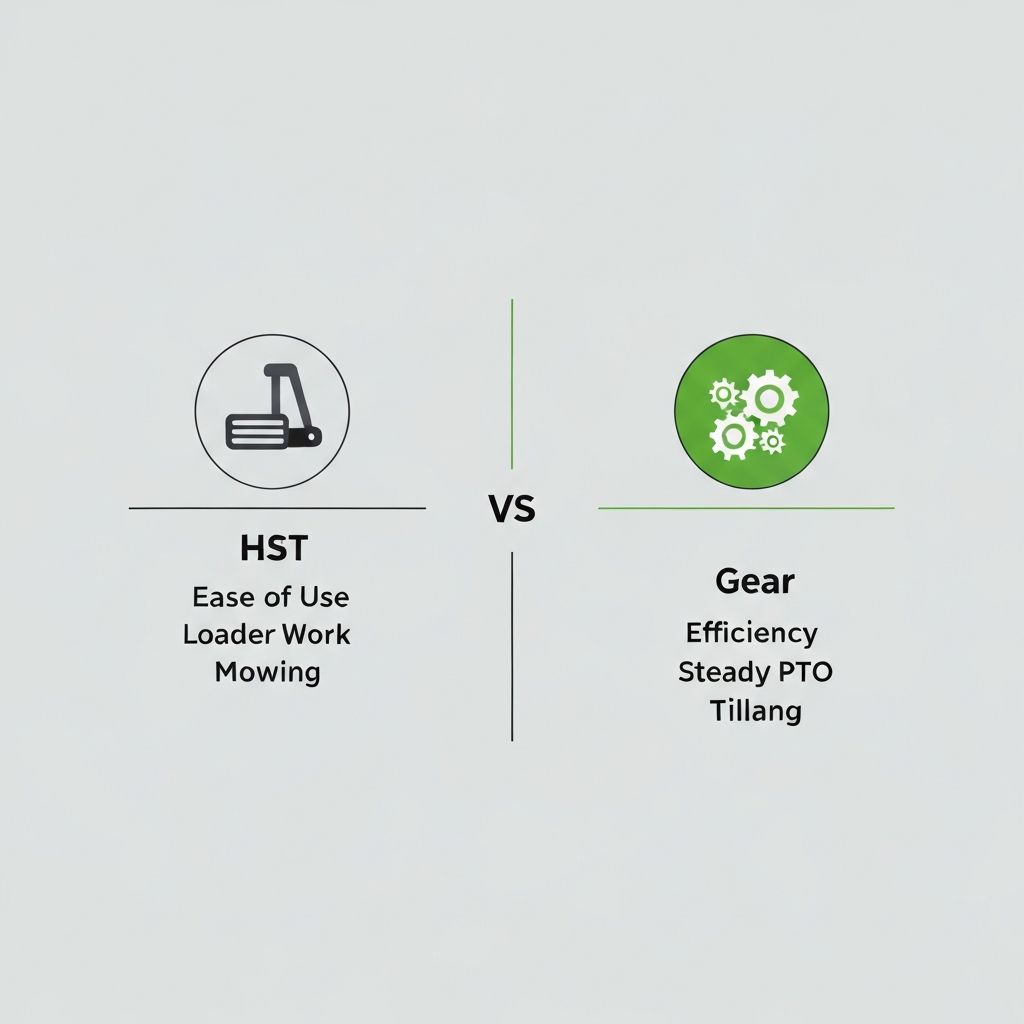
| Aspect | Hydrostatic (Best For) | Manual / Gear (Best For) |
|---|---|---|
| Primary tasks | Loader / mowing / snow | Tilling / steady pull / PTO |
| Terrain | Flat to rolling | Hills / steady field work |
| User experience | Beginners | Experienced operators |
| Efficiency | Lower under heavy load | Higher mechanical transfer |
Your property's layout and terrain determine critical equipment choices like tire type, ballast, and whether 4WD is non-negotiable.
Sub-compacts are typically 44-52 inches wide without the loader. Measure your narrowest gate before buying. With a loader bucket, overall width can reach 54-62 inches. Consider a narrower bucket if access is tight.
On hills, a longer wheelbase and wider stance improve stability. 4WD is essential. Always add rear ballast and keep the loader as low as possible when traveling on slopes. Never operate across a slope—always go up and down.
In hard or rocky ground, sub-compacts will struggle with aggressive ground engagement. Use lighter implements and make multiple passes rather than one deep cut. A box blade with scarifier teeth works well for gradual improvement.
4WD, R4 industrial tires, and tire chains are essential for mud and snow. Rear ballast prevents the back end from sliding. Loaded rear tires add both weight and stability. Budget for chains if you plan to plow or push snow regularly.
Safety Warning: Slopes & Loader Height
Never carry a loaded bucket high on slopes. A raised loader dramatically raises the center of gravity, making the tractor prone to tipping. Lower the bucket to 12 inches or less above the ground when traveling. Engage 4WD before entering a slope, not after you start losing traction.
Attachments transform a sub-compact from a simple tractor into a multi-tool. For a comprehensive overview, see our Tractor Attachment Guide.
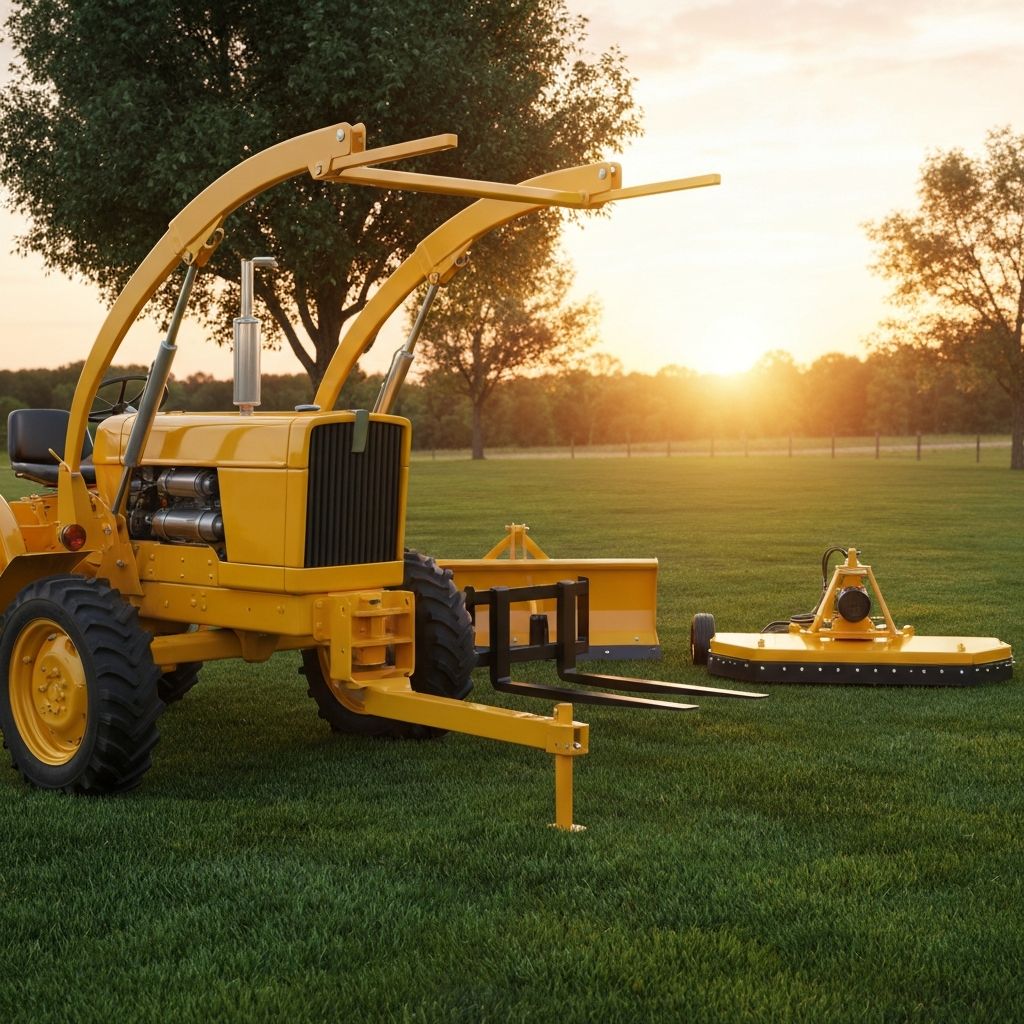
The single most useful attachment. Moves dirt, gravel, mulch, snow, and debris. Look for SSQA (skid-steer quick-attach) compatibility.
Essential for driveway grading, leveling, and spreading material. Scarifier teeth break up compacted surfaces.
Incredible ROI. Move pallets, hay bales, landscape supplies, logs, and building materials. Quick-attach to your loader.
Match PTO hp to the implement. Rotary cutters handle rough vegetation; finish mowers give a lawn-quality cut.
Requires third-function hydraulics. Grabs brush, logs, and debris.
Good for grading and snow plowing. Angles left, right, and straight.
Garden prep. Match width and HP rating to your PTO output.
Smooths and grades soil. Great for seed bed preparation.
Switch rear implements in seconds instead of minutes. High convenience.
Adds 200-400 lbs of counterweight for safe loader operation.
Adds digging capability. Heavy and expensive; affects tractor stability. Ensure your sub-compact is rated for backhoe attachment.
PTO-driven rear snowblower for heavy snow. Front push blades for lighter accumulation.
Breaks up hardpan, but sub-compacts are limited in penetration depth. Set expectations for hard soil.
Budget guidance: Plan $1,500–$5,000 per attachment (varies widely by brand and size). A complete sub-compact setup with loader, box blade, pallet forks, and a rotary cutter can add $5,000–$15,000 to the base tractor price.
The loader is the most-used attachment on any sub-compact. For advanced loader attachment options, see our Loader Attachments Guide.
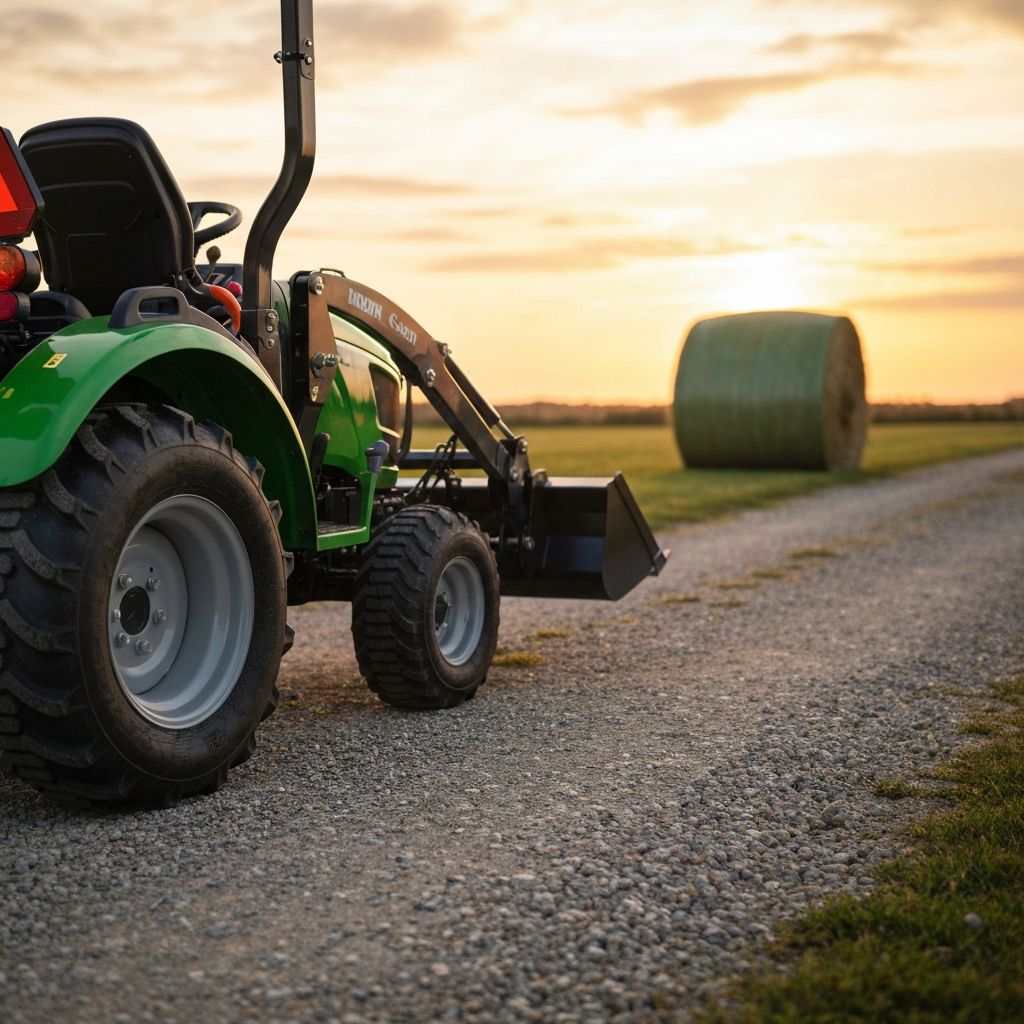
Skid-steer quick-attach lets you swap buckets, forks, and grapples in seconds without tools. Non-negotiable for versatility.
Adds a hydraulic circuit for grapple open/close. Required for grapple use. Factory-installed is cheaper than aftermarket.
Ensure full lift height clears a pickup truck bed (70-80 inches). Check the spec sheet; some sub-compact loaders max out at 72-78 inches.
Always compare the 500 mm forward capacity. At-pins capacity is 20-30% higher but unrealistic for real work with material in the bucket.
Match bucket width to the tractor width or slightly wider. Too narrow wastes time; too wide catches on obstacles and overloads one side.
Mechanical self-leveling keeps the bucket flat as the loader arms raise. Prevents material from spilling when lifting. Standard on most sub-compact loaders.
Loader Must-Haves Checklist
SSQA quick-attach + pallet forks + rear ballast plan. These three items together maximize loader usefulness from day one.
Both new and used sub-compacts can be excellent purchases. Your decision should weigh total cost, warranty coverage, and—critically—dealer proximity and service quality.
| Check Point | What to Look For | Red Flag |
|---|---|---|
| Engine oil | Clean, correct level | Milky (coolant contamination) |
| Hydraulic fluid | Clean, correct level, no burnt smell | Dark, burnt, or low |
| Cylinders | Smooth operation, no external leaks | Visible seepage or scoring on rods |
| Loader pins & bushings | Minimal play, greased | Excessive slop or dry wear marks |
| PTO engagement | Engages smoothly, no grinding | Grinding, slipping, or failure to engage |
| 3-point hitch | Raises and lowers smoothly under load | Jerky, slow, or unable to lift |
| Hours | Consistent with age and condition | Disconnected or replaced hour meter |
| Tires | Even wear, good tread remaining | Cracking, cupping, or bald spots |
Key Insight
Dealer proximity, parts availability, and service reputation often matter more than tiny spec differences between brands. A great dealer within 30 minutes beats a marginally better tractor from a dealer 2 hours away.
The tractor itself is often only 50-60% of the total investment. Plan for the complete system from the start.
| Cost Component | Typical Range | Notes |
|---|---|---|
| Sub-compact tractor (new, with loader) | $15,000–$30,000 | Depends on brand, HP, and features |
| Rear ballast (box or loaded tires) | $200–$800 | Essential for loader work |
| First 2-4 implements | $3,000–$12,000 | Box blade, pallet forks, rotary cutter, etc. |
| Delivery | $0–$500 | Some dealers include; others charge by mile |
| Sales tax | Varies by state | May be exempt in agricultural-use states |
| Estimated Total | $20,000–$45,000 | Complete ready-to-work setup |
Ask about 0% financing promotions (common for 48-72 months). Compare manufacturer financing vs bank/credit union rates. Know your monthly budget and total interest paid.
Standard warranties range from 2 to 6 years or 2,000-3,000 hours (whichever comes first). Powertrain warranties may extend longer. Ask about extended warranty costs.
Consider theft, fire, and transport coverage. Some homeowner policies cover tractors; others require a separate equipment policy. Replacement cost vs actual cash value matters.
When you've narrowed to 2-3 models, run each through this checklist to find your winner.
PTO HP vs implement requirement
Does the tractor's PTO hp exceed your heaviest implement's minimum by 10-15%?
Loader capacity (500 mm) + tractor weight
Can it lift your typical bucket load with adequate ballast?
Hydraulic flow
Higher GPM = faster loader response. Compare side by side.
Ergonomics and visibility
Sit in both. Check sightlines, controls, seat comfort, and ease of getting on/off.
Tire / ballast plan
Does the dealer offer the tire type and ballast solution you need at purchase?
Dealer / service support
Distance, parts inventory, service turnaround, loaner availability.
Total package price
Compare the full package: tractor + loader + implements + delivery + tax.
Print or save this checklist before visiting any dealer. Fill in your property details and requirements, then use it to compare offers side by side.
Real data from our sub-compact tractor directory. Sort, filter, and download to compare models side by side.
| 4WD | Lift Capacity | |||||
|---|---|---|---|---|---|---|
| Antonio Carraro TIGRE 3800 | 25.7 | N/A | Mechanical | 2,315 | 4WD | 1,874 lbs |
| Antonio Carraro TTR 3800 | 36 | N/A | Hydrostatic | 2,150 | 4WD | 4,079 lbs |
| Antonio Carraro TTR 3800 HST II | 25.7 | N/A | Hydrostatic | 2,535 | 4WD | 2,006 lbs |
| Bad Boy Mowers Bad Boy 1022H | 21.5 | N/A | Hydrostatic (2 Range) | 1,433 | 4WD | N/A |
| Bad Boy Mowers Bad Boy 1025H | 24.6 | N/A | Hydrostatic (2 Range) | 1,638 | 4WD | N/A |
| Bobcat CT1021 | 21.1 | 16.7 | Hydrostatic | 1,488 | 4WD | 700 lbs |
| Bobcat CT1025 | 24.5 | 19.4 | Hydrostatic | 1,488 | 4WD | 700 lbs |
| Branson 1905 | 19 | 13.4 | Hydrostatic | 1,433 | 4WD | 1,100 lbs |
| Branson 2205h | 21.5 | 15.1 | Hydrostatic | 1,433 | 4WD | 1,100 lbs |
| Branson 2505h | 24.6 | 18.8 | Hydrostatic | 1,638 | 4WD | 1,214 lbs |
| Case IH Farmall 25A | 24.6 | 19.2 | Hydrostatic | 2,469 | 4WD | 1,433 lbs |
| Case IH Farmall 25SC | 25 | 17 | HST | 1,884 | 4WD | 991 lbs |
| Challenger MT225B | 22.5 | 17.6 | Hydrostatic | 1,609 | 4WD | 1,190 lbs |
| Fendt 200 V | 105 | N/A | CVT | 9,039 | 4WD | 9,268 lbs |
| Jinma 224E | 22 | N/A | N/A | N/A | N/A | N/A |
| John Deere 1023E | 23.5 | 15.3 | Hydrostatic | 1,345 | 4WD | 1,433 lbs |
| John Deere 1025R | 23.8 | 18 | Hydrostatic | 1,444 | 4WD | 681 lbs |
| John Deere 1E 23 | 21.5 | 16.2 | Hydrostatic | 1,446 | 4WD | 758 lbs |
| John Deere 1M 25 | 21.5 | 16.2 | Hydrostatic | 1,446 | 4WD | 758 lbs |
| John Deere 1R 25 | 23.9 | 18.2 | Hydrostatic | 1,872 | 4WD | 915 lbs |
| John Deere 2026R | 25.2 | 18 | Hydrostatic | 1,676 | 4WD | N/A |
| Kioti CK2610 | 24.5 | 21.7 | gear | 2,646 | 4WD | 1,631 lbs |
| Kioti CK2620 | 24.5 | 19.5 | gear | 2,634 | 4WD | 1,631 lbs |
| Kioti CK2620H | 24.5 | 18.7 | hydrostatic | 2,689 | 4WD | 1,631 lbs |
| Kioti CK3010 | 28 | N/A | gear | 2,260 | 4WD | 739 lbs |
| Kioti CS2210 | 21.1 | 18.7 | Hydrostatic | 1,485 | 4WD | 700 lbs |
| Kioti CS2210H | 21 | 16.3 | HST | 1,485 | 4WD | 700 lbs |
| Kioti CS2220 | 21 | 16.3 | hydrostatic | 1,554 | 4WD | 700 lbs |
| Kioti CS2220H | 21 | 16.3 | HST | 1,554 | 4WD | 700 lbs |
| Kioti CS2230H | 21 | 16.7 | HST 2-Range | 1,735 | 4WD | 700 lbs |
| Kioti CS2510 | 24.5 | 19.4 | Hydrostatic | 1,485 | 4WD | 700 lbs |
| Kioti CS2510H | 24.5 | 18.5 | HST | 1,485 | 4WD | 700 lbs |
| Kioti CS2520 | 24.5 | 18.5 | Hydrostatic | 1,554 | 4WD | 700 lbs |
| Kioti CS2520H | 24.5 | 18.5 | HST | 1,554 | 4WD | 700 lbs |
| Kioti CS2530 | 24.5 | 19.3 | Hydrostatic | 2,233 | 4WD | 700 lbs |
| Kioti CS2530H | 24.5 | 19.3 | HST 2-Range | 1,735 | 4WD | 700 lbs |
| Kioti CS2530H Cab | 24.5 | 19.3 | HST 2-Range | 2,233 | 4WD | 700 lbs |
| Kubota B2301 | 22 | 17.5 | Hydrostatic | 1,565 | 4WD | 1,808 lbs |
| Kubota B2320 | 20.9 | 18 | Hydrostatic | 1,480 | 4WD | 1,356 lbs |
| Kubota B2601 | 25.5 | 19.5 | Hydrostatic | 1,632 | 4WD | 1,411 lbs |
| Kubota B3350 | 33 | 28.5 | Hydrostatic | 1,896 | 4WD | N/A |
| Kubota BX1880 | 18 | 13.7 | Hydrostatic | 1,336 | 4WD | 680 lbs |
| Kubota BX2380 | 21.6 | 17.7 | Hydrostatic | 1,443 | 4WD | 680 lbs |
| Kubota BX23S | 21.6 | 17.7 | Hydrostatic | 1,570 | 4WD | 680 lbs |
| Kubota BX2680 | 24.8 | 19.5 | Hydrostatic | 1,521 | 4WD | 680 lbs |
| LS Tractor MT122 | 21.5 | N/A | HST | 1,433 | 4WD | N/A |
| LS Tractor MT125 | 24.7 | N/A | HST | 1,444 | 4WD | N/A |
| LS Tractor MT225S | 24.7 | 19.3 | Hydrostatic | 1,764 | 4WD | 1,896 lbs |
| LS Tractor XJ2025H | 24.4 | 18.5 | Hydrostatic | 1,609 | 4WD | 1,433 lbs |
| Mahindra 1120 | 20.1 | 13.9 | Hydrostatic | 1,620 | 4WD | 771 lbs |
| Mahindra 1123 | 22.9 | 16.8 | Hydrostatic | 1,620 | 4WD | 771 lbs |
| Mahindra 1126 | 25.3 | 19.2 | Hydrostatic | 1,620 | 4WD | 771 lbs |
| Mahindra eMax 20S | 19.4 | 14.2 | hydrostatic | 1,499 | 4WD | 680 lbs |
| Mahindra eMax 20S HST CAB | 19.4 | 14.2 | Hydrostatic | 1,800 | 4WD | 680 lbs |
| Mahindra eMax 22L | 22 | 14.9 | Gear / Hydrostatic | 1,638 | 4WD | 1,323 lbs |
| Mahindra eMax 22S | 22 | 15.9 | gear (6F/2R) or hydrostatic | 1,609 | 4WD | N/A |
| Mahindra eMax 25L | 24 | 16.9 | Hydrostatic | 1,638 | 4WD | 1,323 lbs |
| Mahindra eMax 25L HST Cab | 24 | 16.9 | hydrostatic | 1,870 | 4WD | 1,323 lbs |
| Mahindra eMax 25S | 25 | 16.9 | hydrostatic | 1,540 | 4WD | N/A |
| Mahindra Max 25XL HST | 24 | 20 | Hydrostatic | 1,715 | 4WD | 1,354 lbs |
| Mahindra Max 26XL | 25.6 | 20 | synchro shuttle (8F/8R) or hydrostatic | 1,863 | 4WD | N/A |
| Massey Ferguson 1GC.23 | 22.5 | 18.3 | Hydrostatic | N/A | 4WD | 661 lbs |
| Massey Ferguson 1GC.23B | 22.5 | 18.3 | Hydrostatic | N/A | 4WD | 661 lbs |
| Massey Ferguson 1GC.25 | 24.5 | 18.5 | Hydrostatic | N/A | 4WD | 661 lbs |
| Massey Ferguson 1GC.25B | 24.5 | 18.5 | Hydrostatic | N/A | 4WD | 661 lbs |
| McCormick X1.25 | 24 | N/A | Gear / Hydrostatic | 1,810 | 4WD | 1,500 lbs |
| Mitsubishi MT1801 | 18 | 15 | Gear | 1,803 | 4WD | N/A |
| Montana 2740 | 27 | N/A | Shuttle | 2,600 | 4WD | N/A |
| New Holland Boomer 24 | 24 | 16.7 | hydrostatic | 1,832 | 4WD | 1,433 lbs |
| New Holland Boomer 35 | 35 | 29.7 | 12-speed synchronized shuttle or hydrostatic | 2,804 | 4WD | 1,808 lbs |
| New Holland Workmaster 25 | 24.4 | 19.2 | Hydrostatic | 2,469 | 4WD | 1,808 lbs |
| New Holland Workmaster 25S | 24 | N/A | N/A | N/A | 4WD | N/A |
| Shibaura ST318 | 18 | N/A | Hydrostatic | 1,653 | 4WD | N/A |
| TYM 2400 | 24 | N/A | Shuttle (F6/R2) or 2-Range HST | 1,792 | 4WD | 1,499 lbs |
| TYM 2610 | 24 | 18 | HST | 2,106 | 4WD | 1,499 lbs |
| TYM T2025P | 24.7 | N/A | 2-Speed | 4,865 | 4WD | 319 lbs |
| TYM T224 | 21.5 | N/A | hydrostatic | 1,433 | 4WD | 1,100 lbs |
| TYM T25 | 24.7 | 18.3 | hydrostatic | 1,881 | 4WD | 1,534 lbs |
| TYM T254 | 24.2 | N/A | hydrostatic | 1,610 | 4WD | 1,323 lbs |
| TYM T264H | 24.1 | 18.3 | hydrostatic | 1,881 | 4WD | 1,503 lbs |
| TYM T354 | 34.2 | N/A | Synchronized shuttle | 3,065 | 4WD | 2,646 lbs |
| Yanmar SA223 | 21.5 | 15.6 | Hydrostatic | 1,537 | 4WD | 825 lbs |
| Yanmar SA223 KURO | 21.5 | N/A | Hydrostatic | 1,537 | 4WD | N/A |
| Yanmar SA325 | 23.9 | N/A | Hydrostatic | 1,715 | 4WD | N/A |
| Yanmar SA425 | 23.9 | 18.1 | Hydrostatic | 1,830 | 4WD | 1,200 lbs |
| Yanmar SA425DHX | 23.9 | N/A | Hydrostatic | 1,830 | 4WD | N/A |
| Zetor MAJOR M22HTLB | 22 | N/A | Hydrostatic | N/A | 4WD | N/A |
| Zetor MAJOR M22HTLBM | 22 | N/A | Hydrostatic | N/A | 4WD | N/A |
| Zetor MAJOR M22HTLM | 22 | N/A | Hydrostatic | N/A | 4WD | N/A |
| Zetor MAJOR M25HTLB | 25 | N/A | Hydrostatic | N/A | 4WD | N/A |
| Zetor MAJOR M25HTLBM | 25 | N/A | Hydrostatic | N/A | 4WD | N/A |
| Zetor MAJOR M25HTLM | 25 | N/A | Hydrostatic | N/A | 4WD | N/A |
92 models shown
Best for mowing + light loader work
John Deere 1023E
Best for driveway maintenance
John Deere 1023E
Best for snow removal setup
Mahindra 1123
Best for hilly properties
John Deere 1023E
Best value pick
John Deere 1023E
Answer a few questions about your property and tasks to get a personalized sub-compact tractor recommendation.
A sub-compact tractor is a small-frame utility tractor typically in the 18-25 engine horsepower class. It is designed for property maintenance on 1-10+ acres including mowing, light grading, material handling with a front-end loader, snow removal, and driveway work. Sub-compacts are smaller and lighter than compact tractors (25-50 hp) but far more capable than lawn tractors or riding mowers.
Sub-compact tractors are ideal for properties ranging from 1 to 10+ acres. For properties under 1 acre, a riding mower or lawn tractor may suffice. For properties over 15 acres with regular heavy ground engagement, consider stepping up to a compact tractor (25-50 hp) for greater efficiency.
A 5-foot rotary cutter typically requires 15-20 PTO horsepower to operate effectively in light to moderate brush. Most sub-compact tractors in the 22-25 engine hp class produce 16-19 PTO hp, which can handle a 5-foot cutter in grass and light weeds. For thick brush, you may need a compact tractor with more PTO power.
Hydrostatic (HST) transmission is significantly better for loader work. HST allows infinite speed control and instant direction changes using foot pedals, which is essential when scooping, dumping, and maneuvering with a loaded bucket. Gear transmissions require clutching to shift and change direction, which is slow and awkward for loader-intensive tasks.
4WD is strongly recommended for virtually all sub-compact tractor use. It provides critical traction for loader work, grading, working on slopes, and operating in wet or snowy conditions. The small additional cost of 4WD pays for itself immediately in capability. Very few modern sub-compacts are sold without 4WD.
For a sub-compact tractor, aim for at least 600-800 lbs lift capacity at the pivot pins, or 400-600 lbs at 500 mm (about 20 inches) forward of the pins. The 500 mm forward measurement is the more realistic working capacity. Ensure the loader can reach high enough to clear a pickup truck bed (roughly 70-80 inches at full lift).
The three highest-priority attachments for most sub-compact owners are: (1) a front-end loader with SSQA quick-attach, (2) a box blade or land plane for driveway and grading work, and (3) pallet forks, which are incredibly versatile for moving materials, hay bales, pallets, and landscape supplies.
Yes, driveway grading is one of the top tasks for sub-compact tractors. A box blade with scarifier teeth or a land plane attached to the 3-point hitch can effectively grade and maintain gravel driveways. For best results, make multiple light passes rather than one aggressive pass. Most sub-compacts handle driveways up to 1,000 feet with ease.
Yes, but with realistic expectations. Sub-compact tractors can run 40-48 inch tillers in previously worked or soft garden soil. For breaking new ground, especially hard or rocky soil, a sub-compact will struggle. In tough conditions, make shallow passes and work gradually deeper. For large-scale tilling in hard soil, a compact tractor (25+ hp) is more appropriate.
Ballast a sub-compact by adding weight to the rear when using a front-end loader to prevent the rear from lifting. Common methods include: a rear ballast box filled with gravel or steel (200-400 lbs), loaded rear tires filled with fluid (calcium chloride, beet juice, or RimGuard), or a heavy rear implement like a box blade. Always engage 4WD when using the loader and keep the bucket low when traveling.
Choose turf tires if your primary use is mowing on established lawns where you want to minimize turf damage. Choose R4 industrial tires for the best all-around grip if you use a loader, grade driveways, or work on varied terrain. R4 tires handle gravel, dirt, and mild slopes well without excessive lawn damage. Agricultural (R1) tires are rarely needed on sub-compacts unless you do extensive field work in soft soil.
Both are valid options. New tractors come with a manufacturer warranty (typically 2-6 years), known maintenance history, and current financing offers. Used tractors cost 30-50% less but require careful inspection of hours, leaks, hydraulic function, PTO engagement, and maintenance records. Dealer-certified used tractors offer a middle ground with limited warranties.
Inspect these critical areas: engine oil (milky means coolant leak), hydraulic fluid level and color, all cylinders for leaks, PTO engagement and operation, loader pin wear and bushings, tire condition and tread, 3-point hitch operation, hour meter reading, maintenance records, and any unusual noises. Always test drive and operate all functions before purchasing.
Budget $1,500-$5,000 per attachment depending on brand and size. A complete sub-compact setup with loader, box blade, pallet forks, and a rotary cutter or finish mower typically adds $5,000-$15,000 to the base tractor cost. Buy quality implements; cheap attachments wear fast and cost more over time in repairs and replacements.
Consider a compact tractor (25-50 hp) instead of a sub-compact if you: manage more than 15 acres regularly, need to run implements requiring more than 20 PTO hp (large tillers, hay equipment), do extensive ground engagement in hard soil, or need to move very heavy loads frequently. A compact tractor is more capable but also heavier, wider, and more expensive to own and maintain.
Specs, pricing and real-world guidance for tractor buyers and owners.
© 2026 Tractor Iron. All rights reserved.