Sub-CompactVerifiedMassey Ferguson Tractors: Models, History & Buyer Guide
Born to farm since 1953. Browse every Massey Ferguson tractor in our database, compare specs, and find the right model for your operation.
Brand Overview
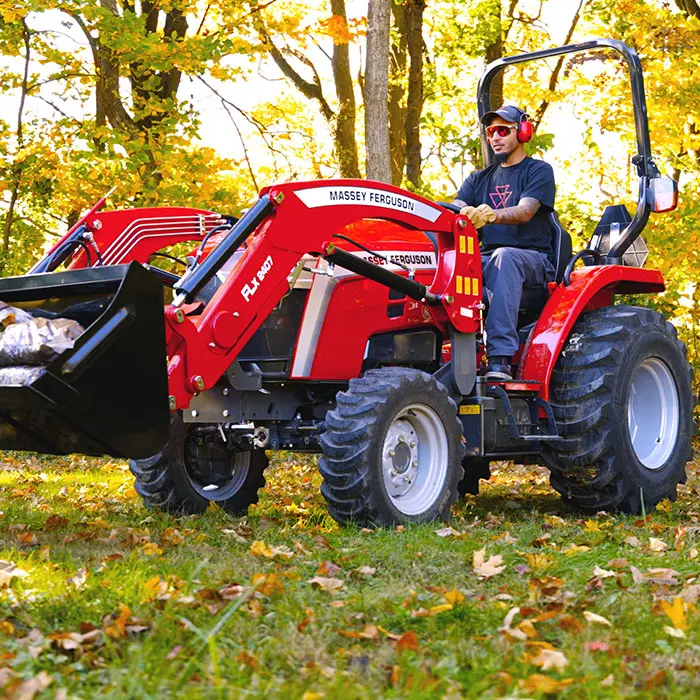
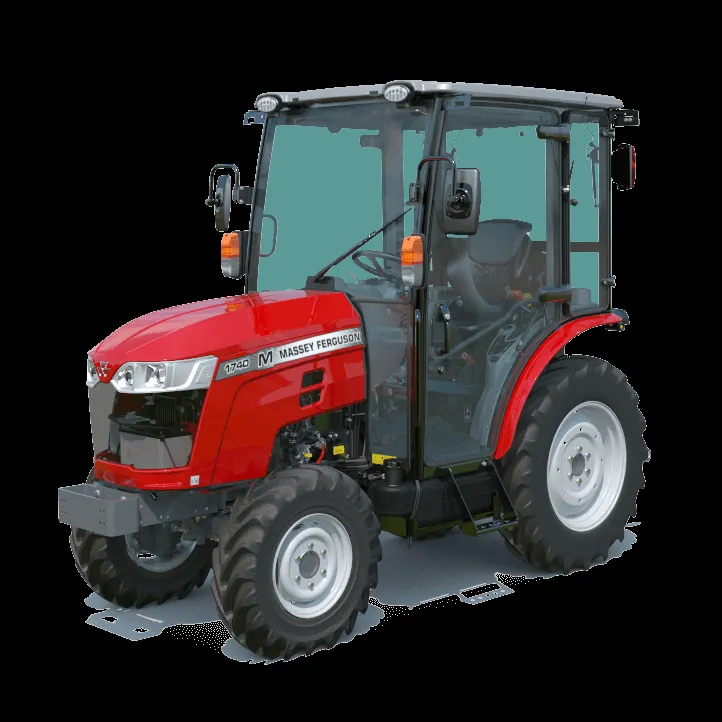
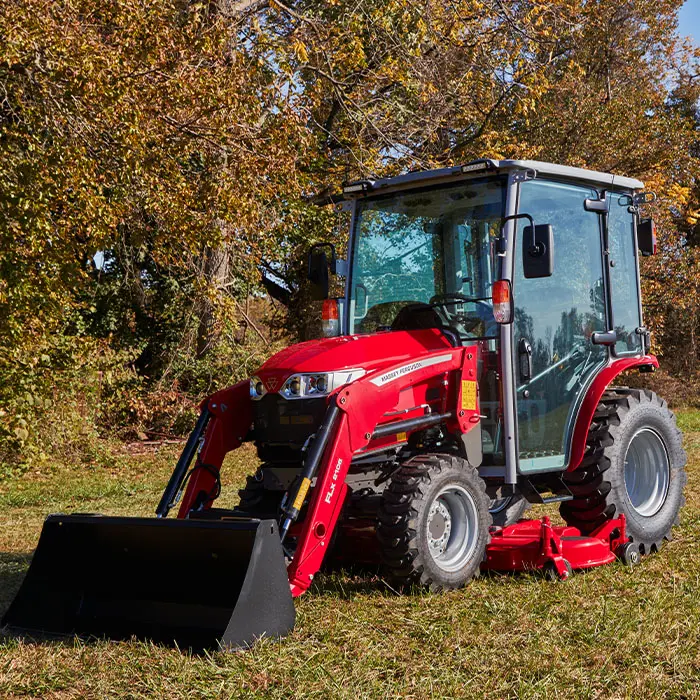
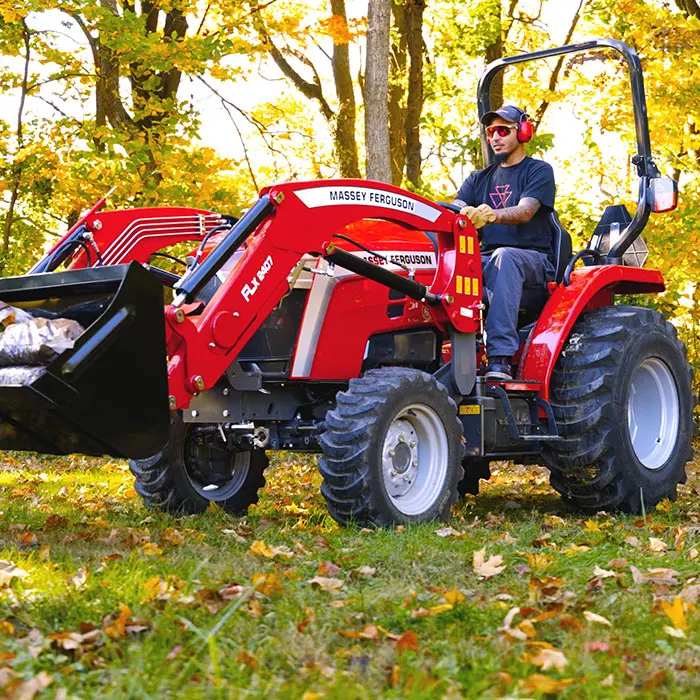
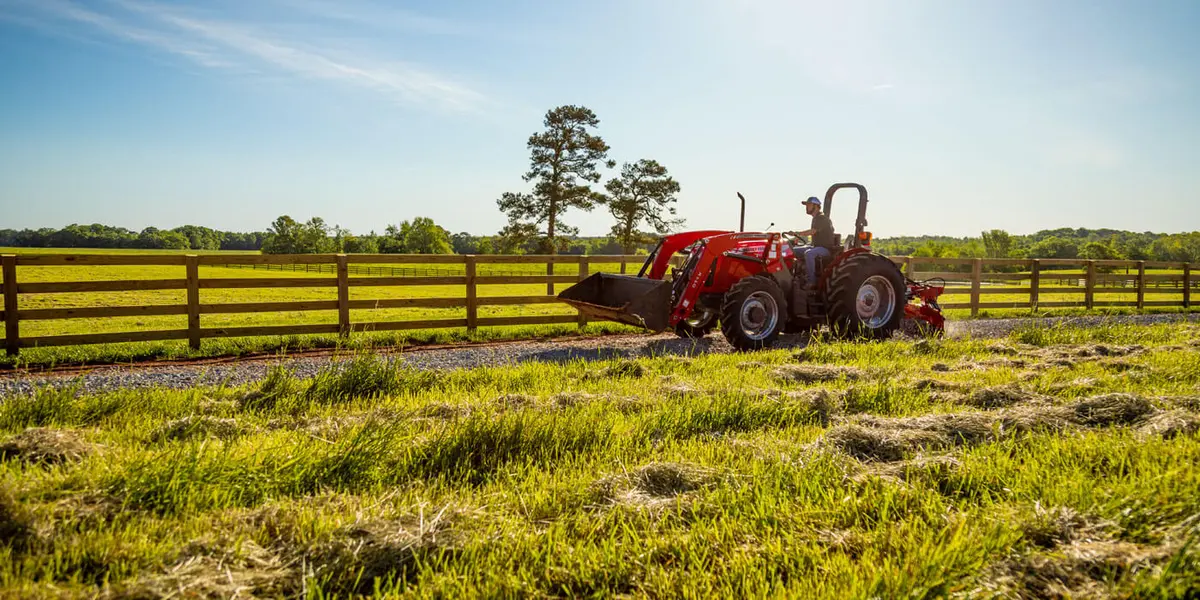
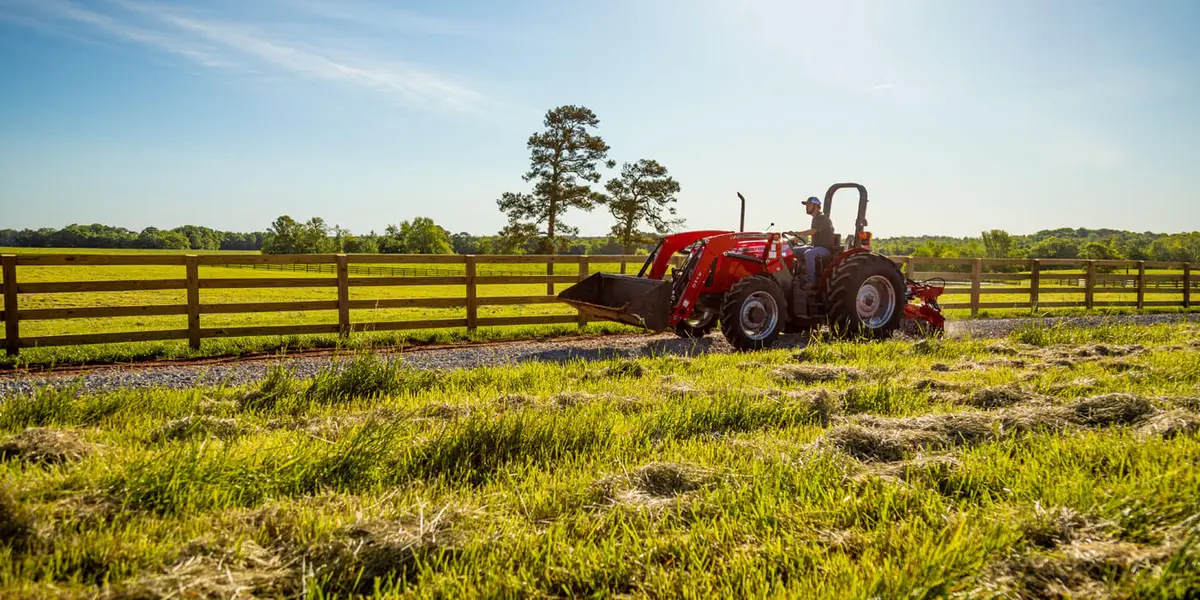
Massey Ferguson is a global agricultural machinery brand owned by AGCO Corporation. Recognized by their red color scheme and practical engineering approach, MF tractors have a loyal following among farmers who value straightforward designs, strong serviceability, and competitive pricing. The brand has a particularly strong international presence and covers everything from compact hobby-farm tractors to large-scale agricultural machines.
If you're deciding how much tractor you need, our guides on choosing by acreage, matching a tractor to your tasks, and buying within a budget are a good starting point before diving into individual models.
Quick Brand Snapshot
Is Massey Ferguson Worth It?
Massey Ferguson typically prices 10–18% below comparable John Deere models. Here's an honest look at where MF delivers, and where the tradeoffs show up.
+ Pros
- ✓Competitive pricing, 10–18% below John Deere on comparable compact and utility models
- ✓Simple, serviceable designs that are straightforward to maintain
- ✓Strong global presence with broadly available parts
- ✓Pioneers of the three-point hitch system (Harry Ferguson legacy)
- ✓Good value for livestock and mixed farming operations
- ✓Dyna-series transmissions well-regarded for durability
− Cons
- −US dealer network smaller than John Deere, Kubota, or New Holland
- −Limited sub-compact tractor presence vs. Kubota
- −Lower brand recognition than top competitors in some US regions
- −Technology features lag behind premium brands in large ag
- −Resale values below Kubota and John Deere
★ Best For
- →Buyers prioritizing purchase price and ease of self-maintenance
- →Livestock farmers and hay producers in the 50–130 HP range
- →Buyers keeping equipment for 15+ years where resale matters less
- →Operations with solid local MF dealer support
- →International operations where MF has strong parts availability
Not sure which model fits your situation? See the most commonly purchased Massey Ferguson tractors, with a plain-language breakdown of who each one is for.
View Popular Models →Most Popular Massey Ferguson Tractors
Eight of the most-researched models across the lineup, each with a plain-language explanation of why it matters and who it's best for.
Massey Ferguson GC1723E
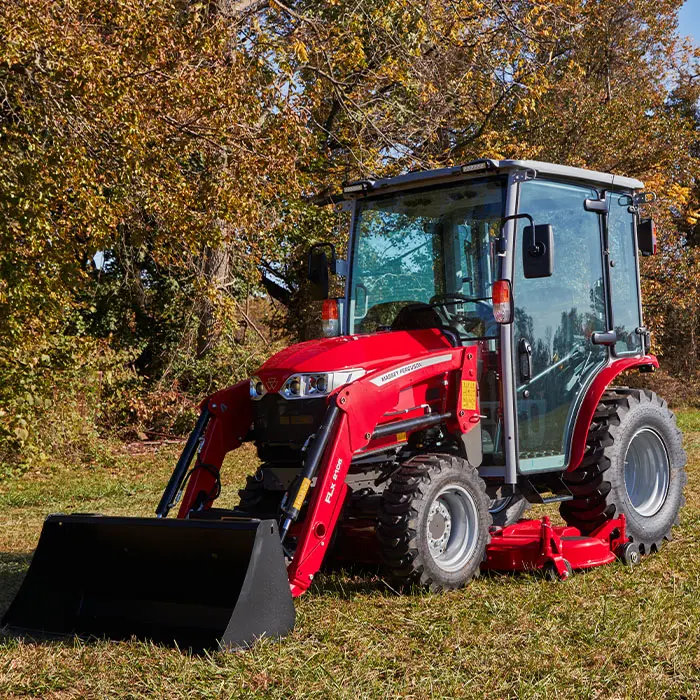
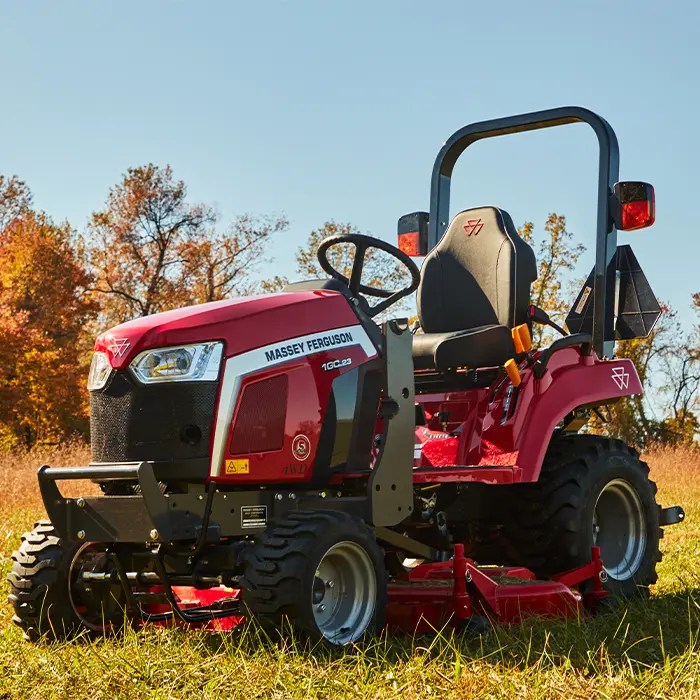
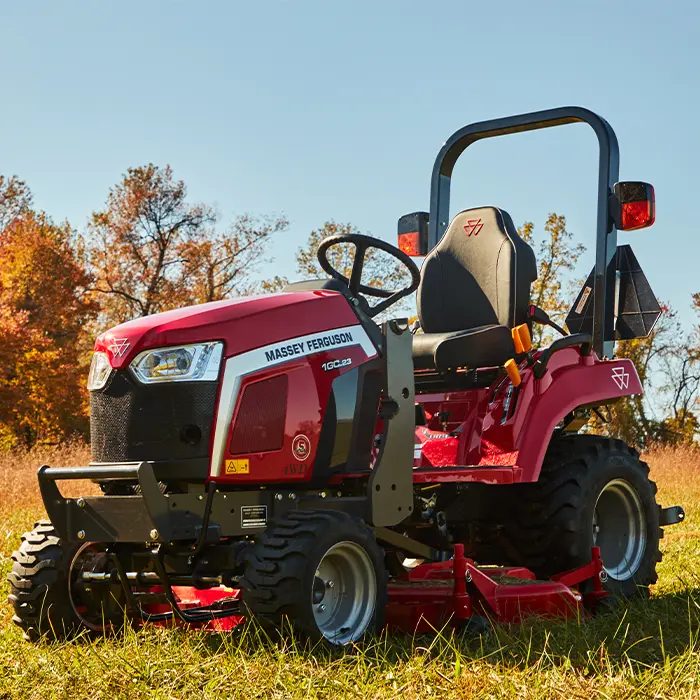
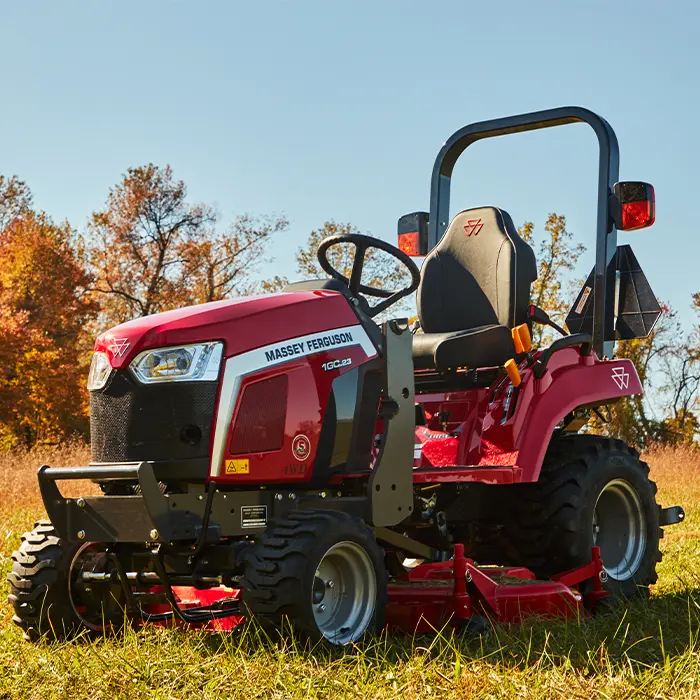
22.5 HP entry-level compact with a factory loader. MF's most accessible tractor, priced competitively against Kubota BX and John Deere 1-Series.
Best for: First-time tractor buyers and hobby farmers needing basic loader work and simple PTO tasks.
Massey Ferguson 1E.25
24 HP compact with a simple, proven design. Easier to service than many competitors in this class, with a lower sticker price than Kubota L or John Deere 3 Series.
Best for: Property owners on smaller parcels who want simplicity and long-term serviceability over premium features.
Massey Ferguson 2E.50
49 HP compact with category 1/2 three-point hitch and 540/1000 PTO. Strong value in the 45–55 HP class where MF is highly competitive on price.
Best for: Farms running a loader, rotary cutter, and rear PTO implements in the 50 HP sweet spot.
Massey Ferguson 2607H
74 HP utility workhorse with a solid hydraulic system and category 2 hitch. Strong value vs. New Holland and Kubota in the 75 HP range.
Best for: Livestock operations and small farms that need genuine utility capability without utility-class pricing.
Massey Ferguson 3SP.75
75 HP purpose-built chassis for livestock and hay work. Priced 10–15% below comparable John Deere and New Holland, MF's value case made clearly.
Best for: Hay producers, livestock farmers, and mixed operations prioritizing cost-effectiveness in the 75 HP class.
Massey Ferguson 5711
110 HP 5711 with Dyna-4 semi-powershift transmission. MF's most popular mid-utility model for commercial and farm applications.
Best for: Mixed farms and commercial operations needing a capable 110 HP utility tractor for daily work.
Massey Ferguson 6S.135
135 HP 6S with Dyna-7 powershift transmission and advanced cab. MF's step into premium utility territory at competitive pricing vs. John Deere 6R.
Best for: Professional farms and commercial operations running intensive daily work in the 130–140 HP class.
Massey Ferguson 7S.165
165 HP 7S with Dyna-VT CVT transmission option. MF's flagship in the mid-large agricultural segment, a strong value vs. John Deere 7R.
Best for: Large farms running tillage, planting, and large-implement work where CVT efficiency matters.
Want to compare specs side-by-side? Browse the full 62-model database below, filtered by category, sorted by horsepower.
Browse All Models →Explore Massey Ferguson Tractor Models
The database below covers 62 Massey Ferguson models, organized by category and sorted by horsepower. Each model page includes verified engine specs, transmission options, PTO output, hydraulics, and pricing where available.
Not sure where to start? Browse by:
- →Property size , match tractor class to your acreage
- →Primary task , loader work, mowing, hay, tillage, and more
- →Budget , see what each price range gets you across brands
Sub-Compact Tractors
View all Sub-Compact →Compact Tractors
View all Compact →
CompactVerified
CompactVerified
CompactVerified
CompactVerified
CompactVerifiedShowing 6 of 14 compact tractors
View all 14 →Utility Tractors
View all Utility →
UtilityVerified
UtilityVerified
UtilityVerified
UtilityVerified
UtilityVerifiedShowing 6 of 43 utility tractors
View all 43 →Still narrowing it down? Our buying guides can help you match the right horsepower class and category to your specific situation.
Which Massey Ferguson Is Right for You?
Use this as a quick-reference guide. For a deeper breakdown, choosing by acreage and matching a tractor to your tasks cover the decision in more detail.
SSmall Farms & Hobby Operations
- →Under 25 HP: the GC1723E or 1E.25 are the most accessible MF entry points, simpler and often less expensive than Kubota or John Deere compact equivalents
- →25–50 acres: the 2E.50 is a strong mid-compact value, category 2 hitch and 1000 PTO at a competitive price
- →MF compact models are particularly popular with buyers doing their own maintenance, simpler hydraulic and electrical systems than premium competitors
- →Sub-compact selection is limited, Kubota and John Deere are stronger choices if you need a tractor under 22 HP
LLivestock & Hay Operations
- →50–80 HP: the 2607H and 3SP.75 are MF's strongest value proposition, pricing below comparable New Holland and John Deere utility models
- →Round baler and mower-conditioner users frequently choose MF for its PTO engagement reliability and loader lift capacity relative to price
- →MF's 3SP series is built specifically for livestock and multi-task operations at mid-utility price points
- →Dyna-series transmissions are well-regarded for smooth PTO engagement during baling operations
VValue-First Buyers
- →MF is one of the clearest value propositions vs. John Deere, consistently lower purchase prices for comparable horsepower and capability
- →Buyers keeping equipment 15+ years typically find MF's lower upfront cost offsets the resale value gap
- →Parts are broadly available globally, important for rural buyers with limited local dealer access
- →AGCO Power engines used across MF's lineup are reliable and broadly serviced, not proprietary in the way John Deere's systems can be
AGMid to Large Agricultural Operations
- →100–165 HP: the 5711 and 6S.135 compete with New Holland T5/T6 and John Deere 5/6 Series at consistently lower prices
- →The 7S.165 with Dyna-VT CVT is MF's answer to John Deere's 7R, a capable large utility at a meaningful cost difference
- →9S series (310–425 HP) serves large-scale grain and row crop farming globally, less common in North America than Deere or Case IH but available
- →MF's precision ag features (Fieldstar) lag behind John Deere but are improving, a consideration for large precision-driven operations
Find a Massey Ferguson Dealer
Near You
Search our dealer directory by ZIP code. Sponsored Massey Ferguson dealers appear first, with full contact details, services offered, and brands carried.
Or browse all dealers using your current location →ZIP & GPS Search
Find dealers within any radius of your location
Sponsored First
Featured dealers surface at the top of every search
Direct Contact
Phone, address, and website on every listing
Services Listed
Sales, parts, service, and financing noted per dealer
Massey Ferguson vs. Other Brands
The right brand depends on your priorities. Here's how Massey Ferguson stacks up against its main competitors.
Massey Ferguson vs. John Deere →
John Deere vs Massey Ferguson — compare pricing, reliability, dealer support, and resale value. Massey Ferguson offers strong practical value at a lower price point than John Deere. Full segment breakdown inside.
Massey Ferguson vs. Kubota →
Kubota vs Massey Ferguson — compare compact and utility tractors from two of the most trusted brands in farming. See pricing, reliability, dealer coverage, and which brand wins segment by segment.
Massey Ferguson vs. New Holland →
New Holland vs Massey Ferguson — two practical-value brands competing in compact and utility tractors. Compare pricing, cab quality, dealer support, and which brand wins segment by segment.
Massey Ferguson vs. Case IH →
Case IH vs Massey Ferguson — compare two heritage American ag brands in utility and large ag tractors. Case IH leads on technology; Massey Ferguson wins on simplicity and global value.
Massey Ferguson vs. Mahindra →
Massey Ferguson vs Mahindra — two value-focused tractor brands competing in compact and utility segments. Compare pricing, reliability, dealer support, and which brand delivers more for the money.
Massey Ferguson: A Brief History
Alanson Harris founds a farm implement company in Ontario, Canada. Around the same time, Daniel Massey establishes a farm equipment business, the two roots that will eventually form Massey-Harris.
Massey Manufacturing Co. and A. Harris, Son & Co. merge to form Massey-Harris, one of Canada's largest agricultural equipment manufacturers.
Harry Ferguson develops the Ferguson System, a revolutionary three-point hitch that allows tractors to be attached to implements without the dangerous rearing effect that killed many early tractor operators. This fundamentally changes tractor design worldwide.
Massey-Harris merges with the Ferguson tractor company to form Massey Harris Ferguson, soon rebranded as Massey Ferguson. Harry Ferguson's three-point hitch becomes standard across the industry.
Massey Ferguson grows into one of the world's leading tractor manufacturers, with strong European and international markets. The red MF tractors become a global symbol of practical farming.
AGCO Corporation acquires Massey Ferguson. AGCO expands the brand's global manufacturing footprint and integrates MF into a portfolio that also includes Fendt and Valtra.
Massey Ferguson introduces the Dyna-VT and Dyna-6 transmission lines, modernizes the GC compact series for North America, and expands the S-series utility lineup.
Massey Ferguson is one of AGCO's primary global brands. Manufacturing spans facilities in Beauvais, France (main European plant), Canoas, Brazil, and Brantford, Canada. The MF brand operates in over 140 countries.
Frequently Asked Questions
Who makes Massey Ferguson tractors now?
Massey Ferguson is owned and manufactured by AGCO Corporation, headquartered in Duluth, Georgia. AGCO also owns Fendt, Challenger, and Valtra tractor brands. Massey Ferguson is AGCO's most widely distributed brand globally.
Are Massey Ferguson tractors any good?
Yes, MF tractors have a solid reliability record and are particularly valued for their simple, serviceable designs. The brand has decades of field-proven experience in both compact and utility segments. Owners commonly cite ease of maintenance and competitive pricing as key advantages.
How does Massey Ferguson compare to John Deere?
Massey Ferguson typically prices 10–18% below comparable John Deere models. John Deere has a larger dealer network, stronger resale values, and more advanced technology options. MF's advantage is clear value for buyers who do their own maintenance and plan to keep equipment long-term.
What engines are in Massey Ferguson tractors?
Massey Ferguson uses AGCO Power engines (formerly Sisu) across most of its lineup, particularly in utility and large ag models. These are reliable industrial diesel engines designed for agricultural applications. Some compact models use engines from Iseki or other suppliers depending on region.
What is the difference between Massey Ferguson GC, 1E, and 2E series?
The GC series is MF's entry-level compact/sub-compact line aimed at hobby farms and property owners. The 1E series is a step up in capability (basic compact with 3-point hitch and PTO. The 2E series is the mid-compact line, offering more horsepower, category 2 hitch options, and 1000 RPM PTO) better suited to serious farm use.
Does Massey Ferguson have good resale value?
Massey Ferguson resale values are reasonable but typically trail John Deere and Kubota by a meaningful margin. The brand's global presence and parts availability help support used values, particularly for utility and agricultural models that are well-maintained.
Where are Massey Ferguson tractors manufactured?
Key manufacturing locations include Beauvais, France (the main European production hub), Canoas, Brazil, Brantford, Canada, and facilities in India. The specific origin varies by model series, North American compact models may be sourced from different facilities than European utility tractors.