The Ultimate Lawn Tractor & Riding Lawn Mower Buying Guide (2026)
Last Updated: February 2026
Last Updated: February 2026
Choosing the right lawn tractor or riding lawn mower is one of the most impactful decisions a homeowner can make. The right machine saves hours every week, keeps your yard looking professional, and lasts a decade or more. The wrong one means frustration, wasted money, and a lawn that never looks quite right.
This lawn mower buying guide cuts through marketing noise with real specifications, honest cost breakdowns, and data-driven recommendations. Whether you're shopping for your first riding lawn mower or upgrading from an aging machine, we'll walk you through every factor that matters: yard size, mower type, deck width, engine options, transmission differences, and true ownership costs.
Built by the Tractor Iron editorial team. For task-specific recommendations, see our Best Tractors for Mowing guide.
Yard size is the single most important factor when choosing a lawn mower. Deck width directly determines how long you'll spend mowing, and the type of mower determines how comfortable that time will be.
| Lawn Size | Deck Width | Recommended Type | Est. Mowing Time |
|---|---|---|---|
| < 1 acre | 30-42″ | Rear-engine rider / small rider | 30-60 minutes |
| 1-2 acres | 42-52″ | Standard riding mower | 60-90 minutes |
| 2-4 acres | 48-60″ | Lawn tractor / residential zero-turn | 90-150 minutes |
| 4+ acres | 60″+ | Heavy-duty residential zero-turn | 2+ hours |
If your yard has slopes over 15 degrees, avoid zero-turn mowers. Standard lawn tractors with wide rear tires and a low center of gravity handle moderate inclines safely.
Yards with many trees, flower beds, and tight spaces benefit from a smaller deck (42″) or a zero-turn's tight turning radius. Larger decks are faster on open ground but struggle in tight areas.
Measure your garage or shed before buying. A 54″ deck lawn tractor is roughly 72″ wide with the chute deflector. Ensure door clearance of at least 78″ height and 74″ width.
Understanding the differences between residential mower types is critical. Each design makes trade-offs in speed, comfort, versatility, and cost.
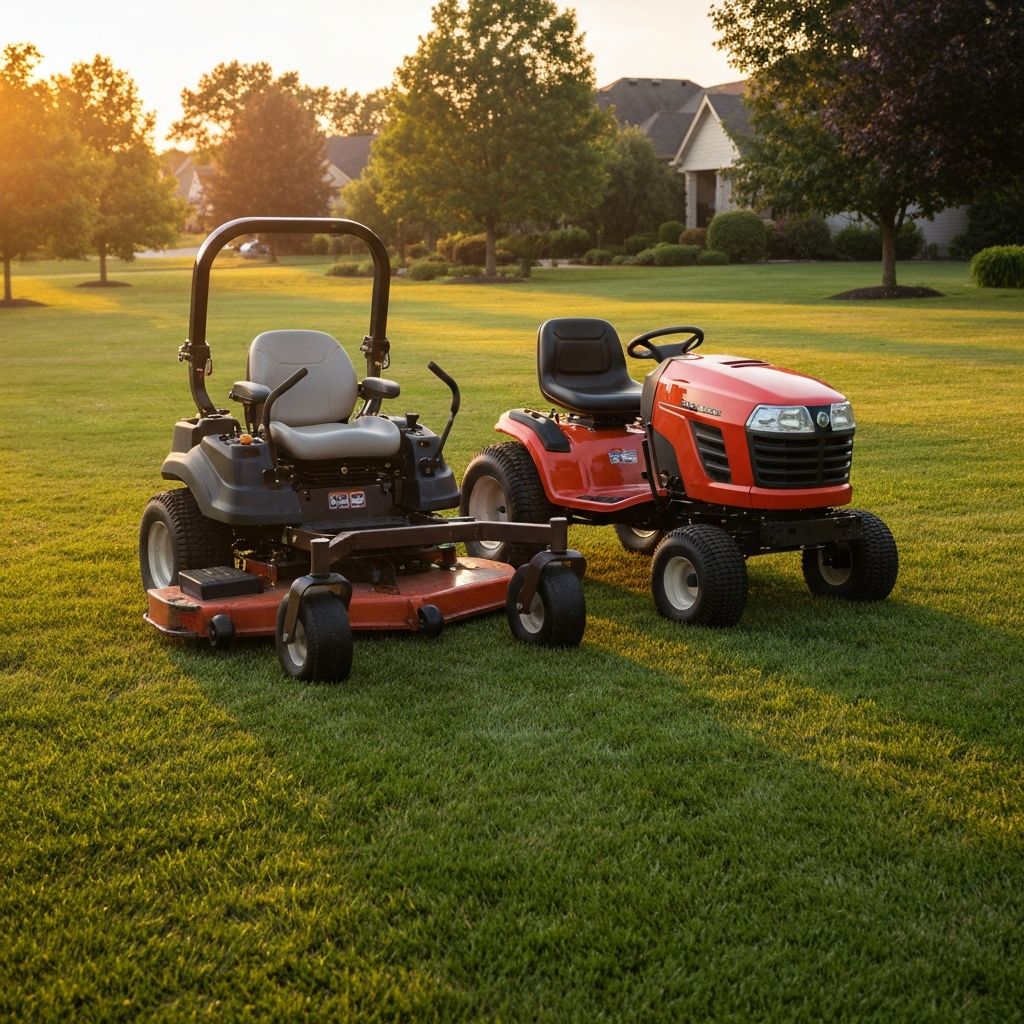
| Feature | Riding Mower | Lawn Tractor | Residential Zero-Turn | Electric Rider |
|---|---|---|---|---|
| Deck Size | 30-38″ | 42-54″ | 42-60″ | 30-54″ |
| Best For | Small flat yards | General use + attachments | Speed, obstacles | Quiet, low-maintenance |
| Speed | 4-5 mph | 5-6 mph | 7-8 mph | 5-7 mph |
| Slope Safety | Good | Good | Poor on steep | Varies |
| Attachments | Minimal | Cart, blade, aerator | Limited | Limited |
| Price Range | $1,500-$2,500 | $2,000-$5,000 | $3,000-$8,000 | $2,500-$6,000 |
| Annual Maintenance | $75-$150 | $100-$200 | $150-$300 | $25-$75 |
Electric riding mowers have improved dramatically, but gas still dominates for larger properties. Here's how they compare on the metrics that matter.
| Factor | Gas | Electric (Battery) |
|---|---|---|
| Runtime | Unlimited (refuel in minutes) | 1-2.5 hours per charge |
| Recharge Time | N/A | 4-12 hours (standard charger) |
| Annual Fuel/Energy Cost | $120-$250 | $15-$40 |
| Annual Maintenance | $100-$200 | $25-$75 |
| Noise Level | 85-95 dB (hearing protection recommended) | 65-75 dB (conversation level) |
| Purchase Cost | $1,500-$5,000 | $2,500-$6,000 |
| Battery Replacement | N/A | $500-$1,500 every 5-8 years |
| Emissions | Yes | Zero at point of use |
| Best For | Yards over 1 acre, long sessions | Yards under 1.5 acres, noise-sensitive areas |
Deck width is measured in inches and represents the cutting swath per pass. The chart below shows how deck size affects mowing time on a flat, open lawn.
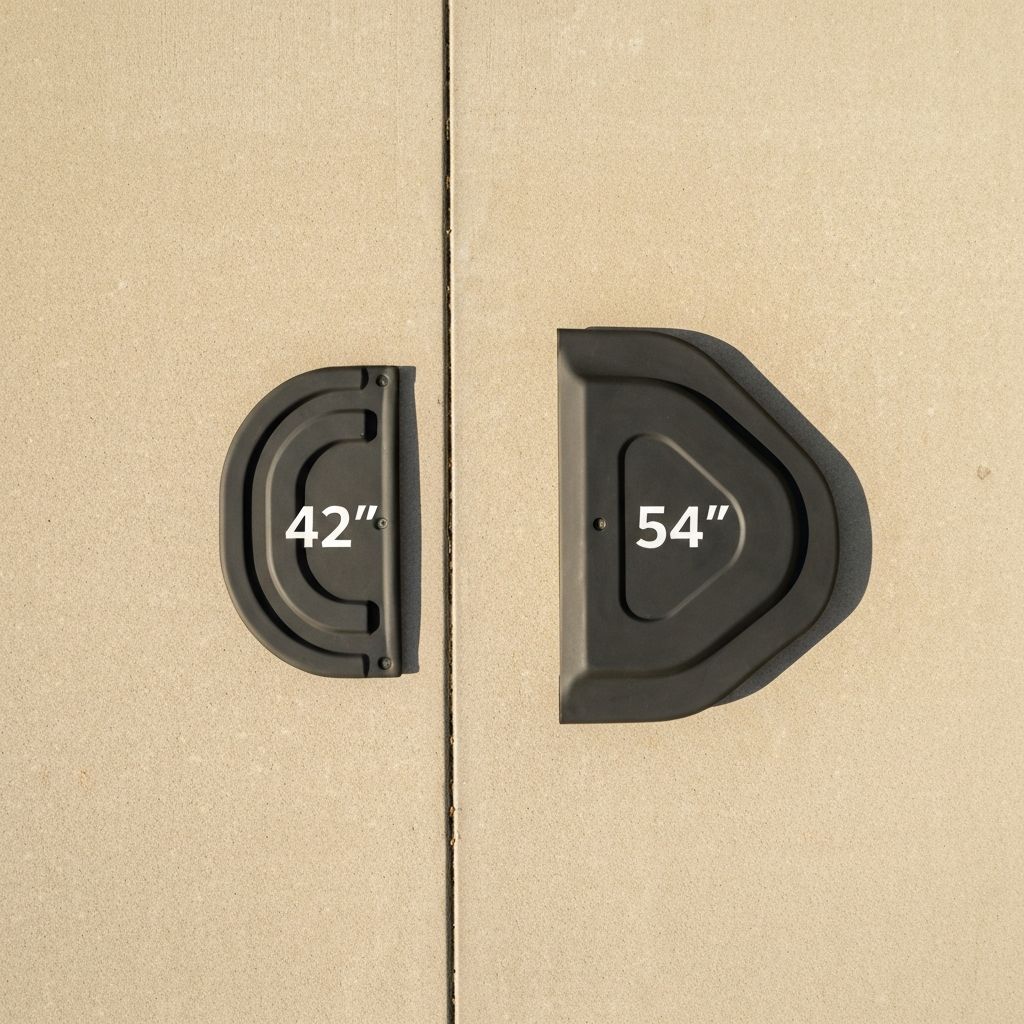
| Deck Width | Time per Acre | Ideal Yard Size | Maneuverability | Typical Price Impact |
|---|---|---|---|---|
| 30″ | ~80 min | < 0.5 acre | Excellent | Base price |
| 38″ | ~65 min | 0.5-1 acre | Very good | +$100-$200 |
| 42″ | ~55 min | 0.75-1.5 acres | Good | +$200-$400 |
| 46″ | ~48 min | 1-2 acres | Good | +$300-$600 |
| 50″ | ~42 min | 1.5-3 acres | Moderate | +$500-$800 |
| 54″ | ~37 min | 2-4 acres | Moderate | +$700-$1,200 |
| 60″+ | ~30 min | 4+ acres | Low | +$1,000-$2,000 |
Single-cylinder engines (Briggs & Stratton, Kohler) are standard on sub-$3,000 mowers. V-twin engines provide more power, smoother operation, and longer life. For yards over 2 acres, a V-twin is worth the premium.
Hydrostatic transmissions use fluid drive for seamless speed changes with a foot pedal. Manual (gear-drive) transmissions require clutching and shifting. For mowing, hydrostatic is overwhelmingly preferred for its ease and precision.
Stamped decks are lighter and cheaper but dent on impact. Fabricated decks are welded from thick steel plates, resist damage better, and can be repaired. Most residential mowers under $3,500 use stamped decks.
Blade tip speed (measured in feet per second) determines cut quality. Higher speeds (18,000+ fpm) produce cleaner cuts and better mulching. Premium decks exceed 18,500 fpm; budget decks typically run 16,000-17,000 fpm.
Lawn tractors typically have an 18-inch turning radius. Zero-turns have a 0-inch turning radius, meaning they pivot in place. A tighter turning radius means less hand-trimming around obstacles.
A high-back padded seat, armrests, cruise control, and cup holder matter on mows over 60 minutes. Spring-mounted seats reduce vibration. Look for adjustable cutting height levers within easy reach.
All modern mowers include an operator-presence switch that stops the blades when you leave the seat. Rollover protection is available on some models. Headlights enable evening mowing in summer months.
Understanding what you get at each price point prevents overspending and avoids buyer's remorse. Here's what to expect.
| Price Range | What You Get | What You Sacrifice | Who It's For |
|---|---|---|---|
| $1,500-$2,000 | Rear-engine rider, 30″ deck, single-cylinder, manual PTO | Speed, comfort, durability, attachment capability | Small flat yards under 0.75 acre, budget-conscious buyers |
| $2,000-$3,000 | Standard lawn tractor, 42-46″ deck, single-cylinder, hydrostatic option | V-twin engine, fabricated deck, premium comfort | 1-2 acre yards, general homeowner use |
| $3,000-$4,500 | Premium lawn tractor, 48-54″ deck, V-twin, hydrostatic, cruise control | Commercial-grade durability, fabricated deck on most | 2-3 acre yards, quality-focused buyers |
| $4,500-$6,000 | Residential zero-turn, 42-50″ fabricated deck, V-twin, lap bars | Slope safety, towing ability, some attachment options | 2-4 acre flat/rolling yards, speed priority |
| $6,000-$8,000+ | Premium residential zero-turn, 54-60″ fabricated deck, suspension seat, high ground speed | Nothing significant at this level for residential use | 4+ acre properties, semi-professional results |
The sweet spot for most homeowners is the $2,500-$3,500 range. This gets a reliable lawn tractor with a 46-48″ deck, hydrostatic transmission, and enough power for 1-2 acres. Spending below $2,000 means significant compromises in comfort and longevity.
Purchase price is only part of the equation. Annual maintenance, fuel, and eventual repairs add up significantly over the 8-15 year life of a riding mower.
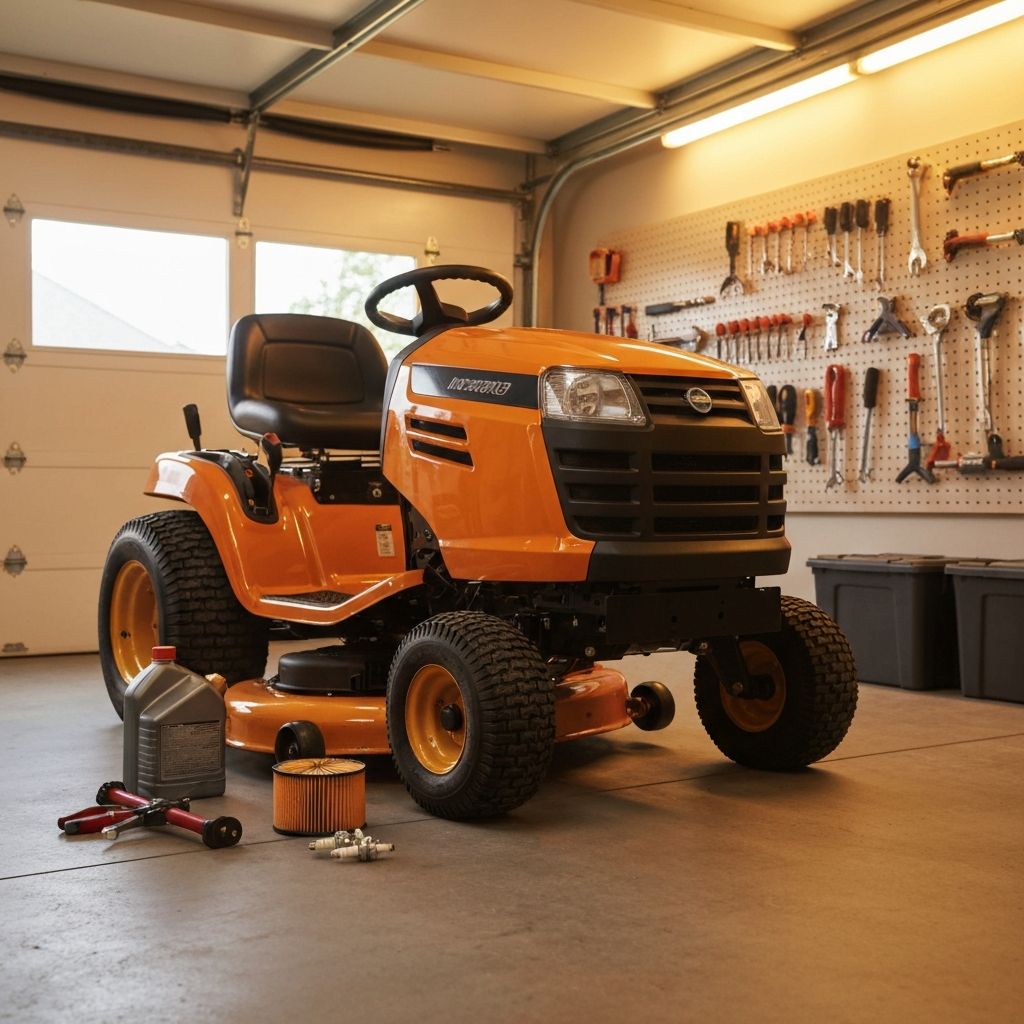
| Cost Category | Annual Estimate | Notes |
|---|---|---|
| Oil + Filter | $15-$30 | Change every 50 hours or annually |
| Air Filter | $10-$20 | Replace annually; clean monthly in dusty conditions |
| Spark Plugs | $5-$15 | Replace annually (1 for single-cyl, 2 for V-twin) |
| Blades | $20-$60 | Sharpen 2-3x/season; replace every 2-3 years |
| Drive Belt | $25-$50 | Replace every 2-3 years (amortized annually) |
| Fuel | $80-$200 | Depends on yard size and mowing frequency |
| Battery | $10-$15 | Replace every 3-4 years ($40-$60, amortized) |
| Total Annual Cost | $165-$390 | Excludes major repairs |
A $3,000 lawn tractor with average annual maintenance of $250 and $150/year in fuel costs approximately $5,000 over 5 years. Dividing by roughly 130 mowing sessions (26/year), that's about $38 per mow. For comparison, a professional mowing service averages $50-$80 per visit, making ownership break even within the first 2 years for most homeowners.
These estimates assume flat terrain, moderate obstacle density, 80% ground coverage efficiency, and include turning time. Steep slopes or many obstacles increase time 20-40%.
| Yard Size | 42″ Deck | 48″ Deck | 54″ Deck | 60″ Zero-Turn |
|---|---|---|---|---|
| 0.5 acre | 30 min | 25 min | 20 min | 15 min |
| 1 acre | 55 min | 48 min | 40 min | 28 min |
| 2 acres | 105 min | 90 min | 75 min | 50 min |
| 3 acres | 155 min | 130 min | 110 min | 70 min |
| 5 acres | 250+ min | 210 min | 180 min | 110 min |
Our lawn tractor evaluations are based on published manufacturer specifications, verified dealer pricing, and aggregated owner feedback. We do not accept sponsorships or payment for inclusion.
Deck design, blade tip speed, discharge evenness, and mulching capability.
Deck material, frame construction, engine brand, and warranty coverage.
Features per dollar, long-term maintenance costs, and resale value retention.
Controls, comfort, visibility, turning radius, and attachment compatibility.
Every model below is from our verified database, filtered to the Lawn category only. Sort by any column, filter by deck width or transmission type, and download the full dataset for offline comparison.
| Altoz TRX 561 | 61" | 29.5 HP | Hydrostatic | $20,000 - $23,000 |
| Ariens Apex 48 Kawasaki | ["48\""] | 23 HP | Hydrostatic | $5,899 - $5,899 |
| Ariens Apex 52 Kawasaki | ["52\""] | 23 HP | Hydrostatic | $5,999 - $5,999 |
| Ariens Apex 60 Kawasaki | ["60\""] | 24 HP | Hydrostatic | $6,099 - $6,099 |
| Ariens Apex Limited Edition 60 Kawasaki | ["60\""] | 24 HP | Hydrostatic | $6,599 - $6,599 |
| Ariens Edge 34 | ["34\""] | 20 HP | Hydrostatic | $3,399 - $3,399 |
| Ariens Edge 42 | ["42\""] | 20 HP | Hydrostatic | $3,399 - $3,399 |
| Ariens Edge 52 Kawasaki | ["52\""] | 21.5 HP | Hydrostatic | $3,599 - $3,599 |
| Ariens Edge LT 42 | ["42\""] | 19 HP | Hydrostatic | $2,999 - $2,999 |
| Ariens IKON 42 Kawasaki | ["42\""] | 21.5 HP | Hydrostatic | $3,799 - $3,799 |
| Ariens IKON 48 Kawasaki | ["48\""] | 21.5 HP | Hydrostatic | $3,899 - $3,899 |
| Ariens IKON 52 Kawasaki | ["52\""] | 23 HP | Hydrostatic | $3,899 - $3,899 |
| Ariens IKON 60 Kawasaki | ["60\""] | 23 HP | Hydrostatic | $4,699 - $4,699 |
| Ariens IKON Onyx 52 Kawasaki | ["52\""] | 23 HP | Hydrostatic | $4,299 - $4,299 |
| Ariens Zenith 60 Kawasaki | ["60\""] | 23.5 HP | Hydrostatic | $8,299 - $8,299 |
| Bad Boy Mowers Bad Boy E-Magnum | N/A | N/A | Hydrostatic | $7,900+ |
| Bad Boy Mowers Bad Boy Maverick | N/A | 24.5 HP | Hydrostatic | $7,000+ |
| Bad Boy Mowers Bad Boy Maverick HD | N/A | 25 HP | Hydrostatic | $10,150+ |
| Bad Boy Mowers Bad Boy MZ Magnum | N/A | 22.5 HP | Hydrostatic | $5,100+ |
| Bad Boy Mowers Bad Boy MZ Rambler | N/A | 20.5 HP | Hydrostatic | $4,400+ |
| Bad Boy Mowers Bad Boy Raider | N/A | 18.5 HP | Hydrostatic | $5,500+ |
| Bad Boy Mowers Bad Boy Rebel | N/A | 31 HP | Hydrostatic | $12,100+ |
| Bad Boy Mowers Bad Boy Rebel SD | N/A | 25 HP | Hydrostatic | $10,600+ |
| Bad Boy Mowers Bad Boy Rebel X | N/A | 38 HP | Hydrostatic | $14,500+ |
| Bad Boy Mowers Bad Boy Renegade Diesel | N/A | 24.7 HP | Hydrostatic | $24,200+ |
| Bad Boy Mowers Bad Boy Renegade Gas | N/A | 38.5 HP | Hydrostatic | $17,000+ |
| Bad Boy Mowers Bad Boy Revolt | N/A | 26.5 HP | Hydrostatic | $9,500+ |
| Bad Boy Mowers Bad Boy Revolt SD | N/A | 20.5 HP | Hydrostatic | $6,800+ |
| Bad Boy Mowers Bad Boy Revolt X | N/A | 35 HP | Hydrostatic | $11,500+ |
| Bad Boy Mowers Bad Boy Rogue | N/A | 38 HP | Hydrostatic | $15,100+ |
| Bad Boy Mowers Bad Boy ZT Avenger | N/A | 24.5 HP | Hydrostatic | $6,200+ |
| Bad Boy Mowers Bad Boy ZT Elite | N/A | 25 HP | Hydrostatic | $6,800+ |
| Bad Boy Mowers MZ 42 | 42" | 22 HP | Dual Hydrostatic | $3,500 - $4,025 |
| Bad Boy Mowers MZ Magnum 54 | 48", 54", 60" | 24 HP | Dual Hydrostatic | $5,200 - $5,980 |
| BigDog Mower Co. Alpha MP 54 | N/A | N/A | Hydrostatic | $5,000 - $5,750 |
| Bobcat ZT2000 | 42", 48", 52" | 21.5 HP | Hydrostatic | $4,800+ |
| Bobcat ZT3000 | 48", 52", 61" | 21.5 HP | Hydrostatic | $5,800+ |
| Bobcat ZT3500 | 48", 52", 61" | 21.5 HP | Hydrostatic | $6,500+ |
| Bobcat ZT5000 | 52", 61", 72" | 23.5 HP | Hydrostatic | $8,500+ |
| Bobcat ZT6000 | 52", 61", 72" | 25.5 HP | Hydrostatic | $10,500+ |
| Bobcat ZT6000e | 52", 61", 72" | N/A | Hydrostatic | $12,500+ |
| Bobcat ZT6100 | 52", 61", 72" | 27 HP | Hydrostatic | $11,500+ |
| Bobcat ZT7000 | 52", 61", 72" | 35 HP | Hydrostatic | $13,500+ |
| Country Clipper Avenue 48 | N/A | 23 HP | Hydrostatic | $5,000 - $5,750 |
| Craftsman 46-Inch 18.5 HP Automatic | [46] | 18.5 HP | Automatic | $2,399 - $2,699 |
| Craftsman 56V MAX Cordless Brushless Riding Mower | [30] | N/A | Electric | $4,999 - $5,999 |
| Craftsman T110 | [42] | 17.5 HP | Gear | $2,199 - $2,399 |
| Craftsman T2200 | 42" | 18 HP | Hydrostatic | $1,799 - $1,799 |
| Craftsman T2200K | [42] | 20 HP | Hydrostatic | $2,599 - $2,899 |
| Craftsman T225 | 30" | 10.5 HP | 6-Speed Gear | $1,199 - $1,199 |
| Craftsman T2400 | 42" | 20 HP | Hydrostatic | $2,300 - $2,645 |
| Craftsman T2400 46-Inch | [46] | 22 HP | Hydrostatic | $2,599 - $2,899 |
| Craftsman T2500 | 54" | 24 HP | Hydrostatic | $2,499 - $2,499 |
| Craftsman T310 | 36" | 11.5 HP | 7-Speed Gear | $2,100 - $2,415 |
| Craftsman T4400 | [54] | 24 HP | Hydrostatic | $3,799 - $4,299 |
| Craftsman Z7200 | [42] | 20 HP | Zero-Turn | $3,299 - $3,799 |
| Cub Cadet CC30 | N/A | 10.5 HP | manual | $1,999+ |
| Cub Cadet CC30H | N/A | 10.5 HP | hydrostatic | $2,299+ |
| Cub Cadet LGT 1054 | 54" | 27 HP | Hydrostatic | $2,799 - $3,219 |
| Cub Cadet Pro Z 754L | N/A | 27 HP | hydrostatic | $14,540+ |
| Cub Cadet Pro Z 754S | N/A | 27 HP | hydrostatic | $16,316+ |
| Cub Cadet Pro Z 760L | N/A | 31 HP | hydrostatic | $14,984+ |
| Cub Cadet Pro Z 760S | N/A | 31 HP | hydrostatic | $16,538+ |
| Cub Cadet Pro Z 772L | N/A | 31 HP | hydrostatic | $16,205+ |
| Cub Cadet Pro Z 960L EFI | N/A | 38.5 HP | hydrostatic | $17,315+ |
| Cub Cadet Pro Z 960S EFI | N/A | 38.5 HP | hydrostatic | $18,869+ |
| Cub Cadet Pro Z 972L EFI | N/A | 38.5 HP | hydrostatic | $18,425+ |
| Cub Cadet Pro Z 972S EFI | N/A | 38.5 HP | hydrostatic | $20,201+ |
| Cub Cadet Pro Z 972SD EFI | N/A | 38.5 HP | hydrostatic | $25,418+ |
| Cub Cadet Pro Z 972SDL EFI | N/A | 38.5 HP | hydrostatic | $31,745+ |
| Cub Cadet XT1 LT42 IntelliPOWER | [42] | N/A | hydrostatic | $2,299+ |
| Cub Cadet XT1 LT46 | [46] | 22 HP | hydrostatic | $2,499+ |
| Cub Cadet XT1 LT50 | 50" | 24 HP | Hydrostatic | $2,999 - $3,449 |
| Cub Cadet XT1 ST54 | 54" | 24 HP | Hydrostatic | $3,499 - $4,024 |
| Cub Cadet XT1-LT42 | 42" | 18 HP | Hydrostatic | $2,499 - $2,874 |
| Cub Cadet XT2 GX54 | 54" | 26 HP | Hydrostatic | $4,799 - $4,899 |
| Cub Cadet XT2 GX54 KH | 54" | 26 HP | Hydrostatic | $4,899 - $5,634 |
| Cub Cadet XT2 LX42 | [42] | 20 HP | hydrostatic | $3,299+ |
| Cub Cadet XT2 LX50 | 50" | 23 HP | Hydrostatic | $3,299 - $3,794 |
| Cub Cadet XT2 LX54 | 54" | 23 HP | Hydrostatic | $3,499 - $4,024 |
| Cub Cadet XT2 SLX50 | [50] | 24 HP | hydrostatic | $3,899+ |
| Cub Cadet XT2 SLX54 | [54] | 24 HP | hydrostatic | $4,199+ |
| Cub Cadet XT2-LX46 | 46" | 24 HP | Hydrostatic | $3,599 - $4,139 |
| Cub Cadet ZT1 42 | N/A | 21.5 HP | hydrostatic | $3,429+ |
| Cub Cadet ZT1 46 | N/A | 21.5 HP | hydrostatic | $3,639+ |
| Cub Cadet ZT1 54 | N/A | 24 HP | hydrostatic | $3,749+ |
| Cub Cadet ZT1 54P | N/A | 23 HP | hydrostatic | $4,179+ |
| Cub Cadet ZT1 60 | N/A | 26 HP | hydrostatic | $4,679+ |
| Cub Cadet ZT1-50 | 50" | 23 HP | Dual Hydrostatic | $3,749 - $4,311 |
| Cub Cadet ZT2 54 | N/A | 23 HP | hydrostatic | $4,889+ |
| Cub Cadet ZT2 60 | N/A | 24 HP | hydrostatic | $5,299+ |
| DeWalt DXGZ260P | [60] | 24 HP | Hydrostatic | $5,000 - $5,750 |
| Dixon ZTR 4423 | N/A | 23 HP | Hydrostatic | $3,500 - $4,025 |
| EGO Power+ Z6 | [42,52] | 24 HP | Direct Drive | $5,500 - $6,325 |
| Exmark Commercial 21 V-Series | 21" | N/A | Hydrostatic | $2,996 - $2,996 |
| Exmark Commercial 21 X-Series | 21" | 6 HP | Hydrostatic | $1,899 - $1,899 |
| Exmark Commercial 30 V-Series | 30" | N/A | Hydrostatic | $4,199 - $4,199 |
| Exmark Commercial 30 X-Series | 30" | 6 HP | Hydrostatic | $2,699 - $2,699 |
| Exmark Lazer Z Diesel 60 | 60" | 25.6 HP | Dual Hydrostatic | $28,099 - $28,099 |
| Exmark Lazer Z Diesel 72 | 72" | 25.6 HP | Dual Hydrostatic | $28,599 - $28,599 |
| Exmark Lazer Z E-Series 48 | 48" | 23.5 HP | Dual Hydrostatic | $10,549 - $10,549 |
| Exmark Lazer Z E-Series 52 | 52" | 23.5 HP | Dual Hydrostatic | $10,849 - $10,849 |
| Exmark Lazer Z E-Series 60 | 60" | 23.5 HP | Dual Hydrostatic | $11,149 - $11,149 |
| Exmark Lazer Z S-Series 52 | 52" | 26.5 HP | Dual Hydrostatic | $15,319 - $15,319 |
| Exmark Lazer Z S-Series 60 | 60" | 25.5 HP | Hydro-Gear Hydrostatic | $13,899 - $14,199 |
| Exmark Lazer Z S-Series 72 | 72" | 25.5 HP | Dual Hydrostatic | $14,599 - $14,599 |
| Exmark Lazer Z V-Series 60 | 60" | N/A | Dual Hydrostatic | $40,499 - $40,499 |
| Exmark Lazer Z X-Series 52 | 52" | 25.5 HP | Dual Hydrostatic | $16,699 - $16,699 |
| Exmark Lazer Z X-Series 60 | 60" | 25.5 HP | Dual Hydrostatic | $16,899 - $16,899 |
| Exmark Lazer Z X-Series 72 | 72" | 26 HP | Dual Hydrostatic | $19,999 - $19,999 |
| Exmark Navigator 42 | 42" | 25 HP | Dual Hydrostatic | $19,299 - $19,299 |
| Exmark Navigator 48 | 48" | 25 HP | Dual Hydrostatic | $20,899 - $20,899 |
| Exmark Quest 50 | 50" | 22 HP | HydroGear Hydrostatic | $3,999 - $3,999 |
| Exmark Quest E-Series 42 | 42" | 22 HP | Dual Hydrostatic | $3,799 - $3,799 |
| Exmark Quest S 50 | 54" | 24 HP | HydroGear Hydrostatic | $4,899 - $4,899 |
| Exmark Quest V-Series 42 | 42" | N/A | Dual Hydrostatic | $6,799 - $6,799 |
| Exmark Quest X-Series 48 | 48" | 24 HP | Dual Hydrostatic | $6,770 - $6,770 |
| Exmark Radius E-Series 44 | 48" | 23 HP | Dual HydroGear ZT-2800 | $6,699 - $6,699 |
| Exmark Radius E-Series 50 | 52" | 23 HP | Dual HydroGear ZT-2800 | $6,699 - $6,699 |
| Exmark Radius S-Series 48 | 48" | 21.5 HP | Dual Hydrostatic | $7,199 - $7,199 |
| Exmark Radius S-Series 52 | 52" | 21.5 HP | Dual Hydrostatic | $7,699 - $7,699 |
| Exmark Radius S-Series 60 | 60" | 24 HP | Dual Hydrostatic | $8,499 - $8,499 |
| Exmark Radius X-Series 52 | 52" | 21.5 HP | Dual Hydrostatic | $9,999 - $9,999 |
| Exmark Radius X-Series 60 | 60" | 23.5 HP | Dual Hydrostatic | $10,499 - $10,499 |
| Exmark Turf Tracer S-Series 36 | 36" | 18.5 HP | Hydrostatic | $8,899 - $8,899 |
| Exmark Turf Tracer S-Series 48 | 48" | 18.5 HP | Hydrostatic | $9,399 - $9,399 |
| Exmark Turf Tracer S-Series 52 | 52" | 18.5 HP | Hydrostatic | $9,799 - $9,799 |
| Exmark Turf Tracer X-Series 52 | 52" | 21.5 HP | Hydrostatic | $10,599 - $10,599 |
| Exmark Turf Tracer X-Series 60 | 60" | 21.5 HP | Hydrostatic | $10,799 - $10,799 |
| Exmark Turf Tracer XiQ 60 | 60" | 26.5 HP | Hydrostatic | $59,999 - $59,999 |
| Exmark Vertex 60 | 60" | 23.5 HP | Hydro-Gear Hydrostatic | $13,199 - $13,299 |
| Exmark Vertex E-Series 32 | 32" | 18.5 HP | Dual Hydrostatic | $9,799 - $9,799 |
| Exmark Vertex E-Series 36 | 36" | 18.5 HP | Dual Hydrostatic | $10,399 - $10,399 |
| Exmark Vertex S-Series 48 | 48" | 23.5 HP | Dual Hydrostatic | $12,699 - $12,699 |
| Exmark Vertex S-Series 52 | 52" | 25 HP | Dual Hydrostatic | $13,499 - $13,499 |
| Exmark Vertex V-Series 52 | 52" | N/A | Dual Hydrostatic | $29,999 - $29,999 |
| Exmark Vertex X-Series 52 | 52" | 35 HP | Dual Hydrostatic | $16,099 - $16,099 |
| Exmark Vertex X-Series 60 | 60" | 35 HP | Dual Hydrostatic | $16,599 - $16,599 |
| Exmark Vertex X-Series 72 | 72" | 35 HP | Dual Hydrostatic | $15,599 - $15,599 |
| Ferris 500S | [48,52,61] | 25 HP | Hydrostatic | $8,999 - $10,499 |
| Ferris F60Z | [36] | 18.5 HP | Hydrostatic | $6,999 - $7,999 |
| Ferris IS 2600 | [61] | 23 HP | Hydrostatic | $19,999 - $22,499 |
| Ferris IS 600Z | [48,52] | 23 HP | Hydrostatic | $8,689 - $9,624 |
| Ferris IS 6200 | [72] | 48 HP | Hydrostatic | $38,000 - $45,000 |
| Ferris IS 700 | [52,60] | 27 HP | Hydrostatic | $10,499 - $11,999 |
| Ferris ISX 2200 | [52,60] | 30.5 HP | Hydrostatic | $15,499 - $17,999 |
| Ferris ISX 3300 | [60,72] | 38.5 HP | Hydrostatic | $19,499 - $22,999 |
| Ferris ISX 800 | [52,60] | 27 HP | Hydrostatic | $11,699 - $13,499 |
| Ferris SRS Z2 | [52,60] | 30.5 HP | Hydrostatic | $14,499 - $16,999 |
| Ferris SRS Z3X | [52,60,72] | 38.5 HP | Hydrostatic | $18,499 - $21,999 |
| Gravely Compact-Pro 34 | [34] | N/A | Hydrostatic | $9,214+ |
| Gravely Pro-Turn 148 | [48] | N/A | Hydrostatic | $12,988+ |
| Gravely Pro-Turn 152 | [52] | N/A | Hydrostatic | $12,091+ |
| Gravely Pro-Turn 160 | [60] | N/A | Hydrostatic | $12,250+ |
| Gravely Pro-Turn 252 | [52] | N/A | Hydrostatic | $13,647+ |
| Gravely Pro-Turn 260 | [60] | N/A | Hydrostatic | $14,232+ |
| Gravely Pro-Turn 352 | [52] | 25.5 HP | Hydrostatic | $13,690 - $14,478 |
| Gravely Pro-Turn 360 | [60] | N/A | Hydrostatic | $14,215 - $15,016 |
| Gravely Pro-Turn 372 | [72] | N/A | Hydrostatic | $14,308+ |
| Gravely Pro-Turn 552 | [52] | 29.5 HP | Hydrostatic | $16,902 - $16,902 |
| Gravely Pro-Turn 560 | [60] | 35 HP | Hydrostatic | $17,493 - $18,000 |
| Gravely Pro-Turn 572 | [72] | 35 HP | Hydrostatic | $18,000 - $18,775 |
| Gravely Pro-Turn 652 | [52] | 35 HP | Hydrostatic | $18,000+ |
| Gravely Pro-Turn 660 | [60] | 35 HP | Hydrostatic | $18,497 - $19,058 |
| Gravely Pro-Turn 672 | [72] | 35 HP | Hydrostatic | $18,834 - $20,382 |
| Gravely Pro-Turn EV 48 | [48] | N/A | Electric Drive | $23,779 - $23,779 |
| Gravely Pro-Turn EV 52 | [52] | N/A | Electric Drive | $23,779 - $23,779 |
| Gravely Pro-Turn EV 60 | [60] | N/A | Electric Drive | $23,779 - $23,779 |
| Gravely Pro-Turn Mach One | [52] | N/A | Hydrostatic | $18,421 - $19,144 |
| Gravely Pro-Turn ZX 48 | [48] | N/A | Hydrostatic | $12,896+ |
| Gravely Pro-Turn ZX 52 | [52] | N/A | Hydrostatic | $11,388+ |
| Gravely Pro-Turn ZX 60 | [60] | N/A | Hydrostatic | $11,508+ |
| Gravely ZT 34 | [34] | 18 HP | Hydrostatic | $3,799 - $4,450 |
| Gravely ZT 42 | [42] | 21.5 HP | Hydrostatic | $4,843+ |
| Gravely ZT HD 44 | [44] | N/A | Hydrostatic | $7,702+ |
| Gravely ZT HD 48 | [48] | N/A | Hydrostatic | $7,843+ |
| Gravely ZT HD 52 | [52] | N/A | Hydrostatic | $7,960+ |
| Gravely ZT HD 60 | [60] | N/A | Hydrostatic | $8,077+ |
| Gravely ZT X 42 | [42] | N/A | Hydrostatic | $5,176+ |
| Gravely ZT X 48 | [48] | N/A | Hydrostatic | $5,417+ |
| Gravely ZT X 52 | [52] | N/A | Hydrostatic | $5,418+ |
| Gravely ZT XL 42 | [42] | N/A | Hydrostatic | $6,463+ |
| Gravely ZT XL 48 | [48] | N/A | Hydrostatic | $6,587+ |
| Gravely ZT XL 52 | [52] | N/A | Hydrostatic | $6,712+ |
| Greenworks 60V 54" MaximusZ | [54] | N/A | Direct Drive | $7,498 - $8,500 |
| Greenworks 60V 60" MaximusZ | [60] | 31 HP | Direct Drive | $7,600 - $8,000 |
| Greenworks 80V 42" CrossoverZ | [42] | 32 HP | Direct Drive | $4,500 - $5,850 |
| Greenworks 80V 54" MaximusZ | [54] | N/A | Direct Drive | $7,499 - $7,700 |
| Greenworks 80V 60" MaximusZ | [60] | 41 HP | Direct Drive | $8,999+ |
| Greenworks Pro 60V | [42,54,60] | 24 HP | Direct Drive | $4,500 - $5,000 |
| Husqvarna MZ 48 Special Edition | 48 | 23 HP | Hydrostatic | $5,499 - $5,499 |
| Husqvarna MZ 54 ROPS Special Edition | 54 | 24 HP | Hydrostatic | $5,899 - $5,899 |
| Husqvarna MZ 54 Special Edition | 54 | 24 HP | Hydrostatic | $5,999 - $5,999 |
| Husqvarna MZ 61 ROPS Special Edition | 61 | 24 HP | Hydrostatic | $6,299 - $6,299 |
| Husqvarna MZ 61 Special Edition | 61 | 24 HP | Hydrostatic | $6,299 - $6,299 |
| Husqvarna MZ54 ROPS | 54 | 24 HP | Hydrostatic | $5,899 - $5,899 |
| Husqvarna TS 120 42" | 42" | 19 HP | Hydrostatic | $2,299 - $2,299 |
| Husqvarna TS 120 46" | 46" | 22 HP | Hydrostatic | $2,499 - $2,499 |
| Husqvarna TS 120 54" | 54" | 24 HP | Hydrostatic | $2,699 - $2,699 |
| Husqvarna TS 140X 42" | 42" | 22 HP | Hydrostatic | $2,599 - $2,599 |
| Husqvarna TS 140X 48" | 48" | 24 HP | Hydrostatic | $2,999 - $2,999 |
| Husqvarna TS 140X 54" | 54" | 24 HP | Hydrostatic | $3,199 - $3,199 |
| Husqvarna TS 275XD 42" | 42" | 21.5 HP | Hydrostatic | $3,749 - $3,749 |
| Husqvarna TS 275XD 48" | 48" | 23 HP | Hydrostatic | $3,949 - $3,949 |
| Husqvarna TS 348XD | 48" | 22 HP | Hydrostatic | $4,599 - $4,599 |
| Husqvarna TS 375XD 48" | 48" | 24 HP | Hydrostatic | $4,699 - $4,699 |
| Husqvarna TS 375XD 54" | 54" | 24 HP | Hydrostatic | $4,899 - $4,899 |
| Husqvarna Z 275X 48" | 48 | 24 HP | Hydrostatic | $4,299 - $4,299 |
| Husqvarna Z 275X 54" | 54 | 24 HP | Hydrostatic | $4,499 - $4,499 |
| Husqvarna Z242F | 42 | 21.5 HP | Hydrostatic | $3,499 - $3,499 |
| Husqvarna Z242F Special Edition | 42 | 21.5 HP | Hydrostatic | $3,199 - $3,199 |
| Husqvarna Z246 | 46 | 22 HP | Hydrostatic | $3,399 - $3,399 |
| Husqvarna Z248F | 48 | 23.1 HP | Hydrostatic | $3,599 - $3,599 |
| Husqvarna Z248F Special Edition | 48 | 21.5 HP | Hydrostatic | $3,299 - $3,299 |
| Husqvarna Z248FX | 48 | 22 HP | Hydrostatic | $4,199 - $4,199 |
| Husqvarna Z254 | 54 | 24 HP | Hydrostatic | $3,599 - $3,599 |
| Husqvarna Z254F | 54 | 24 HP | Hydrostatic | $3,699 - $3,699 |
| Husqvarna Z254F Special Edition | 54 | 23.1 HP | Hydrostatic | $3,399 - $3,399 |
| Husqvarna Z254FX | 54 | 24 HP | Hydrostatic | $4,399 - $4,399 |
| Husqvarna Z345 54" | 54 | 23.1 HP | Hydrostatic | $5,099 - $5,099 |
| Husqvarna Z448 | 48" | 22 HP | hydrostatic | $8,899 - $8,899 |
| Husqvarna Z454 | 54" | 22 HP | hydrostatic | $9,199 - $9,199 |
| Husqvarna Z454XS | 54" | 23.5 HP | hydrostatic | $11,199 - $11,199 |
| Husqvarna Z460 | 60" | 23 HP | hydrostatic | $9,799 - $9,799 |
| Husqvarna Z460XS | 60" | 23.5 HP | hydrostatic | $11,499 - $11,499 |
| Husqvarna Z554L | 54" | 27 HP | hydrostatic | $13,999 - $13,999 |
| Husqvarna Z554X | 54" | 31 HP | hydrostatic | $15,399 - $15,399 |
| Husqvarna Z560L | 60" | 27 HP | hydrostatic | $14,399 - $14,399 |
| Husqvarna Z560LS | 60" | 38.5 HP | hydrostatic | $15,899 - $15,899 |
| Husqvarna Z560X | 60" | 31 HP | hydrostatic | $15,699 - $15,699 |
| Husqvarna Z560XS | 60" | 38.5 HP | hydrostatic | $17,599 - $17,599 |
| Husqvarna Z572XS | 72 | 38.5 HP | Hydrostatic | $18,399 - $18,399 |
| Hustler Dash XD | 34", 42" | 15 HP | Dual Hydrostatic | $3,000 - $4,000 |
| Hustler FasTrak | 48", 54", 60" | 22 HP | Dual Hydrostatic | $8,500 - $11,000 |
| Hustler FasTrak SDX | 48", 54", 60" | 22 HP | Dual Hydrostatic | $6,500 - $8,500 |
| Hustler HyperDrive | 60", 72" | 35 HP | Dual Hydrostatic | $18,000 - $28,000 |
| Hustler Raptor SD 42 | [42] | 21.5 HP | Hydrostatic | $3,800 - $4,370 |
| Hustler Raptor X | 42", 48", 54" | 21.5 HP | Dual Hydrostatic | $4,100 - $5,200 |
| Hustler Raptor XD | 48", 54", 60" | 24 HP | Dual Hydrostatic | $5,100 - $6,300 |
| Hustler Raptor XDX | 52", 60" | 24 HP | Dual Hydrostatic | $6,200 - $7,000 |
| Hustler Raptor XL | 48", 54", 60" | 23 HP | Dual Hydrostatic | $4,500 - $5,800 |
| Hustler Super S | 48", 52", 60" | 27 HP | Dual Hydrostatic | $9,000 - $13,000 |
| Hustler Super Z | 52", 60", 72" | 27 HP | Dual Hydrostatic | $14,000 - $22,000 |
| Hustler X-ONE | 48", 54", 60", 66", 72" | 27 HP | Dual Hydrostatic | $11,000 - $16,000 |
| John Deere X110 | 42" | 13.5 HP | Hydrostatic | $1,564 - $1,836 |
| John Deere X300 | 38", 42", 48" | 17 HP | Hydrostatic | $2,999 - $2,999 |
| John Deere X330 | 42", 48" | 22 HP | Hydrostatic | $2,999 - $3,599 |
| John Deere X350 | 42", 48" | 18.5 HP | Hydrostatic | $3,199 - $3,599 |
| John Deere X354 | 42" | 18.5 HP | Hydrostatic | $3,799 - $3,799 |
| John Deere X370 | 42" | 18.5 HP | Hydrostatic | $3,999 - $3,999 |
| John Deere X380 | 48", 54" | 22 HP | Hydrostatic | $4,399 - $4,699 |
| John Deere X384 | 48" | 22 HP | Hydrostatic | $5,099 - $5,099 |
| John Deere X390 | 48", 54" | 22 HP | Hydrostatic | $5,399 - $5,699 |
| John Deere X394 | 48" | 22 HP | Hydrostatic | $6,099 - $6,099 |
| John Deere X500 | 48", 54" | 25 HP | Hydrostatic | $4,140 - $4,860 |
| John Deere X570 | 48", 54" | 24 HP | Hydrostatic | $4,140 - $4,860 |
| John Deere X580 | 48", 54" | 24 HP | Hydrostatic | $4,140 - $4,860 |
| John Deere X584 | 48", 54" | 24 HP | Hydrostatic | $4,140 - $4,860 |
| John Deere X730 | 48", 54", 60" | 25.5 HP | Hydrostatic | $5,842 - $6,858 |
| John Deere X734 | 48", 54", 60" | 25.5 HP | Hydrostatic | $5,842 - $6,858 |
| John Deere X738 | 48", 54", 60" | 25.5 HP | Hydrostatic | $5,842 - $6,858 |
| John Deere X739 | 48", 54", 60" | 25.5 HP | Hydrostatic | $20,076 - $20,076 |
| John Deere X750 | 48", 54", 60" | 24 HP | Hydrostatic | $15,259 - $15,259 |
| John Deere X754 | 48", 54", 60" | 24 HP | Hydrostatic | $4,140 - $4,860 |
| John Deere Z315E | 42 | 20 HP | Dual Hydrostatic | $3,399 - $3,399 |
| John Deere Z320M | 42 | 21.5 HP | Dual Hydrostatic | $3,599 - $3,599 |
| John Deere Z320R | 42 | 21.5 HP | Dual Hydrostatic | $3,799 - $3,799 |
| John Deere Z325E | 48", 54" | 24 HP | Dual Hydrostatic | $3,699 - $3,949 |
| John Deere Z330M | 48, 54 | 23 HP | Dual Hydrostatic | $3,899 - $3,899 |
| John Deere Z330R | 48, 54 | 23 HP | Dual Hydrostatic | $4,099 - $4,099 |
| John Deere Z335E | 42 | 20 HP | Hydrostatic | $2,599 - $2,599 |
| John Deere Z345M | 42 | 22 HP | Hydrostatic | $2,799 - $2,799 |
| John Deere Z345R | 42 | 22 HP | Hydrostatic | $2,899 - $2,899 |
| John Deere Z355E | 48 | 22 HP | Hydrostatic | $2,999 - $2,999 |
| John Deere Z355R | 48 | 22 HP | Hydrostatic | $3,199 - $3,199 |
| John Deere Z365R | 48 | 24 HP | Hydrostatic | $3,399 - $3,399 |
| John Deere Z370R | 42 | N/A | Direct Drive | $6,499 - $6,499 |
| John Deere Z370RS | 42 | N/A | Dual Electric Motor | $3,599 - $4,199 |
| John Deere Z375R | 54 | 25 HP | Hydrostatic | $3,499 - $3,499 |
| John Deere Z380R | 54 | N/A | Dual Electric Motor | $4,099 - $4,799 |
| John Deere Z515E | 48, 54, 60 | 24 HP | Hydrostatic | $3,999 - $4,499 |
| John Deere Z530M | 48, 54, 60 | 24 HP | Hydrostatic | $4,699 - $5,199 |
| John Deere Z530R | 54, 60 | 24 HP | Hydrostatic | $5,699 - $5,999 |
| John Deere Z545R | 48, 54, 60 | 25 HP | Hydrostatic | $5,799 - $6,299 |
| John Deere Z720E | 48, 54, 60 | 23 HP | Hydrostatic | $6,549 - $6,549 |
| John Deere Z730M | 54, 60 | 24 HP | Hydrostatic | $7,759 - $7,759 |
| John Deere Z735E | 60 | 25 HP | Hydrostatic | $7,259 - $7,259 |
| John Deere Z735M | 48, 54, 60 | 25 HP | Hydrostatic | $7,459 - $7,459 |
| John Deere Z740R | 48, 54, 60 | 23.5 HP | Hydrostatic | $8,549 - $8,549 |
| John Deere Z760R | 54, 60 | 27 HP | Dual Hydrostatic | $8,999 - $10,499 |
| Kubota F2510 | 60,72 | 23.3 HP | Hydrostatic | $24,199+ |
| Kubota F2690 | 60/72 | 25.5 HP | Hydrostatic | $25,499 - $25,499 |
| Kubota F2690E | 60/72 | 25.5 HP | Hydrostatic | $22,549 - $22,549 |
| Kubota F3710 | 60,70 | 36.9 HP | Hydrostatic | $30,999+ |
| Kubota F3990 | 60/72 | 39 HP | Hydrostatic | $22,000 - $25,300 |
| Kubota GR2020G | 48 | 20.5 HP | Hydrostatic | $10,699 - $10,699 |
| Kubota GR2120 | 48/54 | 17 HP | Hydrostatic | $12,199 - $12,199 |
| Kubota SZ19NC-36-2 | 36 | 19 HP | Hydrostatic | $11,199 - $11,199 |
| Kubota SZ22NC-48-2 | 48 | 22 HP | Hydrostatic | $12,249 - $12,249 |
| Kubota SZ26NC-52-2 | 52 | 26 HP | Hydrostatic | $13,049 - $13,049 |
| Kubota SZ26NC-61-2 | 61 | 26 HP | Hydrostatic | $13,449 - $13,449 |
| Kubota T2290KW-42 | 42 | 21.5 HP | Hydrostatic | $5,799 - $5,799 |
| Kubota T2290KWNC-42 | 42 | 21.5 HP | Hydrostatic | $5,799+ |
| Kubota T2290KWT-48 | 48 | 21.5 HP | Hydrostatic | $6,749 - $6,749 |
| Kubota WHF14NC-36-2 | 36 | 14.5 HP | Hydrostatic | $7,949 - $7,949 |
| Kubota WHF15NC-48-2 | 48 | 15 HP | Hydrostatic | $8,649 - $8,649 |
| Kubota WHF19NC-52-2 | 52 | 18.5 HP | Hydrostatic | $9,599 - $9,599 |
| Kubota Z231BR | 48/54 | 22 HP | Hydrostatic | $3,800 - $4,370 |
| Kubota Z231KH | 42/48/54 | 21 HP | Hydrostatic | $4,200 - $4,830 |
| Kubota Z231KW | 42 | 21.5 HP | Hydrostatic | $4,500 - $5,175 |
| Kubota Z232KW-42 | 42 | 21.5 HP | Hydrostatic | $5,549+ |
| Kubota Z242KH-48 | 48 | 22 HP | Hydrostatic | $7,099+ |
| Kubota Z242KW-48 | 48 | 21.5 HP | Hydrostatic | $7,799 - $7,799 |
| Kubota Z251BR | 54 | 25 HP | Hydrostatic | $4,200 - $4,830 |
| Kubota Z251KH | 48/54 | 25 HP | Hydrostatic | $4,800 - $5,520 |
| Kubota Z252KH-54 | 54 | 25 HP | Hydrostatic | $7,899 - $7,899 |
| Kubota Z252KW-54 | 54 | 24 HP | Hydrostatic | $8,699+ |
| Kubota Z411KW | 48/54 | 22 HP | Hydrostatic | $8,299 - $8,299 |
| Kubota Z411KWNC-48 | 48 | 22 HP | Hydrostatic | $8,299+ |
| Kubota Z412KW | 48/54 | 22 HP | Hydrostatic | $9,249 - $9,249 |
| Kubota Z412KWNC-48 | 48 | 22 HP | Hydrostatic | $9,249+ |
| Kubota Z421KW | 54/60 | 24 HP | Hydrostatic | $8,899 - $9,499 |
| Kubota Z421KWNC-54 | 54 | 24 HP | Hydrostatic | $8,899+ |
| Kubota Z421KWTNC-60 | 60 | 24 HP | Hydrostatic | $9,499+ |
| Kubota Z422KW | 54/60 | 24 HP | Hydrostatic | $9,949 - $10,599 |
| Kubota Z422KWNC-54 | 54 | 24 HP | Hydrostatic | $9,949+ |
| Kubota Z422KWTNC-60 | 60 | 24 HP | Hydrostatic | $10,599+ |
| Kubota Z452KWi-54 | 54 | 26 HP | Hydrostatic | $11,349+ |
| Kubota Z452KWTi-60 | 60 | 26 HP | Hydrostatic | $11,949+ |
| Kubota Z723KH | 48/54 | 22.5 HP | Hydrostatic | $11,199 - $11,199 |
| Kubota Z723KH-3-48 | 48 | 22.5 HP | Hydrostatic | $11,199+ |
| Kubota Z724KHNC-54 | 54 | 23.5 HP | Hydrostatic | $12,549+ |
| Kubota Z724XKWNC-48 | 54/60 | 23.5 HP | Hydrostatic | $12,449 - $13,049 |
| Kubota Z724XKWNC-54 | 54 | 23.5 HP | Hydrostatic | $13,049+ |
| Kubota Z725KH | 60 | 25 HP | Hydrostatic | $13,199 - $13,199 |
| Kubota Z725KHNC-60 | 60 | 25 HP | Hydrostatic | $13,199+ |
| Kubota Z726XKWNC-60 | 60/72 | 25.5 HP | Hydrostatic | $13,649 - $13,649 |
| Kubota Z751KWi-48 | 48 | 25.5 HP | Hydrostatic | $13,999+ |
| Kubota Z781KWi-54 | 54 | 29.5 HP | Hydrostatic | $14,899+ |
| Kubota Z781KWiTW-54 | 54 | 29.5 HP | Hydrostatic | $16,299+ |
| Kubota Z781KWiTW-60 | 60 | 29.5 HP | Hydrostatic | $16,999+ |
| Kubota Z781KWTi | 60/72 | 29.5 HP | Hydrostatic | $15,649 - $15,649 |
| Kubota Z781KWTi-60 | 60 | 29.5 HP | Hydrostatic | $15,649+ |
| Kubota ZD1011 | 48/54 | 19.3 HP | Hydrostatic | $16,599 - $16,599 |
| Kubota ZD1021 | 60 | 21.6 HP | Hydrostatic | $19,199+ |
| Kubota ZD1211 | 60/72 | 24.8 HP | Hydrostatic | $22,849 - $23,949 |
| Kubota ZD1211-3-60 | 60 | 23.3 HP | Hydrostatic | $22,849+ |
| Kubota ZD1211L-3-72 | 72 | 23.3 HP | Hydrostatic | $23,949+ |
| Kubota ZD1511 | 60/72 | 30.8 HP | Hydrostatic | $12,000 - $13,800 |
| Kubota ZD1611 | 60 | 30.8 HP | Hydrostatic | $27,999+ |
| Kubota ZG222 | 48 | 22 HP | Hydrostatic | $11,599 - $11,599 |
| Kubota ZG227 | 54/60 | 27 HP | Hydrostatic | $12,999 - $13,649 |
| Kubota ZG327 | 60 | 27 HP | Hydrostatic | $15,249 - $15,249 |
| MTD 992 | 50,60 | 20 HP | Gear | $1,500 - $1,725 |
| Murray 425001 | 42 | 17 HP | Gear | $1,200 - $1,380 |
| Murray Cruz 42 | 42 | 19 HP | Hydrostatic | $2,899+ |
| Murray Cruz XD 50 | 50 | 22 HP | Hydrostatic | $3,349+ |
| Murray MT100 | 42 | 13 HP | 6-speed manual | $1,200 - $1,380 |
| Murray MT200 | 42 | 19 HP | Automatic | $1,500 - $1,725 |
| Poulan Pro PB19542LT | 42 | 19 HP | Gear | $1,400 - $1,610 |
| Poulan Pro PB23H48YT | 48 | 23 HP | Hydrostatic | $1,800 - $2,070 |
| Poulan Pro PP19A42 | 42 | 19 HP | Automatic | $1,300 - $1,495 |
| Ryobi RY48111 | [38] | N/A | Direct Drive | $2,699 - $2,899 |
| Ryobi RY48130 | [30] | N/A | Direct Drive | $2,899 - $2,899 |
| Ryobi RY48140 | [54] | 18 HP | Direct Drive | $4,599 - $4,599 |
| Ryobi RY48ZTR100 | [42] | 15 HP | Direct Drive | $5,649 - $5,649 |
| Ryobi RYRM8010 | 30" | 28 HP | Direct Drive Brushless | $3,000 - $3,450 |
| Ryobi RYRM8021 | 42" | 31 HP | Direct Drive Brushless | $5,999 - $5,999 |
| Ryobi RYRM8034 | 54" | 42 HP | Direct Drive Brushless | $3,500 - $4,025 |
| Ryobi RYRM8060 | 42" | 21 HP | Direct Drive Brushless | $4,999 - $4,999 |
| Ryobi RYRM8070 | 46" | 23 HP | Direct Drive Brushless | $3,499 - $5,499 |
| Scag Cheetah II 61 | N/A | 36 HP | Hydrostatic | $13,999+ |
| Scag Cheetah II 72 | N/A | 40 HP | Hydrostatic | $17,499+ |
| Scag EVZ 52 | N/A | N/A | Hydrostatic | $13,999+ |
| Scag Freedom Z 48 | N/A | 22 HP | Hydrostatic | $6,899+ |
| Scag Freedom Z 52 | 52" | 24 HP | Hydro-Gear ZT-2800 | $6,999 - $7,799 |
| Scag Liberty Z 36 | 36" | 18 HP | Hydro-Gear ZT-2800 | $5,599 - $5,999 |
| Scag Liberty Z 42 | N/A | 22 HP | Hydrostatic | $6,099+ |
| Scag Liberty Z 48 | N/A | 23 HP | Hydrostatic | $5,999+ |
| Scag Liberty Z 52 | N/A | 25 HP | Hydrostatic | $6,199+ |
| Scag Liberty Z 61 | N/A | 27 HP | Hydrostatic | $6,899+ |
| Scag Patriot 52 | 52" | 22 HP | Hydro-Gear ZT-3100 | $8,599 - $9,539 |
| Scag Patriot 61 | N/A | 27 HP | Hydrostatic | $8,999+ |
| Scag SLS 52 | N/A | 22 HP | Hydrostatic | $4,500 - $4,900 |
| Scag Tiger Cat II 48 | N/A | 23 HP | Hydrostatic | $11,729+ |
| Scag Tiger Cat II 52 | 52" | 26 HP | Dual Hydro-Gear 12cc | $12,599 - $14,179 |
| Scag Tiger Cat II 61 | N/A | 31 HP | Hydrostatic | $13,099+ |
| Scag Turf Tiger II 52 | N/A | 31 HP | Hydrostatic | $16,999+ |
| Scag Turf Tiger II 61 | 61" | 31 HP | Dual Hydro-Gear 16cc | $17,199 - $20,499 |
| Scag Turf Tiger II 72 | N/A | 37 HP | Hydrostatic | $18,999+ |
| Scag V-Ride II 52 | N/A | 36 HP | Hydrostatic | $11,499+ |
| Scag V-Ride II 61 | N/A | 40 HP | Hydrostatic | $12,749+ |
| Scag V-Ride LS 36 | N/A | 18 HP | Hydrostatic | $6,299+ |
| Scag V-Ride LS 42 | N/A | 21 HP | Hydrostatic | $6,399+ |
| Scag V-Ride LS 48 | N/A | 23 HP | Hydrostatic | $6,599+ |
| Scag V-Ride LS 52 | N/A | 25 HP | Hydrostatic | $6,699+ |
| Scag V-Ride XL 52 | N/A | 38 HP | Hydrostatic | $15,399+ |
| Scag V-Ride XL 61 | N/A | 40 HP | Hydrostatic | $15,249+ |
| Scag V-Ride XL 72 | N/A | 40 HP | Hydrostatic | $16,659+ |
| Simplicity Broadmoor 25/52 | 52" | 25 HP | Hydrostatic | $7,899 - $7,899 |
| Simplicity Citation XT 27/61 | 61" | 27 HP | Hydrostatic | $11,249 - $11,249 |
| Simplicity Cobalt 26/61 | 61" | 28 HP | Hydrostatic | $14,899 - $14,899 |
| Simplicity Cobalt LE 37/61 | 61 | 37 HP | Hydrostatic | $17,849+ |
| Simplicity Cobalt LE 37/72 | 72 | 37 HP | Hydrostatic | $18,699+ |
| Simplicity Conquest 25/52 | 52 | 25 HP | Hydrostatic | $9,999+ |
| Simplicity Contender 25/52 | 52 | 25 HP | Hydrostatic | $8,399+ |
| Simplicity Contender 25/61 | 61 | 25 HP | Hydrostatic | $9,899+ |
| Simplicity Courier 21.5/48 Kawasaki | 48 | 21.5 HP | Hydrostatic | $5,249+ |
| Simplicity Courier 21/42 Kawasaki | 42 | 21.5 HP | Hydrostatic | $4,449+ |
| Simplicity Courier 23/36 | 36 | 23 HP | Hydrostatic | $3,799+ |
| Simplicity Courier 23/42 | 42 | 23 HP | Hydrostatic | $3,999+ |
| Simplicity Courier 23/48 | 48 | 23 HP | Hydrostatic | $5,049+ |
| Simplicity Courier 25/52 | 52 | 25 HP | Hydrostatic | $5,849+ |
| Simplicity Courier XT 25/48 | 48 | 25 HP | Hydrostatic | $6,599+ |
| Simplicity Courier XT 25/52 | 52 | 25 HP | Hydrostatic | $6,899+ |
| Simplicity Courier XT 25/61 | 61 | 25 HP | Hydrostatic | $7,699+ |
| Simplicity Legacy XL 33 | N/A | 33 HP | Hydrostatic | $12,299 - $13,249 |
| Simplicity Prestige 27 | 52" | 27 HP | Hydrostatic | $11,799 - $11,799 |
| Simplicity Regent 38 | 38" | 23 HP | Hydrostatic | $3,649 - $3,649 |
| Snapper LT300 | 46 | 22 HP | Hydrostatic | $2,000 - $2,300 |
| Snapper SPX 42 | 42" | 19 HP | Hydrostatic | $2,500 - $2,500 |
| Spartan Mowers SRT XD | [54,61,72] | 38.5 HP | Hydrostatic | $12,000 - $13,800 |
| Toro TimeCutter 34" Zero-Turn Mower | 34 | 22 HP | hydrostatic | $3,699+ |
| Toro TimeCutter 42" Zero-Turn Mower | 42 | 22 HP | hydrostatic | $3,699+ |
| Toro TimeCutter Electric 42" Zero-Turn Mower | 42 | N/A | hydrostatic | $5,499+ |
| Toro TimeCutter Electric 54" Zero-Turn Mower | 54 | N/A | hydrostatic | $6,999+ |
| Toro TimeCutter MAX 50" 22HP Zero-Turn Mower | 50 | 22 HP | hydrostatic | $3,999+ |
| Toro TimeCutter MAX 50" Zero-Turn Mower | 50 | 23 HP | hydrostatic | $4,099+ |
| Toro TimeCutter MAX 54" Zero-Turn Mower | 54 | 23 HP | hydrostatic | $4,199+ |
| Toro TimeCutter MAX 60" Zero-Turn Mower | 60 | 23 HP | hydrostatic | $5,099+ |
| Toro TimeCutter MAX Havoc 54" Zero-Turn Mower | 54 | 23 HP | hydrostatic | $4,199+ |
| Toro TimeCutter MAX Havoc MyRIDE 54" Zero-Turn Mower | 54 | 23 HP | hydrostatic | $4,499+ |
| Toro TimeCutter MAX Havoc MyRIDE 60" Zero-Turn Mower | 60 | 23 HP | hydrostatic | $5,299+ |
| Toro TimeCutter MAX MyRIDE 50" Zero-Turn Mower | 50 | 23 HP | hydrostatic | $4,399+ |
| Toro TimeCutter MAX MyRIDE 54" Zero-Turn Mower | 54 | 23 HP | hydrostatic | $4,499+ |
| Toro TimeCutter MAX MyRIDE 60" Zero-Turn Mower | 60 | 24 HP | hydrostatic | $5,099+ |
| Toro TITAN 48" Zero-Turn Mower | 48 | 23 HP | hydrostatic | $5,999+ |
| Toro TITAN 54" 23HP Zero-Turn Mower | 54 | 23 HP | hydrostatic | $6,299+ |
| Toro TITAN 54" 26HP Zero-Turn Mower | 54 | 26 HP | hydrostatic | $6,099+ |
| Toro TITAN 60" 24HP Zero-Turn Mower | 60 | 24 HP | hydrostatic | $6,399+ |
| Toro TITAN 60" 26HP Zero-Turn Mower | 60 | 26 HP | hydrostatic | $6,199+ |
| Toro TITAN MyRIDE 48" Zero-Turn Mower | 48 | 23 HP | hydrostatic | $6,699+ |
| Toro TITAN MyRIDE 54" Zero-Turn Mower | 54 | 26 HP | hydrostatic | $6,799+ |
| Toro TITAN MyRIDE 60" 26HP Zero-Turn Mower | 60 | 26 HP | hydrostatic | $6,899+ |
| Toro Z Master 2000 52" Zero-Turn Mower | 52 | 24.5 HP | hydrostatic | Contact Dealer |
| Toro Z Master 2000 60" Zero-Turn Mower | 60 | 23.5 HP | hydrostatic | Contact Dealer |
| Toro Z Master 2000 HDX MyRIDE 48" Zero-Turn Mower | 48 | 24.5 HP | hydrostatic | Contact Dealer |
| Toro Z Master 2000 HDX MyRIDE 52" Zero-Turn Mower | 52 | 23.5 HP | hydrostatic | Contact Dealer |
| Toro Z Master 2000 HDX MyRIDE 60" Zero-Turn Mower | 60 | 23.5 HP | hydrostatic | Contact Dealer |
| Toro Z Master 2000 HDX Pro 60" Zero-Turn Mower | 60 | 24.5 HP | hydrostatic | Contact Dealer |
| Toro Z Master 5000 48" 23HP EFI Zero-Turn Mower | 48 | 23 HP | hydrostatic | Contact Dealer |
| Toro Z Master 5000 60" 25HP Zero-Turn Mower | 60 | 25 HP | hydrostatic | Contact Dealer |
| Toro Z Master 5000 60" 27.5HP Zero-Turn Mower | 60 | 27.5 HP | hydrostatic | Contact Dealer |
| Toro Z Master 5000 60" Rear Discharge Zero-Turn Mower | 60 | 25 HP | hydrostatic | Contact Dealer |
| Toro Z Master 5000 72" Rear Discharge Zero-Turn Mower | 72 | 26.5 HP | hydrostatic | Contact Dealer |
| Toro Z Master 6000 60" 29HP Zero-Turn Mower | 60 | 29.5 HP | hydrostatic | Contact Dealer |
| Toro Z Master 7500-D 60" Diesel Zero-Turn Mower | 60 | 37 HP | hydrostatic | Contact Dealer |
| Toro Z Master 7500-D 72" Diesel Zero-Turn Mower | 72 | 37 HP | hydrostatic | Contact Dealer |
| Toro Z Master 7500-D 96" Diesel Rear Discharge Zero-Turn Mower | 96 | 37 HP | hydrostatic | Contact Dealer |
| Troy-Bilt Bronco 42 | 42 | 18.5 HP | CVT | $2,199+ |
| Troy-Bilt Bronco 46 | 46" | 10.5 HP | CVT | $2,049 - $2,049 |
| Troy-Bilt Horse GT | 50" | 24 HP | Hydrostatic | $2,999 - $2,999 |
| Troy-Bilt Mustang Z42 | 42 | 22 HP | Hydrostatic | $3,029+ |
| Troy-Bilt Mustang Z46 | 46 | 22 HP | Hydrostatic | $3,149+ |
| Troy-Bilt Mustang Z50 | 50 | 24 HP | Hydrostatic | $3,249+ |
| Troy-Bilt Mustang Z54 | 54 | 24 HP | Hydrostatic | $3,449+ |
| Troy-Bilt Pony 42 | 42" | 15.5 HP | 7-Speed CVT | $2,099 - $2,099 |
| Troy-Bilt Super Bronco | 42" | 15.5 HP | CVT AutoDrive | $2,199 - $2,199 |
| Troy-Bilt Super Bronco 46K FAB | 46 | 22 HP | Hydrostatic | $2,849+ |
| Troy-Bilt Super Bronco 50 XP | 46" | 15.5 HP | CVT AutoDrive | $2,299 - $2,299 |
| Troy-Bilt Super Bronco 50K FAB | 50 | 24 HP | Hydrostatic | $2,999+ |
| Troy-Bilt TB30B | 30 | 10.5 HP | CVT | $2,049+ |
| Wheel Horse 270-H | 38,42,48,52 | 20 HP | Hydrostatic | $3,000 - $3,450 |
| Worldlawn Viper SD 60 | 60" | 21.5 HP | Hydrostatic | $6,500 - $7,475 |
| Wright Stander ZK | [52,61,72] | 34.5 HP | Hydrostatic | $15,300 - $15,300 |
| Yard Machines 13AN771H729 | N/A | 20 HP | Gear | $1,200 - $1,380 |
| Yard Machines 420cc 42 | N/A | 15.5 HP | Gear | $1,300 - $1,495 |
477 models shown
Yard Machines
Wheel Horse
Yard Machines
Craftsman
Manufacturer-advertised horsepower is measured at the crankshaft under ideal conditions. Real-world cutting power depends on blade tip speed, deck design, and engine torque at low RPM. Two mowers with identical HP ratings can perform very differently. Focus on cut quality reviews rather than raw HP numbers.
Hydrostatic transmissions generate heat during operation. Budget mowers use fan-cooled transmissions that overheat on long mows (2+ hours). Premium models use oil-cooled transmissions with external coolers. If you mow over 90 minutes per session, prioritize a model with a cooled transmission to avoid premature wear.
Commercial mowers use thicker steel (7-gauge vs 12-gauge decks), sealed bearings, larger spindles, and more robust engines rated for 2,000-3,000 hours. Residential models are rated for 500-1,000 hours. For most homeowners mowing 50-75 hours per year, a residential model lasts 8-15 years comfortably.
Entry-level riders ($1,500-$2,000) typically last 5-8 years. Mid-range lawn tractors ($2,500-$4,000) last 10-12 years. Premium models ($4,000+) can last 15+ years with proper maintenance. The transmission and engine are the two most expensive components to replace, often exceeding the value of the machine.
Riding mowers can tip on slopes exceeding 15 degrees (27% grade). Zero-turn mowers are particularly dangerous on slopes because their rear-wheel-only drive and high center of gravity make them prone to sliding downhill when turning. Standard lawn tractors with four-wheel contact are safer on moderate slopes.
Never mow across a slope with a zero-turn. Always mow up and down. With a standard lawn tractor, mow across slopes for maximum stability.
Answer a few questions about your yard and preferences, and we'll recommend the right mower type, deck size, and features to prioritize.
For a 1-acre lawn, a standard riding mower with a 42-inch to 46-inch deck is ideal. This balances mowing speed with maneuverability around obstacles. Expect to mow a flat 1-acre yard in about 60-75 minutes with a 42-inch deck.
A residential zero-turn is worth it if you have 1+ acres with many obstacles to mow around. Zero-turns are faster and more maneuverable than lawn tractors but cost more, ride rougher on uneven terrain, and cannot handle slopes over 15 degrees safely.
A well-maintained riding lawn mower lasts 8-15 years or 1,000-1,500 engine hours. Key longevity factors include regular oil changes every 50 hours, annual blade sharpening, clean air filters, and proper winter storage with fuel stabilizer.
Standard lawn tractors handle moderate slopes (up to 15 degrees) better than zero-turns due to their lower center of gravity and four-wheel stability. For steep hills, look for models with locking differentials and wide rear tires for maximum traction.
Gas mowers suit yards over 1 acre where runtime matters. Electric riders are quieter, cheaper to maintain, and emission-free, but current battery technology limits most models to 1-2 acres per charge. Battery replacement ($500-$1,500) is needed every 5-8 years.
Deck size is the cutting width in inches. A 42-inch deck cuts a 42-inch-wide strip of grass per pass. Larger decks mow faster but are harder to maneuver in tight spaces. Match deck size to your yard: 38-42 inches for under 1 acre, 46-54 inches for 1-3 acres, 60+ inches for 4+ acres.
Entry-level rear-engine riders start around $1,500-$2,000. Standard lawn tractors with 42-inch decks run $2,000-$3,500. Premium lawn tractors with 48-54 inch decks cost $3,000-$5,000. Residential zero-turns range from $3,000-$8,000 depending on deck size and features.
A riding mower typically has a rear-mounted engine and smaller deck (30-38 inches) designed for basic grass cutting. A lawn tractor has a front-mounted engine, larger deck (42-54 inches), and can often accept attachments like carts, snow blades, and aerators via a hitch or PTO.
Sharpen blades every 20-25 hours of use, or roughly every 8-10 mowings. Dull blades tear grass instead of cutting it cleanly, causing brown tips and increased disease susceptibility. A professional sharpening costs $10-$20 per blade, or you can do it yourself with a bench grinder.
Yes, most lawn tractors with a rear hitch can tow 300-500 lbs using a utility cart or small trailer. Check your model's towing capacity in the owner's manual. Use lower gears when towing, avoid steep grades, and never exceed the rated capacity as it strains the transmission.
Essential annual maintenance includes: oil and filter change ($15-$30), air filter replacement ($10-$20), spark plug replacement ($5-$10), blade sharpening or replacement ($15-$60), battery check, tire pressure adjustment, deck cleaning, and belt inspection. Total annual cost: $75-$200.
Fabricated decks are welded from heavy-gauge steel and are more durable, repairable, and better at dispersing clippings. Stamped decks are pressed from a single sheet of steel, are lighter and cheaper, but dent more easily. For homeowners mowing weekly, a stamped deck is fine. For 2+ acres or rough conditions, a fabricated deck is worth the premium.
Affiliate Disclosure: Tractor Iron may earn a commission when you purchase through links on this page. This does not influence our evaluations or recommendations. All models are evaluated using the same specification-based methodology regardless of affiliate relationships. Pricing information is sourced from manufacturer MSRPs and verified dealer listings and may vary by region and dealer.
Specs, pricing and real-world guidance for tractor buyers and owners.
© 2026 Tractor Iron. All rights reserved.